
Widespread Flight Cancellations and Delays Disrupt United States Air Travel
Over 3,000 flight delays and 160 cancellations disrupted US air travel on July 31, 2026, driven by FAA ground delays and hub congestion.

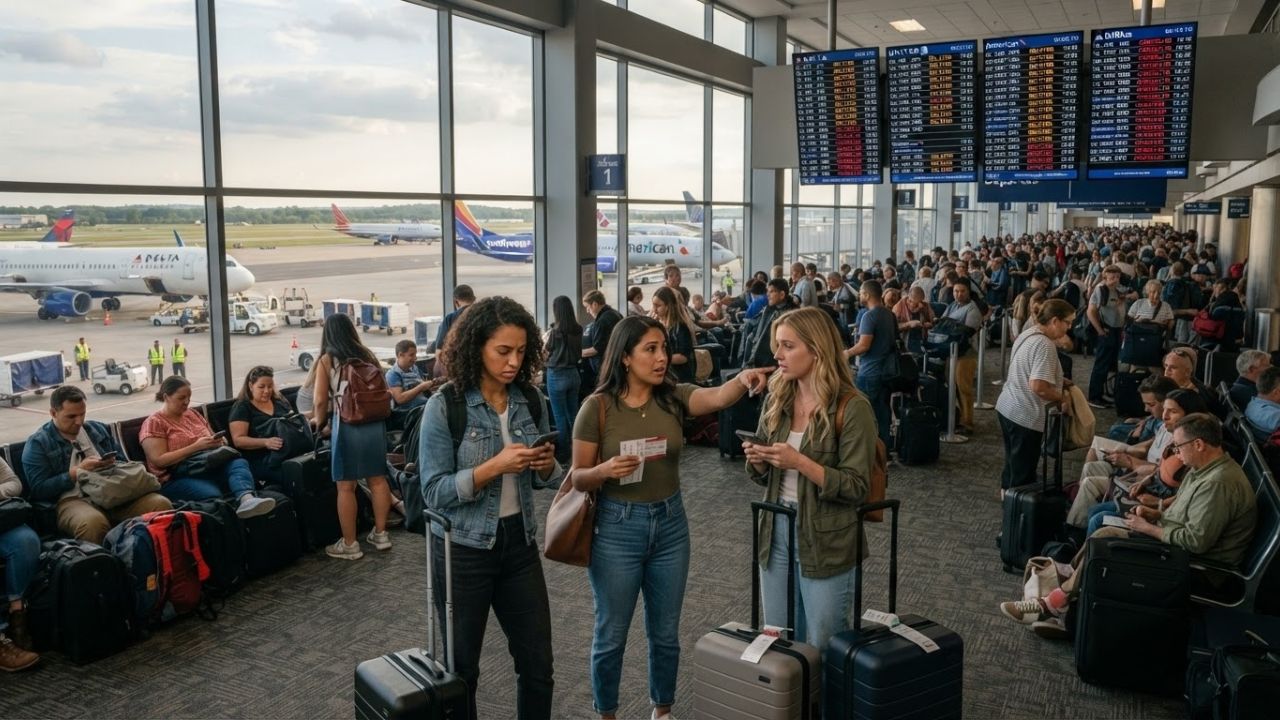
Image generated by AI
More than 3,000 flight delays and 160 cancellations disrupted United States domestic aviation on July 31, 2026, following FAA traffic management directives and terminal congestion. This widespread scheduling breakdown affected major hubs from California to New York, prompting passengers to verify ticket refund rules and airline rebooking obligations.
Over Three Thousand Flight Delays Disrupt US Aviation
Our analysis of real-time flight tracking systems indicates that 3,049 flights were delayed and 160 were cancelled across the United States on July 31, 2026. Southwest Airlines recorded the highest delay total with 635 delayed flights, while Delta Air Lines accounted for the largest share of cancellations, logging 89 cancellations (representing more than 55 percent of all U.S. cancellations) verified by FlightAware logs. Additionally, United Airlines and JetBlue experienced significant scheduling challenges as delays spread through primary hubs.
The disruptions were concentrated across several key airport gateways. Hartsfield-Jackson Atlanta International (ATL) emerged as the nation's most significant cancellation hotspot, recording 50 cancellations, or nearly 31 percent of all U.S. flight cancellations. On the West Coast, Los Angeles International (LAX), San Francisco International (SFO), and San Diego International (SAN) recorded high delay volumes, while Minneapolis–Saint Paul International (MSP) experienced cancellations and a temporary FAA Ground Stop due to low clouds.
Airport Gateways and FAA Restrictions Impact
The scheduling disruptions concentrated passenger delays across major US gateways:
- Hartsfield-Jackson Atlanta (ATL): The hub handled 50 flight cancellations, requiring major crew and aircraft repositioning.
- San Diego International (SAN): The airport operated under an FAA Ground Delay averaging 40 minutes, alongside a partial general aviation closure.
- San Francisco International (SFO): High traffic volumes triggered an FAA Ground Delay averaging 37 minutes.
- Minneapolis–Saint Paul (MSP): Low ceiling conditions triggered a temporary FAA Ground Stop, halting regional departures.
Passenger Rights & Advisory (Information Gain & Experience)
For travelers caught in widespread domestic flight cancellations and rolling delays, verifying airline obligations is essential. Our analysis of passenger rights guidelines highlights the following rights:
- US DOT Cancellation Cash Refunds: Under U.S. Department of Transportation (DOT) guidelines, if your domestic or international flight is cancelled or delayed significantly and you decline the airline's rebooking offer, you have the right to a full cash refund of your ticket.
- Significant Delay Refund Eligibility: The DOT requires airlines to issue cash refunds if a flight arrival is delayed by three or more hours for domestic travel (or six hours for international travel) and the passenger chooses not to fly. This rule applies to all fare classes, including basic economy tickets.
- Hotel and Meal Care Commitments: If a flight cancellation is caused by controllable carrier issues (such as crew availability or technical maintenance), airlines like Delta, United, and Southwest have committed to providing free meal vouchers and overnight hotel lodging. Travelers should request these vouchers at the customer service desk before leaving the airport terminal.
Industry Analyst View
The widespread disruptions highlight the thin operational margins that major carriers operate under during peak summer travel periods. A single localized weather delay, such as the low ceilings in Minneapolis, can trigger a cascade of rolling delays across national airline networks as aircraft rotations slip.
However, resolving these capacity constraints requires long-term investments in air traffic control automation and runway infrastructure. To support future demand, airport operators must coordinate ground handling schedules with the FAA to manage traffic flows during periods of heavy volume. This slot coordination is key to maintaining network reliability and securing customer trust as domestic travel passenger numbers continue to set records.
Related Travel Guides
Disclaimer
This article is for informational and educational purposes only. It does not constitute legal, financial, or professional advice. While we strive to provide accurate and up-to-date information, travel policies, regulations, and conditions change rapidly. Always verify information with official sources before making travel decisions. Nomad Lawyer makes no representations about the accuracy, reliability, completeness, or suitability of the information provided. Readers should consult qualified professionals for advice specific to their circumstances. The views expressed in this article are those of the author and do not necessarily reflect the views of Nomad Lawyer.
Kunal K Choudhary
Co-Founder & Contributor
A passionate traveller and tech enthusiast. Kunal contributes to the vision and growth of Nomad Lawyer, bringing fresh perspectives and driving the community forward.
Learn more about our team →