
US Navy Deploys Super Hornets Against F-5 Tigers in High-Stakes Reserve Squadron Training
Breaking airline news and aviation industry updates for 2026.

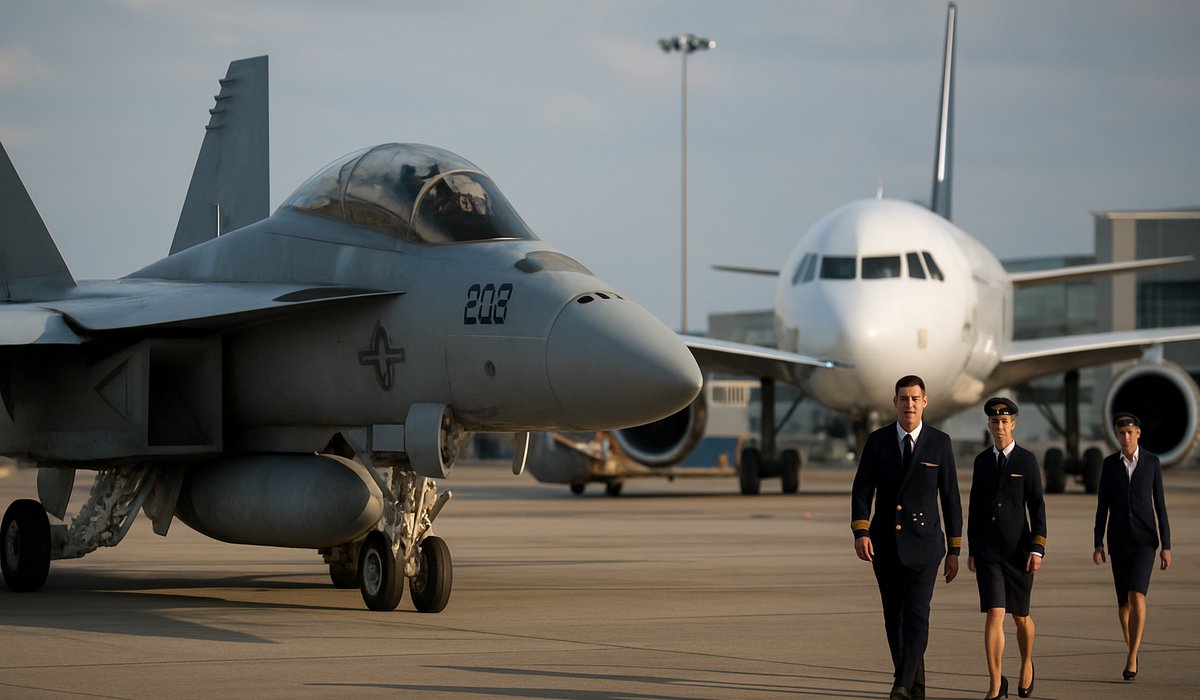
Image generated by AI
US Navy Deploys Super Hornets Against F-5 Tigers in High-Stakes Reserve Squadron Training
Legacy fighter jets repurposed as adversary aircraft push modern combat pilots to their limits
The Evolution of an Iconic Cold War Fighter
The Northrop F-5 Tiger II, once a cornerstone of global air defense strategies, has undergone a dramatic transformation in its operational lifecycle. While the lightweight fighter dominated international aviation markets throughout the 1970s and 1980s, offering affordable combat capability to allied nations worldwide, its role within American military operations has fundamentally shifted. Today, rather than defending US airspace, these aging jets serve as adversary platforms—forcing the Navy's most advanced pilots to confront realistic threat scenarios in controlled training environments.
Redefining Training Through Adversary Air Combat
The United States Navy has increasingly turned to F-5 Tiger aircraft as invaluable tools for preparing Super Hornet pilots for genuine aerial threats. Operating through dedicated reserve squadrons, these Cold War-era fighters are deliberately flown against modern Boeing F/A-18 Super Hornet jets in complex air combat training exercises. This counterintuitive approach reflects a critical gap in military aviation: modern fighters require seasoned opposition, not cooperative sparring partners.
The F-5's enduring value lies in its agility and simplicity. Despite lacking the technological sophistication of contemporary fighter platforms, the Tiger II remains remarkably nimble in close-range dogfighting scenarios. Pilots flying these legacy aircraft can push their airframes to physical limits that newer platforms, constrained by advanced avionics and sophisticated damage management systems, cannot match.
Strategic Advantage Through Legacy Platforms
Reserve squadrons maintain these F-5 formations specifically because modern adversary roles demand authentic tactical challenges. When Super Hornet pilots encounter F-5 opposition in training sorties, they confront flight characteristics and tactical employment patterns that mirror genuine threats from adversary nations still operating comparable lightweight fighter designs.
The T-38 Talon variant, directly descended from F-5 Tiger technology, has proven equally valuable as an advanced training platform. Both aircraft platforms continue generating irreplaceable operational insights that translate directly to improved pilot performance and tactical doctrine development.
Looking Forward in Military Aviation Training
While the F-5 Tiger will eventually retire from American military service, its legacy as an adversary platform demonstrates how legacy aircraft can maintain strategic relevance through repurposing. Navy planners recognize that cutting-edge training requires appropriately calibrated opposition—a role these proven fighters continue filling effectively.
The deployment strategy underscores a broader military aviation principle: tactical proficiency demands realistic, dynamic opposition. The F-5 Tiger II, despite its age, continues delivering precisely that capability.
Frequently Asked Questions
What is the purpose of using F-5 Tiger aircraft in Navy training? F-5 Tigers serve as adversary aircraft in reserve squadron training, providing realistic opposition for Super Hornet pilots during air combat exercises.
Why don't Navy pilots train against more modern fighters? Modern fighters are constrained by advanced systems and damage management protocols. F-5s offer authentic tactical challenges through superior agility in close-range combat scenarios.
Is the F-5 Tiger still used in active military service? The F-5 Tiger remains operational primarily in training and adversary roles. International air forces continue operating variants for frontline duty.
How does the T-38 Talon relate to F-5 Tiger operations? The T-38 Talon, derived from F-5 technology, serves as an advanced trainer platform, leveraging the same tactical and aerodynamic principles.
Will F-5 Tigers eventually be retired from US military use? Yes, eventually these aircraft will retire from service, though their operational value in training continues extending their useful service life.
Related Travel Guides
-
WestJet Charts Aggressive Expansion with 13 New International Routes Set to Launch in 2026
-
Force Pilots Highest Paid Ranks in 2026: US Air Force Salary Breakdown
-
Boeing B-52 and Lockheed C-130: Military Aircraft Defying Decades of Obsolescence
External Resources
Disclaimer
This article is for informational and educational purposes only. It does not constitute legal, financial, or professional advice. While we strive to provide accurate and up-to-date information, travel policies, regulations, and conditions change rapidly. Always verify information with official sources before making travel decisions. Nomad Lawyer makes no representations about the accuracy, reliability, completeness, or suitability of the information provided. Readers should consult qualified professionals for advice specific to their circumstances. The views expressed in this article are those of the author and do not necessarily reflect the views of Nomad Lawyer.
Raushan Kumar
Founder & Lead Developer
Full-stack developer with 11+ years of experience and a passionate traveller. Raushan built Nomad Lawyer from the ground up with a vision to create the best travel and law experience on the web.
Learn more about our team →