
Boeing 777-300ER's Exclusive Engine Deal: Why GE90 Powers All Extended-Range Variants
Breaking airline news and aviation industry updates for 2026.

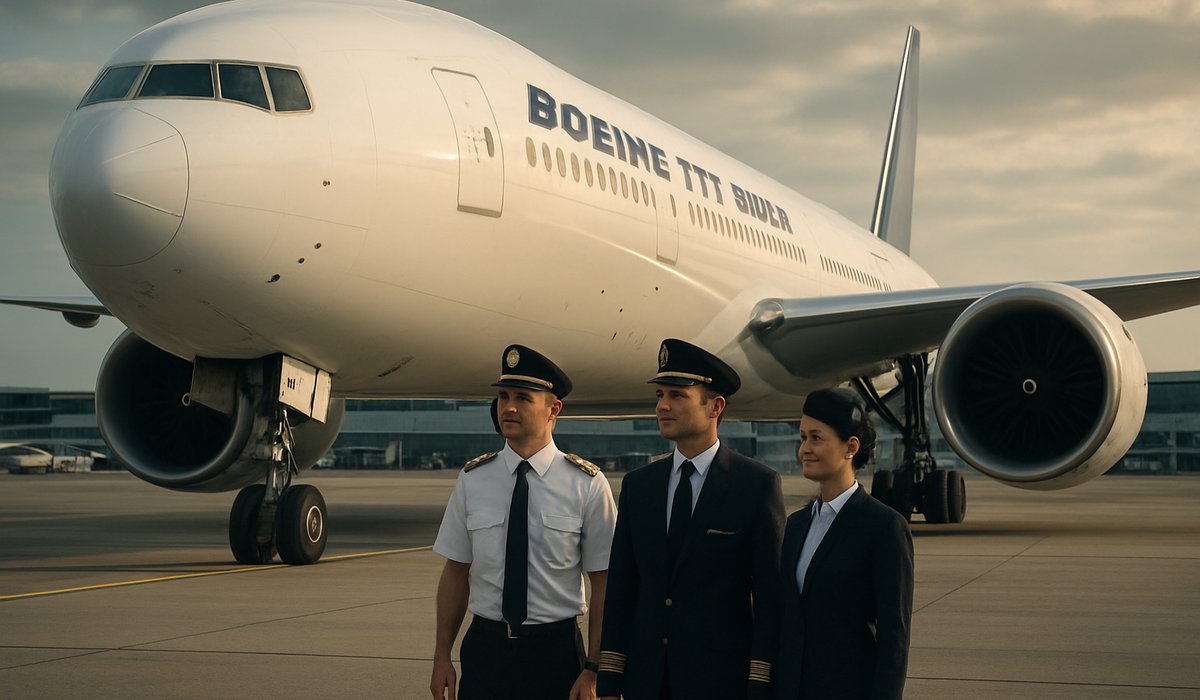
Image generated by AI
Boeing 777-300ER's Exclusive Engine Deal: Why GE90 Powers All Extended-Range Variants
General Electric's dominance in powering Boeing's flagship wide-body reflects shifting aerospace manufacturing strategy and competitive consolidation
The Engine Monopoly Taking Shape
Boeing's decision to exclusively equip its second-generation 777-300ER and 777-200LR aircraft with General Electric's GE90 engines marks a significant consolidation in commercial aviation propulsion—a strategic move that departed sharply from the manufacturer's earlier multi-engine flexibility approach.
The distinction between Boeing's first and second-generation 777 variants reveals how the aviation industry has evolved toward engine standardization. While early 777 models offered airlines a rare tri-engine choice—featuring General Electric's GE90, Rolls-Royce's Trent 800, and Pratt & Whitney's PW4000-112—the extended-range variants that followed narrowed options considerably. The Trent 800 initially captured the largest share of first-generation orders, suggesting strong market demand for engine diversity.
Strategic Shift Toward Single-Engine Configuration
However, Boeing's corporate calculus shifted for the advanced 777-300ER and 777-200LR platforms. The aerospace giant opted for exclusive GE90 power across both variants, effectively eliminating the competitive engine selection that had previously defined the 777 family's appeal to global carriers.
This consolidation strategy reflects broader industry trends toward manufacturing standardization, supply chain efficiency, and simplified maintenance protocols. By committing exclusively to GE90 engines, Boeing reduced production complexity while strengthening its relationship with General Electric—one of aviation's most influential engine manufacturers.
Implications for Airlines and the Supply Chain
The decision carries significant consequences for airline operators worldwide. Carriers operating 777-300ER aircraft must commit to GE90 maintenance infrastructure, spare parts availability, and technical training protocols. This standardization, while potentially streamlining operational efficiency, eliminates the competitive leverage airlines previously enjoyed when selecting between multiple engine options.
General Electric's monopoly over extended-range 777 powerplants represents a consolidation trend evident across modern aviation. As aircraft platforms mature and manufacturers prioritize production efficiency, the multi-engine flexibility that characterized earlier generations increasingly gives way to single-engine configurations determined at the manufacturing stage rather than by customer preference.
The GE90 remains one of aviation's most powerful and reliable commercial engines, justifying Boeing's confidence in exclusive deployment. Yet the loss of engine choice for 777-300ER operators signals a broader shift in how modern aircraft platforms are configured—one favoring standardization over flexibility.
Frequently Asked Questions
Why did Boeing eliminate engine options for the 777-300ER? Boeing prioritized manufacturing simplification, supply chain efficiency, and streamlined maintenance protocols by standardizing on the GE90 engine exclusively for second-generation 777 variants.
Which engines powered the original 777 aircraft? Early 777 models offered three options: General Electric's GE90, Rolls-Royce's Trent 800 (the most popular choice), and Pratt & Whitney's PW4000-112.
Can airlines retrofit 777-300ER aircraft with alternative engines? No. The 777-300ER's airframe is certified exclusively for GE90 engines; structural and systems modifications would be prohibitively expensive and require re-certification.
What advantages does the GE90 offer that justified exclusive use? The GE90 delivers exceptional fuel efficiency, reliability, and thrust capabilities suitable for long-range operations, making it ideal for extended-range 777 variants on transoceanic routes.
Has engine consolidation affected airline operating costs? Yes. Exclusive engine configuration limits competitive pressure on engine manufacturers, potentially affecting maintenance costs and spare parts pricing for airlines operating 777-300ER fleets.
Related Travel Guides
External Resources
Disclaimer
This article is for informational and educational purposes only. It does not constitute legal, financial, or professional advice. While we strive to provide accurate and up-to-date information, travel policies, regulations, and conditions change rapidly. Always verify information with official sources before making travel decisions. Nomad Lawyer makes no representations about the accuracy, reliability, completeness, or suitability of the information provided. Readers should consult qualified professionals for advice specific to their circumstances. The views expressed in this article are those of the author and do not necessarily reflect the views of Nomad Lawyer.
Preeti Gunjan
Contributor & Community Manager
A passionate traveller and community builder. Preeti helps grow the Nomad Lawyer community, fostering engagement and bringing the reader experience to life.
Learn more about our team →