
Military Aviation's Most Decisive Weapons: Context, Strategy, and Real-World Application in Modern Conflicts
Breaking airline news and aviation industry updates for 2026.

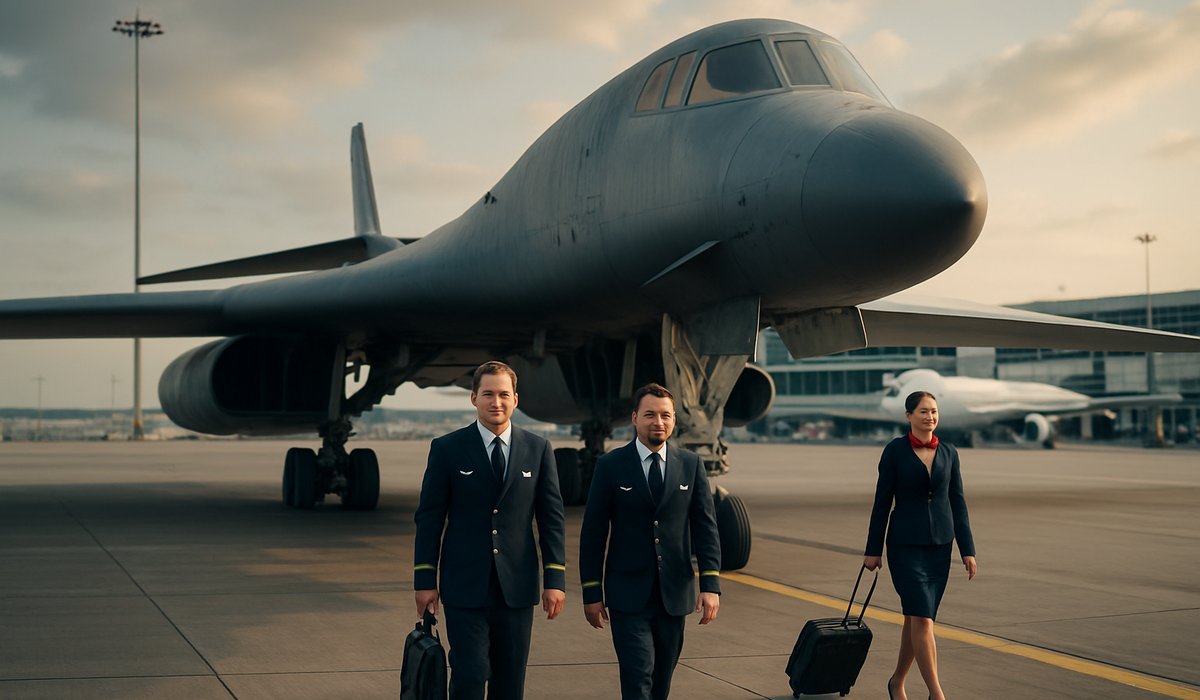
Image generated by AI
Military Aviation's Most Decisive Weapons: Context, Strategy, and Real-World Application in Modern Conflicts
How aircraft effectiveness depends on combat scenarios, geopolitical players, and operational objectives rather than raw technological superiority
The Strategic Calculation Behind Modern Air Power
The debate over which military aircraft wields the greatest influence in contemporary conflicts reveals a fundamental truth: there is no universal answer. The decisiveness of any fighter jet, transport plane, or support aircraft hinges entirely on the specific theater of war, the adversaries involved, and the strategic objectives being pursued. Advanced platforms like the F-35 stealth fighter, despite representing cutting-edge aerospace technology, may prove irrelevant in certain combat environments where alternative systems deliver greater tactical advantage.
Context Determines Combat Effectiveness
Military strategists increasingly recognize that technological sophistication alone does not guarantee operational success. In campaigns designed to project air power across vast distances, refueling capabilities become paramount—making aerial tankers essential infrastructure rather than peripheral assets. Conversely, in theaters where adversaries lack sophisticated air defenses or advanced fighter squadrons, stealth technology offers minimal marginal benefit over conventional aircraft.
The ongoing Russia-Ukraine conflict, which has maintained intensive air operations since 2022, illustrates this principle starkly. Neither Russian nor Ukrainian forces operate F-35 Lightning II jets, rendering the platform's advanced stealth capabilities irrelevant to this particular conflict's outcome. Instead, success in the skies above Eastern Europe depends on aircraft that address the specific operational realities of the region—including available inventory, pilot expertise, and defensive systems already deployed.
The Role of National Arsenals and Alliances
The aircraft that prove decisive in any given conflict are fundamentally constrained by which nations are actively participating. Aerial platform effectiveness cannot be divorced from geopolitical alignment, defense budgets, and existing military infrastructure. A nation's air force composition reflects decades of procurement decisions, training protocols, and industrial partnerships.
As global tensions persist and regional conflicts evolve, military strategists continue reassessing which aircraft platforms deliver maximum strategic return. This reassessment occurs not in laboratories or defense contractor boardrooms, but in actual operational theaters where competing air forces test capabilities against real-world adversaries.
The lesson for defense planners worldwide remains consistent: the most decisive military aircraft today is whichever platform best aligns with the specific conflict's demands—not necessarily the most technologically advanced system available.
FAQ: Understanding Modern Military Aircraft Effectiveness
Q: Why isn't the F-35 considered decisive in the Russia-Ukraine conflict? A: The F-35 remains absent from both Russian and Ukrainian air forces, making its advanced stealth capabilities irrelevant to this specific conflict's aerial campaigns.
Q: What makes aerial tankers strategically important in military operations? A: Refueling aircraft extend operational range significantly, proving critical for campaigns projecting air power across vast geographical distances beyond home territory.
Q: How does combat context affect aircraft selection and effectiveness? A: Different theaters require different capabilities—stealth may be unnecessary against adversaries lacking sophisticated air defenses, while transport and logistics assets may prove more decisive than fighters in certain scenarios.
Q: What determines which military aircraft prove most decisive globally? A: Decisiveness depends on the specific combatants involved, their existing arsenals, operational objectives, and the theater's unique defensive and offensive characteristics.
Q: Are newer military aircraft always more effective in conflicts? A: No—operational effectiveness depends on matching aircraft capabilities to specific conflict requirements rather than pursuing technological superiority alone.
Related Travel Guides
Disclaimer
This article is for informational and educational purposes only. It does not constitute legal, financial, or professional advice. While we strive to provide accurate and up-to-date information, travel policies, regulations, and conditions change rapidly. Always verify information with official sources before making travel decisions. Nomad Lawyer makes no representations about the accuracy, reliability, completeness, or suitability of the information provided. Readers should consult qualified professionals for advice specific to their circumstances. The views expressed in this article are those of the author and do not necessarily reflect the views of Nomad Lawyer.
Preeti Gunjan
Contributor & Community Manager
A passionate traveller and community builder. Preeti helps grow the Nomad Lawyer community, fostering engagement and bringing the reader experience to life.
Learn more about our team →