
Supersonic Aviation's Return: How Boom Overture Could Democratize High-Speed Flight
Breaking airline news and aviation industry updates for 2026.

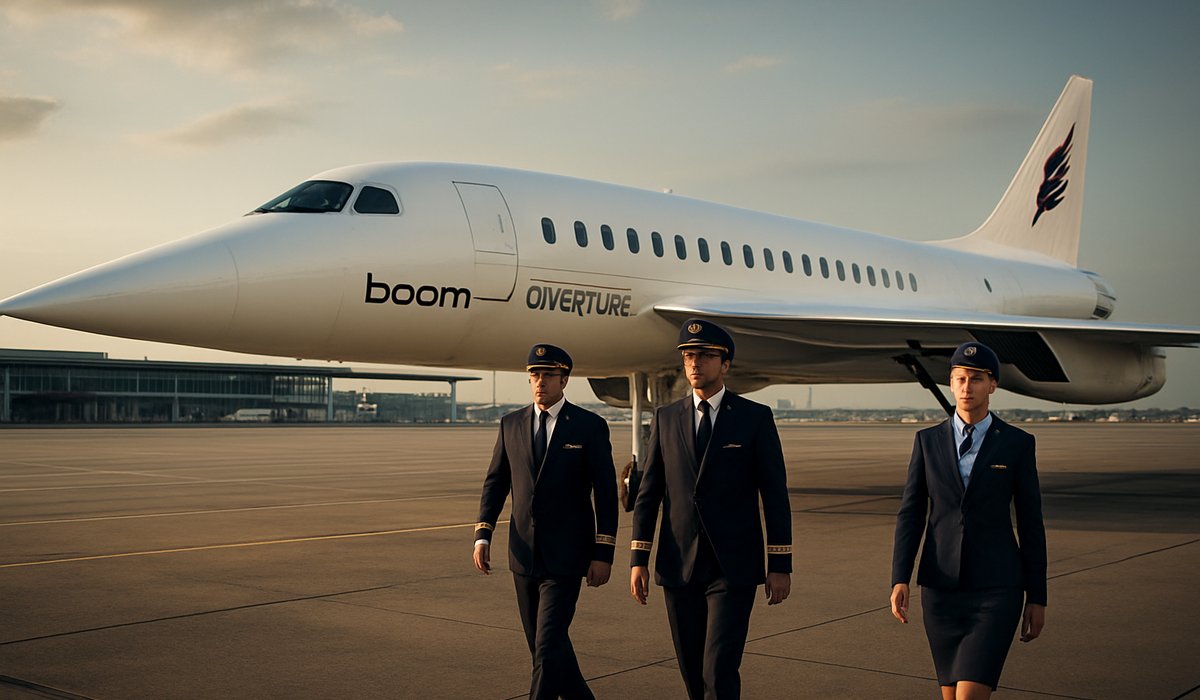
Image generated by AI
Supersonic Aviation's Return: How Boom Overture Could Democratize High-Speed Flight
The race to resurrect commercial supersonic travel enters a critical phase as Boom Supersonic prepares to challenge two decades of industry silence following Concorde's retirement
The Supersonic Dream Reignited
After more than 20 years of silence in the commercial supersonic aviation sector, a new contender is preparing to break the sound barrier—and crucially, break the exclusivity barrier that defined its legendary predecessor. Boom Supersonic's Overture aircraft represents the industry's most serious attempt to revive high-speed transatlantic travel since Concorde's final flight in 2003, with a fundamental difference: affordability at its core.
The Colorado-based manufacturer has moved beyond theoretical designs and into active flight testing phases, signaling genuine progress toward operational deployment. Industry observers note this milestone comes amid evolving pressures on the aviation industry, including volatile jet fuel prices and rising consumer demands for efficiency—conditions that forced previous supersonic ventures to depend on premium pricing models that limited market viability.
Breaking the Exclusivity Model
Concorde's operational history, while limited to elite passengers and demanding specific route economics, demonstrated that supersonic services could sustain operations on certain high-traffic corridors. The historical aircraft maintained a presence across transatlantic routes for three decades, validating market demand despite extreme operational costs and environmental concerns that ultimately constrained its expansion.
Boom Supersonic's engineering strategy directly addresses these historical constraints. By designing the Overture with enhanced fuel efficiency and streamlined manufacturing processes, the manufacturer aims to position supersonic flights as genuinely accessible rather than exclusively luxury offerings—a critical distinction that could fundamentally reshape aviation economics.
Market Viability Questions Persist
Despite technological progress, skepticism remains regarding the Overture's commercial sustainability. Critics question whether fuel consumption rates justify operational costs, whether environmental regulations will permit widespread deployment, and whether sufficient passenger demand exists at competitive price points to sustain profitability across multiple aircraft and routes.
Airline operators evaluating potential fleet additions remain cautious, reflecting broader industry lessons learned from failed supersonic initiatives. The volatility of jet fuel markets adds another layer of uncertainty to long-term financial projections—operators cannot guarantee ticket pricing stability if petroleum markets shift dramatically.
Looking Forward
Boom's advancement represents aviation's persistent belief that speed remains a marketable commodity. Whether the Overture succeeds depends not solely on engineering excellence but on navigating regulatory frameworks, environmental commitments, and proving that consumers will pay premium fares for dramatically reduced flight times without returning to Concorde's wealth-exclusive model.
FAQ: Supersonic Aviation and Boom Overture
When will Boom Overture commercial flights begin? Boom Supersonic projects initial passenger operations in the mid-to-late 2020s, pending regulatory certification and customer commitments.
How much will Boom Overture tickets cost compared to standard airline fares? The manufacturer has not released final pricing but targets significantly lower prices than Concorde's historical fares while maintaining a premium over subsonic options.
How does jet fuel pricing affect supersonic flight economics? Supersonic engines consume substantially more fuel than conventional aircraft, making volatile petroleum markets critical risk factors for operational profitability and ticket pricing stability.
Which airlines have ordered the Boom Overture? Several carriers, including United Airlines, have announced commitments, though firm orders remain conditional on certification and performance validation.
Is the Boom Overture environmentally sustainable? Boom emphasizes sustainable aviation fuel compatibility and emissions reduction improvements, though environmental advocates continue scrutinizing supersonic operations' broader climate impacts.
Related Travel Guides
External Resources
Disclaimer
This article is for informational and educational purposes only. It does not constitute legal, financial, or professional advice. While we strive to provide accurate and up-to-date information, travel policies, regulations, and conditions change rapidly. Always verify information with official sources before making travel decisions. Nomad Lawyer makes no representations about the accuracy, reliability, completeness, or suitability of the information provided. Readers should consult qualified professionals for advice specific to their circumstances. The views expressed in this article are those of the author and do not necessarily reflect the views of Nomad Lawyer.
Raushan Kumar
Founder & Lead Developer
Full-stack developer with 11+ years of experience and a passionate traveller. Raushan built Nomad Lawyer from the ground up with a vision to create the best travel and law experience on the web.
Learn more about our team →