
Boeing 747-8's 16-Tire Landing Gear System: Engineering Marvel Behind Aviation's Heaviest Passenger Aircraft
Breaking airline news and aviation industry updates for 2026.

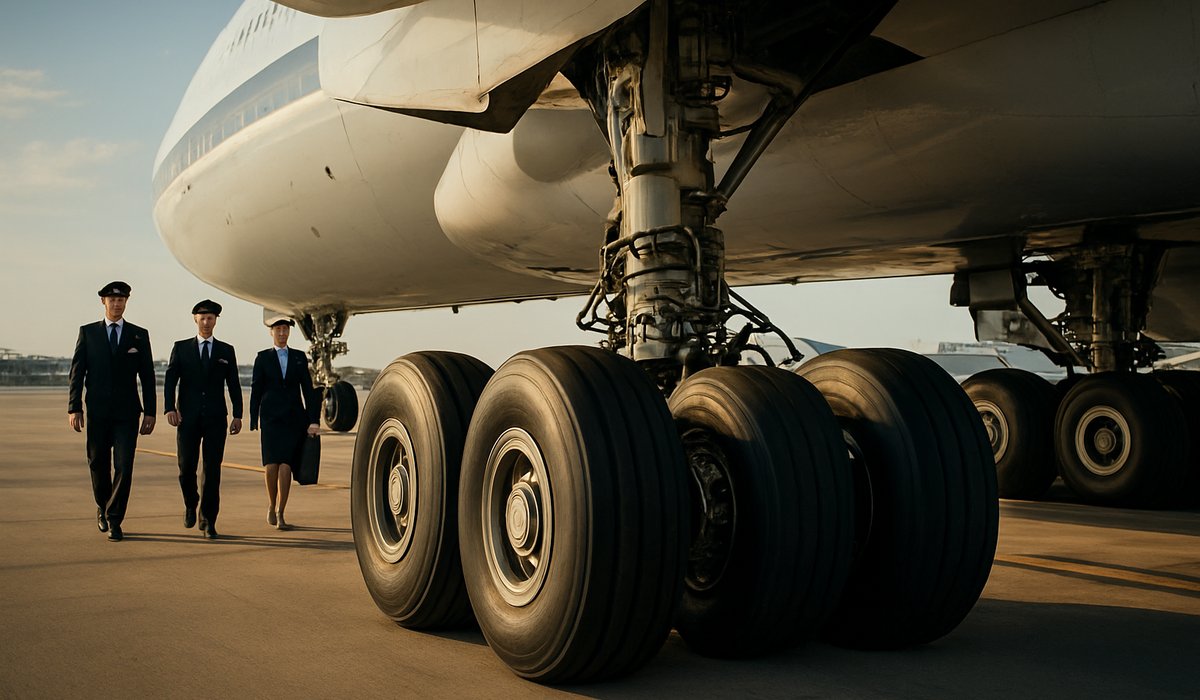
Image generated by AI
Boeing 747-8's 16-Tire Landing Gear System: Engineering Marvel Behind Aviation's Heaviest Passenger Aircraft
Inside the complex mechanical architecture designed to support nearly half a million pounds on the tarmac
The Engineering Challenge of Ultra-Heavy Aircraft
The Boeing 747-8 represents a pinnacle of commercial aviation engineering, yet its most critical burden isn't encountered at cruising altitude—it's on the ground. With a maximum takeoff weight approaching 987,000 pounds (447,000 kilograms), the aircraft demands one of the most robust landing gear systems ever engineered for passenger service.
This exceptional weight requirement fundamentally reshapes how engineers approach the aircraft's undercarriage design. While aerodynamic lift carries the 747-8 through the skies, every ounce of that nearly half-million-pound mass transfers directly to the landing gear during ground operations—taxiing, takeoff runs, and most critically, during landing impact.
Why 16 Tires Are Structurally Necessary
The 747-8's main landing gear configuration requires 16 tires to distribute this extraordinary load across multiple contact points with the runway surface. This isn't redundancy for its own sake; it's a calculated engineering solution to fundamental physics.
When an aircraft as massive as the 747-8 touches down, the concentrated weight would exceed the structural limits of runway surfaces and the aircraft's own gear systems if distributed across fewer contact points. By spreading the load across 16 individual tires, engineers achieve several critical objectives: they reduce ground pressure per tire, minimize wear on runway infrastructure, and ensure the landing gear itself can withstand repeated cycles of extreme stress without catastrophic failure.
Each tire operates within carefully calculated pressure and load parameters. Should even one tire fail during operation, the remaining 15 maintain sufficient load distribution to ensure safety—a crucial redundancy factor that regulators require for aircraft of this scale.
Implications for Airport Infrastructure
The 747-8's landing gear design has broader implications for global aviation infrastructure. Airports hosting these aircraft must maintain runways engineered to handle the specific ground pressure distributions created by this 16-tire configuration. This requirement influences runway maintenance schedules, reconstruction timelines, and ultimately, airport operational costs.
The aircraft's massive footprint also affects gate assignments, taxiway routing, and ground handling procedures at major international hubs. As airlines operate these aircraft on long-haul routes connecting major cities worldwide, airport operators continuously invest in infrastructure upgrades to accommodate such ultra-heavy aircraft safely and efficiently.
FAQ: Boeing 747-8 Landing Gear & Aviation Engineering
Why does the 747-8 need more tires than smaller aircraft? The 747-8's maximum takeoff weight of 987,000 pounds requires weight distribution across 16 tires to prevent exceeding runway pressure limits and ensure structural safety during landing impacts.
Can a 747-8 land safely if one tire fails? Yes. The 16-tire configuration provides redundancy; the remaining 15 tires can safely distribute the aircraft's weight under emergency landing conditions.
Does the 16-tire system affect fuel efficiency? Indirectly. The additional landing gear weight and aerodynamic drag increase fuel consumption slightly, but the structural necessity outweighs efficiency trade-offs for aircraft of this scale.
Which airports can accommodate Boeing 747-8 operations? Only major international airports with runways rated for aircraft exceeding 875,000 pounds maximum takeoff weight can safely operate 747-8s.
How often do 747-8 tires require replacement? Tire life depends on flight cycles and landing conditions, but 747-8 operators typically replace tires every 200-400 flight cycles to maintain safety margins.
Related Travel Guides
- UK Extends Fuel Duty Cut as Prices Surge from Iran Conflict
- King Abdulaziz International Airport Disruptions: 16 Flights Cancelled Across Dubai and Asia Routes in 2026
- Australia, Malaysia, Japan, China, and India Strengthen Air Travel Networks: Malaysia Airlines Expands Brisbane Service to Daily Operations by October 2026
Disclaimer
This article is for informational and educational purposes only. It does not constitute legal, financial, or professional advice. While we strive to provide accurate and up-to-date information, travel policies, regulations, and conditions change rapidly. Always verify information with official sources before making travel decisions. Nomad Lawyer makes no representations about the accuracy, reliability, completeness, or suitability of the information provided. Readers should consult qualified professionals for advice specific to their circumstances. The views expressed in this article are those of the author and do not necessarily reflect the views of Nomad Lawyer.
Preeti Gunjan
Contributor & Community Manager
A passionate traveller and community builder. Preeti helps grow the Nomad Lawyer community, fostering engagement and bringing the reader experience to life.
Learn more about our team →