
Delta's A350-1000 Gambit Marks Sharp Divergence from US Rival Strategies on Long-Haul Routes
Breaking airline news and aviation industry updates for 2026.

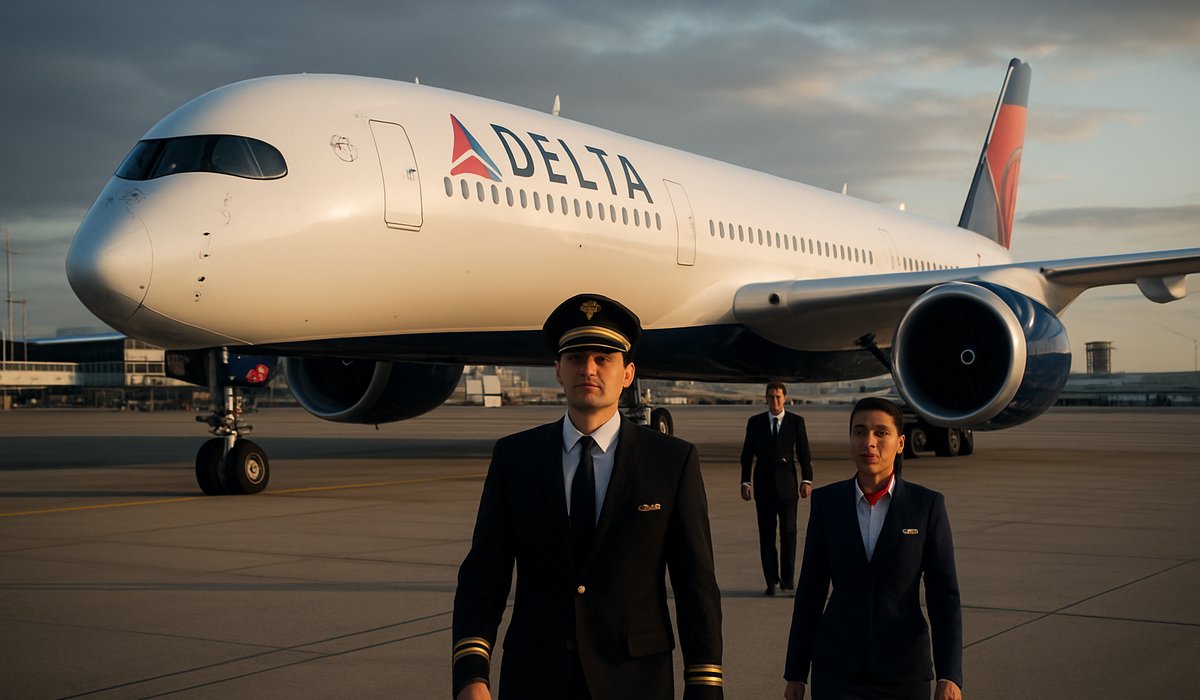
Image generated by AI
Delta's A350-1000 Gambit Marks Sharp Divergence from US Rival Strategies on Long-Haul Routes
As the carrier takes delivery of Airbus's premium widebody, it signals a fundamentally different approach to ultra-long-distance travel than United and American Airlines
Delta Charts Exclusive Course with Premium-Heavy A350 Fleet
Delta Air Lines is preparing to reshape its long-haul operations with a strategic aircraft acquisition that sets it decisively apart from major US competitors. The Atlanta-based carrier will become the first North American airline to deploy the Airbus A350-1000 when deliveries commence in late 2026, positioning the twin-engine widebody as its flagship aircraft for extended international routes.
The order encompasses 20 firm commitments alongside 20 additional options, signaling Delta's substantial confidence in the aircraft's commercial viability. What distinguishes Delta's approach most sharply is its planned cabin configuration—roughly 50% of the A350-1000's capacity will be reserved for premium seating, a notably higher allocation than competing carriers have embraced for similar aircraft.
A Contrasting Philosophy on Premium Revenue
This strategic decision reveals a fundamental philosophical divide within the US aviation industry. While United Airlines and American Airlines have pursued configurations prioritizing economy density and volume on their long-haul fleets, Delta is explicitly betting on premium-cabin profitability and passenger experience differentiation.
The A350-1000 will operate Delta's most demanding long-haul routes—flights exceeding 14+ hours on trunk international corridors connecting North America with Asia-Pacific and European markets. By allocating substantial cabin real estate to business and first-class products, Delta is targeting high-yield corporate and premium leisure travelers willing to pay premium fares.
Market Context: Fuel Efficiency Meets Revenue Strategy
The timing of this order reflects broader aviation industry dynamics. Modern widebody aircraft like the A350 address rising jet fuel costs through superior fuel efficiency—a critical consideration as volatile petroleum markets continue pressuring airline margins. The aircraft's 9,700+ nautical mile range and advanced aerodynamics deliver approximately 25% better fuel economics compared to legacy widebody platforms.
Industry analysts view Delta's configuration choice as a calculated response to evolving long-haul travel patterns. Corporate travel has concentrated among premium cabin users, while economy segments face commoditization pressure. By front-loading premium capacity, Delta positions itself to capture disproportionate revenue yields on competitive international routes.
Implications for Industry Competition
Delta's divergent strategy carries competitive implications for the broader industry. The A350-1000 represents cutting-edge long-haul technology, and Delta's exclusive North American entry provides temporary competitive advantage on prestige routes and premium traveler perception.
The decision also reflects Delta's traditional operational philosophy: investing in passenger experience and premium service differentiation rather than pure capacity maximization—a posture that has historically supported premium pricing power and loyalty program strength.
FAQ: Understanding Delta's A350-1000 Strategy
When will Delta begin operating the A350-1000? Deliveries commence in late 2026, with aircraft entering scheduled service on the carrier's longest international routes.
How does Delta's A350 configuration differ from competitors? Delta allocates approximately 50% of seating to premium cabins (business and first class), emphasizing revenue per available seat mile over raw capacity.
Why choose the A350 over Boeing aircraft? The A350-1000 offers superior fuel efficiency (addressing rising jet fuel costs), advanced technology, and cabin flexibility that align with Delta's premium-focused strategy.
What routes will operate the A350-1000? The aircraft will serve ultra-long-haul international corridors connecting North America to Asia-Pacific and European destinations, typically 14+ hour flights.
How does this impact airline baggage fees and ancillary revenue? Premium cabin passengers aboard the A350-1000 receive enhanced baggage allowances and amenities, potentially reducing reliance on ancillary fees compared to economy-heavy configurations.
Related Travel Guides
External Resources
Disclaimer
This article is for informational and educational purposes only. It does not constitute legal, financial, or professional advice. While we strive to provide accurate and up-to-date information, travel policies, regulations, and conditions change rapidly. Always verify information with official sources before making travel decisions. Nomad Lawyer makes no representations about the accuracy, reliability, completeness, or suitability of the information provided. Readers should consult qualified professionals for advice specific to their circumstances. The views expressed in this article are those of the author and do not necessarily reflect the views of Nomad Lawyer.
Kunal K Choudhary
Co-Founder & Contributor
A passionate traveller and tech enthusiast. Kunal contributes to the vision and growth of Nomad Lawyer, bringing fresh perspectives and driving the community forward.
Learn more about our team →