
Dubai International Airport Dominates Global Airbus A380 Operations as Superjumbo Fleet Consolidates
Breaking airline news and aviation industry updates for 2026.

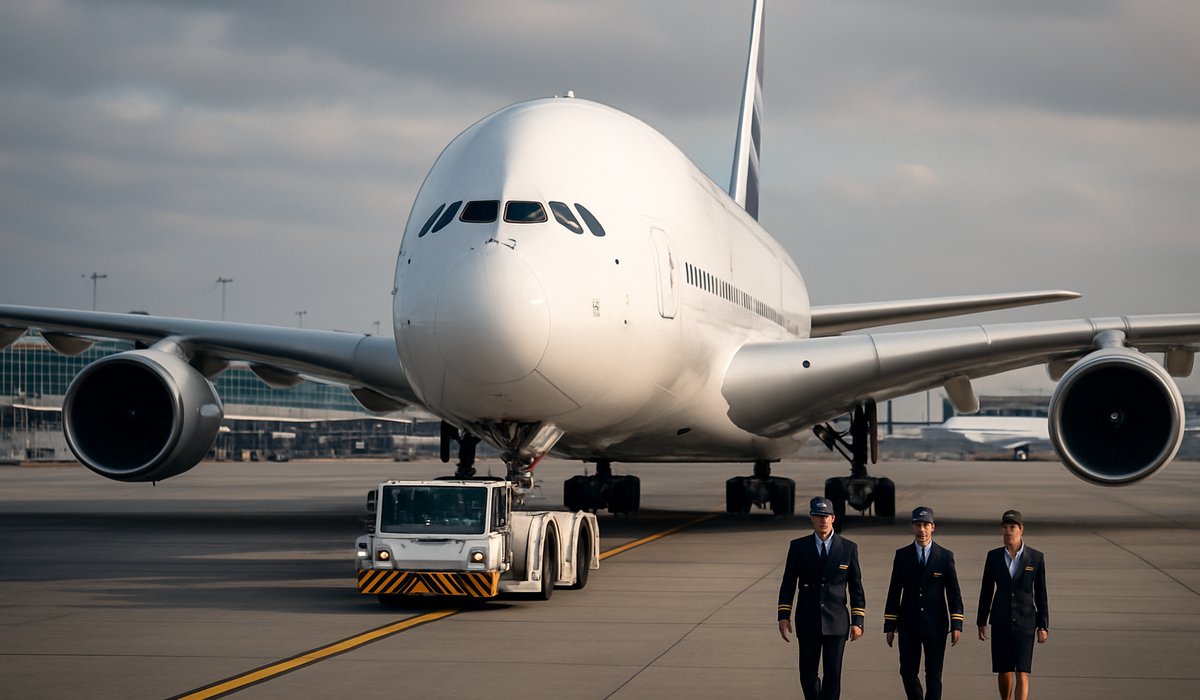
Image generated by AI
Dubai International Airport Dominates Global Airbus A380 Operations as Superjumbo Fleet Consolidates
The world's busiest hub for the double-decker giant reveals critical shifts in long-haul aviation strategy and airline investment priorities
The A380 Hub Phenomenon
Dubai International Airport has solidified its position as the global epicenter for Airbus A380 operations, commanding the largest concentration of the world's most ambitious passenger aircraft. The finding underscores how the aviation industry's infrastructure and fleet deployment strategies have evolved around a handful of mega-hubs capable of supporting the superjumbo's demanding operational requirements.
The A380—a double-deck, four-engine aircraft capable of carrying up to 853 passengers in high-density configuration—requires specialized ground handling, maintenance facilities, and terminal infrastructure. This technical reality has created a natural clustering of operations at only a select number of airports globally, with Dubai's positioning at the intersection of Asian, European, and African aviation networks proving decisive.
Strategic Concentration and Airline Operations
Only a diminishing number of carriers continue operating the A380 fleet at scale, fundamentally reshaping where these aircraft congregate. Emirates, Singapore Airlines, China Southern Airlines, and Air France have anchored their superjumbo programs at specific gateway cities, with Dubai serving as the dominant operational center.
Emirates alone operates the world's largest A380 fleet, with the airline deploying the aircraft on high-capacity routes connecting the Middle East to Europe, Asia, and North America. The carrier's strategic positioning in Dubai, combined with the airport's massive investment in A380-compatible infrastructure, has created a self-reinforcing advantage in attracting additional superjumbo traffic.
Infrastructure Investment and Long-Haul Demand
The concentration of A380 operations at select hubs reflects broader patterns in aviation investment. Airports investing in dedicated A380 facilities—including specialized gates, boarding bridges, and maintenance hangars—naturally attract operators seeking to maximize return on their billion-dollar aircraft purchases.
Long-haul demand patterns have also shifted since the A380's introduction in 2007. Rather than distributing superjumbo operations across numerous secondary hubs, airlines have increasingly consolidated routes through premium mega-hubs offering superior connectivity, passenger amenities, and operational efficiency.
The Narrowing A380 Universe
Production challenges and declining airline orders have reshaped the A380 landscape. Airbus ceased new aircraft deliveries in 2021, effectively freezing the global fleet at approximately 250 operational aircraft. This contraction has intensified competition among airports seeking to maintain A380 services as carriers evaluate route profitability.
FAQ: Understanding A380 Hub Operations
Which airport handles the most A380 flights annually? Dubai International Airport operates the highest volume of A380 departures and arrivals globally, driven primarily by Emirates' fleet concentration.
Why do airlines concentrate A380 operations at specific hubs? Specialized ground infrastructure, maintenance facilities, and connecting passenger volumes make mega-hubs more economically viable for supporting the superjumbo's high operating costs.
How many A380 aircraft remain in active service worldwide? Approximately 250 A380s operate globally, with production halted in 2021, limiting future fleet expansion.
What routes typically feature the most A380 traffic? Long-haul premium routes connecting major international hubs—particularly Dubai-London, Dubai-Paris, and Dubai-Singapore—constitute primary A380 corridors.
Will A380 operations continue declining? Without new aircraft production, the A380 fleet will gradually diminish as aging aircraft retire, unless secondary market aircraft transfers sustain operations at select carriers.
Related Travel Guides
External Resources
Disclaimer
This article is for informational and educational purposes only. It does not constitute legal, financial, or professional advice. While we strive to provide accurate and up-to-date information, travel policies, regulations, and conditions change rapidly. Always verify information with official sources before making travel decisions. Nomad Lawyer makes no representations about the accuracy, reliability, completeness, or suitability of the information provided. Readers should consult qualified professionals for advice specific to their circumstances. The views expressed in this article are those of the author and do not necessarily reflect the views of Nomad Lawyer.
Raushan Kumar
Founder & Lead Developer
Full-stack developer with 11+ years of experience and a passionate traveller. Raushan built Nomad Lawyer from the ground up with a vision to create the best travel and law experience on the web.
Learn more about our team →