
How the Airbus A300 Revolutionized Aviation Design—Then Disappeared Into History
Breaking airline news and aviation industry updates for 2026.

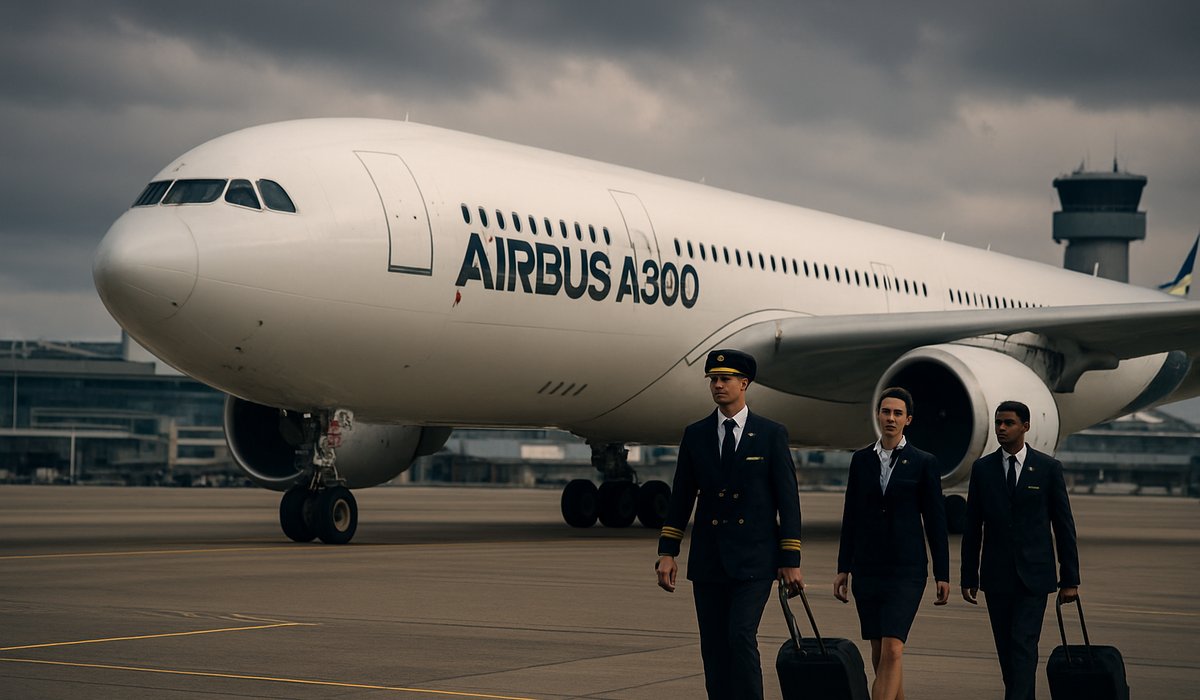
Image generated by AI
How the Airbus A300 Revolutionized Aviation Design—Then Disappeared Into History
The aircraft that pioneered modern widebody standards couldn't survive the industry's shift toward fuel-efficient twin-engine jets
The Widebody Pioneer That Changed Everything
The Airbus A300 stands as one of aviation's most consequential yet overlooked innovations. While the Boeing 747 holds the distinction of being aviation's first widebody aircraft, it was Airbus's A300 that established the blueprint for modern wide-cabin jet design—a configuration that dominates commercial aviation today. Yet despite fundamentally reshaping how airlines think about aircraft efficiency, the A300 vanished from passenger service, becoming little more than a historical footnote in an industry it helped transform.
The aircraft's revolutionary feature was strikingly simple: it accomplished widebody capacity and comfort using only two engines instead of the three or four-engine configurations that dominated long-haul aviation during the 1970s. This design choice was audacious, even radical, at a time when jet engine technology was only beginning to reach the power thresholds necessary for reliably powering massive commercial airliners across transcontinental distances.
Regulatory Constraints Met Technological Limitations
The A300's twin-engine configuration presented a fundamental problem for long-distance operations. Aviation regulatory authorities strictly limited twin-engine aircraft on overwater routes, reflecting legitimate safety concerns rooted in the technological limitations of the era. This regulatory ceiling proved devastating for the A300's commercial prospects on intercontinental flights—precisely the routes where airlines could maximize profitability and utilize the aircraft's innovative widebody design.
Airlines operating the A300 found themselves geographically constrained to predominantly overland routes where regulatory restrictions didn't apply, severely limiting the aircraft's commercial appeal and return on investment. The aircraft was advanced in concept but imprisoned by the regulations and engineering realities of its time.
The Twin-Engine Revolution
Everything changed as jet engine manufacturing advanced dramatically through the 1980s and 1990s. Modern turbofan engines became exponentially more powerful and reliable, eventually accumulating operational track records that satisfied regulators. Restrictions on twin-engine overwater operations gradually loosened, and airlines embraced the obvious economic advantages: twin-engine jets consumed significantly less fuel than their four-engine predecessors while delivering comparable passenger capacity.
Aircraft like the Boeing 777 and Airbus A350 eventually perfected the twin-engine widebody formula the A300 had pioneered decades earlier—but with engines powerful enough and reliable enough to operate anywhere on Earth. The A300's visionary design had won out; the aircraft itself simply hadn't survived long enough to benefit from the technological evolution it anticipated.
FAQ: Understanding Widebody Aircraft Evolution
What was the Airbus A300, and why was it significant? The A300 was Airbus's first widebody aircraft and the first commercial jet to successfully combine twin-engine efficiency with wide-cabin comfort, establishing design principles still used today.
Why did the A300 fail commercially despite being innovative? Regulatory restrictions on twin-engine overwater flights limited the A300 to regional routes, restricting airline profitability and making the aircraft economically impractical for long-haul operations.
How did engine technology change the widebody market? Modern turbofan engines became powerful and reliable enough to satisfy safety regulators, enabling twin-engine aircraft to operate on unlimited international routes and making the A300's design philosophy commercially viable.
What modern aircraft inherited the A300's twin-engine widebody concept? The Boeing 777 and Airbus A350 perfected twin-engine widebody design with advanced engines, proving the A300's original concept was decades ahead of its time.
Why don't airlines use four-engine aircraft anymore? Twin-engine jets offer superior fuel efficiency, lower operating costs, and comparable passenger capacity, making four-engine aircraft economically obsolete for modern airlines managing fuel price volatility.
Related Travel Guides
-
Air Canada & Azorra Back Airbus A220-500 — A New Era for Narrowbodies
-
Southwest Airlines Launches 20 New Routes in June Amid Cautious Network Expansion
External Resources
Disclaimer
This article is for informational and educational purposes only. It does not constitute legal, financial, or professional advice. While we strive to provide accurate and up-to-date information, travel policies, regulations, and conditions change rapidly. Always verify information with official sources before making travel decisions. Nomad Lawyer makes no representations about the accuracy, reliability, completeness, or suitability of the information provided. Readers should consult qualified professionals for advice specific to their circumstances. The views expressed in this article are those of the author and do not necessarily reflect the views of Nomad Lawyer.
Preeti Gunjan
Contributor & Community Manager
A passionate traveller and community builder. Preeti helps grow the Nomad Lawyer community, fostering engagement and bringing the reader experience to life.
Learn more about our team →