
FAA Clears High-Energy Laser Systems Over El Paso: U.S.-Mexico Border Counter-Drone Defense Won't Disrupt Commercial Aviation
FAA and DOD confirm military laser systems deployed along U.S.-Mexico border pose no risk to passenger aircraft. Airspace closures brief as counter-drone operations intensify.

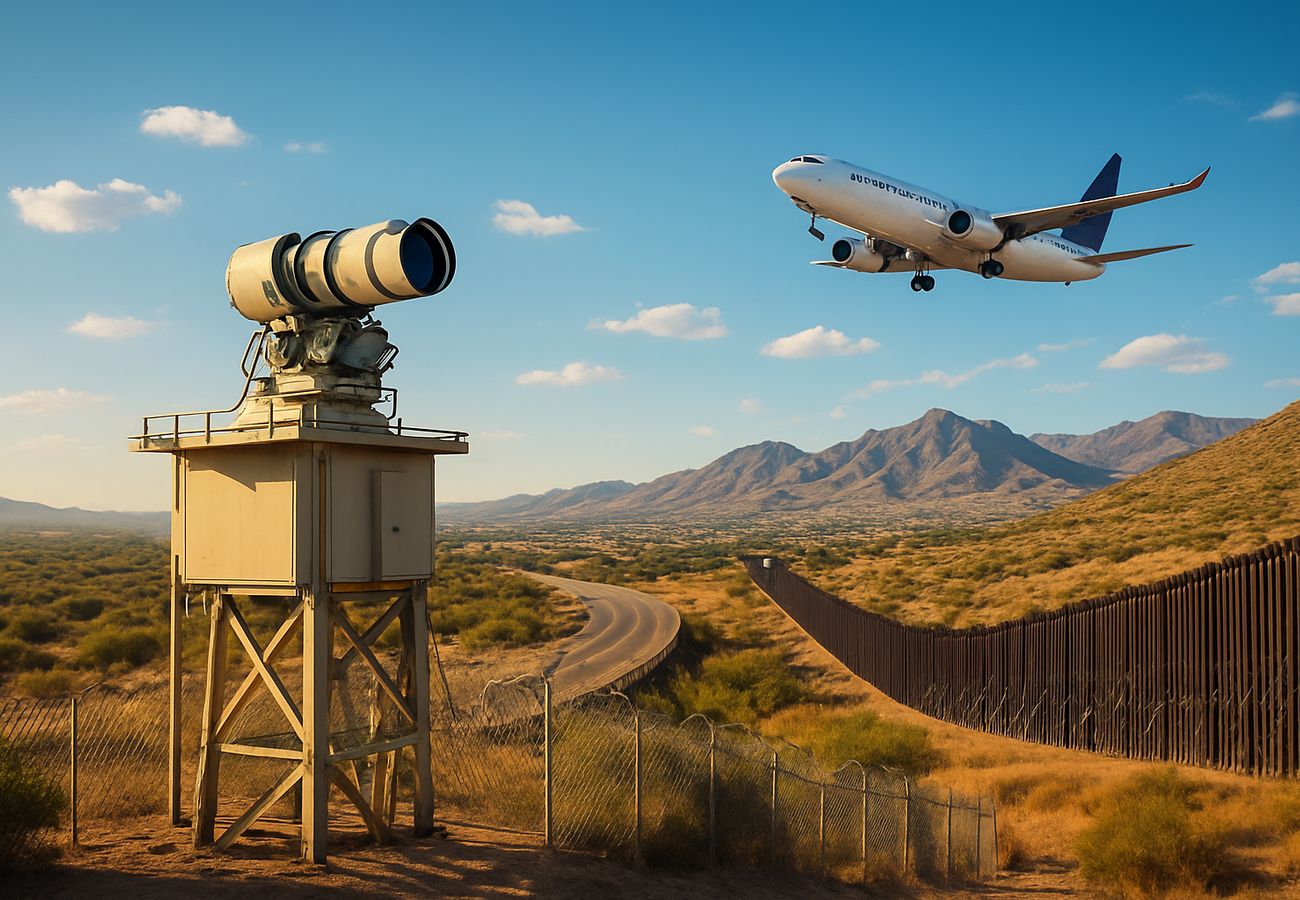
Image generated by AI
The Federal Aviation Administration (FAA) has officially cleared the deployment of advanced high-energy laser systems along the U.S.-Mexico border, declaring that military-grade counter-drone technology poses no undue risk to commercial passenger aircraft. The landmark safety determination comes weeks after a temporary airspace closure over El Paso, Texas in February sparked widespread concern about potential interference with civilian flights.
The brief closure of civilian airspace over El Paso—which lasted only hours rather than the initially projected week—marked a turning point in how federal authorities balance national security with aviation safety. According to the FAA and Department of Defense (DOD), comprehensive data-driven risk assessments confirmed that the laser systems can effectively neutralize unauthorized drones without compromising the integrity of the National Airspace System. The technology, deployed to combat escalating drone threats from criminal organizations and foreign actors, will remain operational as part of ongoing border security initiatives.
The February incident revealed the precision of these systems when a military-grade laser successfully downed a drone operated by Customs and Border Protection—a federal agency itself—demonstrating the weapon's effectiveness even in complex operational environments. Transportation officials later confirmed that the primary target that day was a drone reportedly controlled by Mexican drug cartels engaged in illegal trafficking operations. The incident underscored the growing sophistication of unauthorized aerial activity near the southern border and the critical need for advanced countermeasures.
Expanding beyond El Paso, the U.S. government has installed similar anti-drone laser systems in other strategically sensitive locations. In April, a comparable system was deployed near Palm Beach International Airport in Florida, ostensibly to protect the nearby Mar-a-Lago estate while safeguarding commercial aircraft operations. This expansion reflects escalating concerns about drone-related threats to national security infrastructure and high-profile locations. According to the FAA's official guidance on airspace management, such deployments require rigorous coordination between military and civilian aviation authorities to prevent operational conflicts.
The decision to deploy military-grade laser technology in civilian airspace has ignited broader debate about security versus accessibility. The FAA emphasized that stringent safety protocols remain in place to prevent accidental interference with passenger flights, while the DOD stressed the necessity of these systems to address emerging threats. Both agencies have committed to continuous monitoring and inter-agency collaboration to ensure that counter-drone operations do not compromise commercial aviation safety. Industry observers note that this represents a delicate equilibrium between protecting national interests and maintaining public confidence in air travel safety.
Drone-related threats have intensified dramatically across North America, with unauthorized aerial activity increasingly linked to surveillance, trafficking, and potential security breaches. The International Air Transport Association (IATA) has documented rising concerns about drone interference with commercial operations, prompting aviation authorities worldwide to develop countermeasures. The FAA's clearance of these laser systems signals a willingness to embrace advanced technology solutions, provided rigorous safety assessments precede deployment. As drone technology continues evolving and its potential for misuse expands, the FAA's role in managing emerging airspace risks will become increasingly critical to maintaining both national security and passenger safety.
What This Means for Travelers
Passengers flying through El Paso International Airport (ELP), Palm Beach International Airport (PBI), and other border-adjacent hubs should expect occasional, brief airspace closures as counter-drone operations continue. The FAA assures that these temporary restrictions—typically lasting hours rather than days—will not significantly disrupt flight schedules, as military and civilian authorities coordinate operations in advance. Travelers should monitor real-time flight status updates through airline apps and official airport websites, as minor delays may occur during active counter-drone deployments. The good news: commercial aircraft remain fully protected, and these security measures enhance overall aviation safety by eliminating unauthorized aerial threats.
Expert Insight: The FAA's clearance of border laser systems represents a watershed moment in balancing military security imperatives with civilian aviation operations—a model likely to influence counter-drone policies at airports worldwide.
As drone technology proliferates and border security challenges intensify, the deployment of high-energy laser systems will almost certainly expand to additional U.S. airports and international gateways. The FAA's data-driven approach to safety assessment provides a template for other nations grappling with similar threats. While brief airspace closures may become routine in high-risk zones, the underlying message is clear: federal authorities are investing heavily in technologies that protect both national security and the traveling public. Passengers can expect a new normal of occasional, coordinated airspace restrictions—a small price for enhanced protection against evolving aerial threats.
Related Travel Guides
Disclaimer
This article is for informational and educational purposes only. It does not constitute legal, financial, or professional advice. While we strive to provide accurate and up-to-date information, travel policies, regulations, and conditions change rapidly. Always verify information with official sources before making travel decisions. Nomad Lawyer makes no representations about the accuracy, reliability, completeness, or suitability of the information provided. Readers should consult qualified professionals for advice specific to their circumstances. The views expressed in this article are those of the author and do not necessarily reflect the views of Nomad Lawyer.
Kunal K Choudhary
Co-Founder & Contributor
A passionate traveller and tech enthusiast. Kunal contributes to the vision and growth of Nomad Lawyer, bringing fresh perspectives and driving the community forward.
Learn more about our team →