
Premium Economy Seats Are Reshaping Long-Haul Travel—Here's Why Airlines and Passengers Are Betting Big
Breaking airline news and aviation industry updates for 2026.

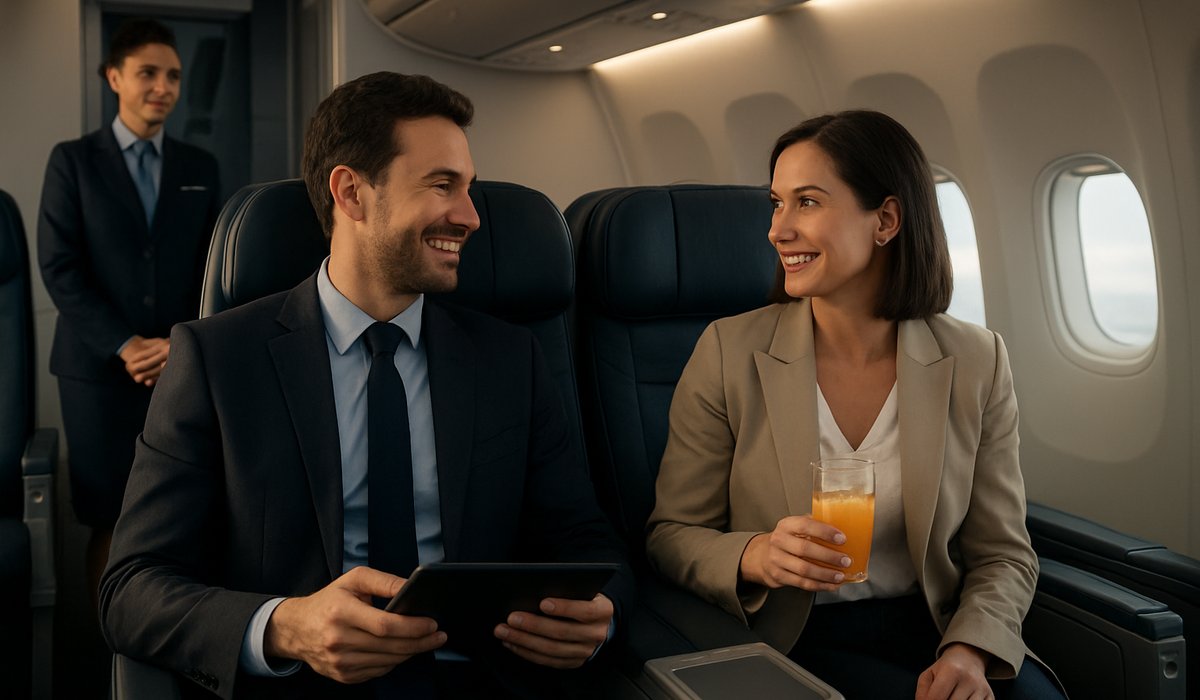
Image generated by AI
Premium Economy Seats Are Reshaping Long-Haul Travel—Here's Why Airlines and Passengers Are Betting Big
As carriers expand the cabin class across fleets, premium economy is becoming the sweet spot for budget-conscious business travelers and leisure passengers seeking comfort without breaking the bank
The Rise of Aviation's Fastest-Growing Cabin Class
Premium economy has evolved from a niche offering into a pivotal revenue driver for the global aviation industry. Introduced by Taiwan-based carrier EVA Air in the early 1990s, this middle-tier cabin class has since become standard equipment on long-haul aircraft operated by virtually every major international airline. The expansion has been dramatic: carriers are now retrofitting narrow-body aircraft with premium economy seats—a move that signals the industry's confidence in sustained demand.
The financial implications are striking. Industry analysts report that premium economy profit margins are now competing with—and in some cases exceeding—those generated by traditional business-class offerings. This economic reality has fundamentally altered airline strategy, prompting carriers to aggressively expand premium economy capacity rather than pursue business-class growth alone.
Why Passengers and Airlines Favor Premium Economy
For travelers, premium economy bridges a critical gap in the aviation market. The cabin delivers measurable comfort improvements—enhanced seat width, increased pitch, direct-aisle access on some aircraft, and elevated catering standards—at price points significantly lower than business-class fares. For price-sensitive business travelers and premium leisure passengers, the value proposition is compelling.
Airlines benefit equally from this positioning. Premium economy generates higher yield per seat than economy while requiring substantially lower capital investment and operational complexity compared to business-class expansion. The result: superior profit margins with reduced risk exposure.
Mainstream Adoption Signals Market Maturity
The widespread rollout across fleet networks underscores the cabin class's maturation. Today, premium economy is no longer an experimental offering but rather a foundational element of modern aircraft configurations. Even narrow-body regional carriers have begun deploying the product on longer domestic and transcontinental routes, reflecting genuine market demand rather than marketing novelty.
Industry observers expect this expansion trajectory to accelerate. As fuel prices fluctuate and airlines face pressure to optimize revenue per available seat mile, premium economy offers an attractive middle path—capturing additional spending from premium-conscious passengers without the operational burden of expanding traditional business-class cabins.
What This Means for the Aviation Sector
The premium economy phenomenon reflects deeper shifts in how airlines monetize long-haul networks. Rather than competing primarily on price (economy) or luxury (business class), carriers are now competing on value—a strategic pivot that has proven remarkably profitable. This three-tier model has become the industry standard for international aviation, fundamentally reshaping passenger experience and airline economics.
FAQ: Premium Economy Travel Questions Answered
Q: How much cheaper is premium economy compared to business class? A: Premium economy typically costs 40-60% less than business-class fares on long-haul routes, while offering substantial comfort improvements over standard economy.
Q: Which airlines offer the best premium economy products? A: EVA Air, Singapore Airlines, British Airways, Lufthansa, and Air France are recognized leaders in premium economy cabin design and service quality.
Q: Is premium economy worth the extra cost? A: For flights exceeding 6-8 hours, premium economy offers meaningful benefits including wider seats, better meals, priority boarding, and increased baggage allowances—making it worthwhile for many travelers.
Q: Are premium economy seats available on all aircraft types? A: Most wide-body jets now feature premium economy; however, narrow-body aircraft installations remain selective. Check directly with your airline for specific aircraft configurations.
Q: How has jet fuel pricing affected premium economy expansion? A: Rising fuel costs incentivize airlines to maximize revenue per seat, making premium economy's high-margin profile increasingly attractive as an alternative to business-class expansion.
Related Travel Guides
External Resources
Disclaimer
This article is for informational and educational purposes only. It does not constitute legal, financial, or professional advice. While we strive to provide accurate and up-to-date information, travel policies, regulations, and conditions change rapidly. Always verify information with official sources before making travel decisions. Nomad Lawyer makes no representations about the accuracy, reliability, completeness, or suitability of the information provided. Readers should consult qualified professionals for advice specific to their circumstances. The views expressed in this article are those of the author and do not necessarily reflect the views of Nomad Lawyer.
Kunal K Choudhary
Co-Founder & Contributor
A passionate traveller and tech enthusiast. Kunal contributes to the vision and growth of Nomad Lawyer, bringing fresh perspectives and driving the community forward.
Learn more about our team →