
The Abandoned Dream: How Cold War Politics Killed America's Supersonic Aviation Program
Breaking airline news and aviation industry updates for 2026.

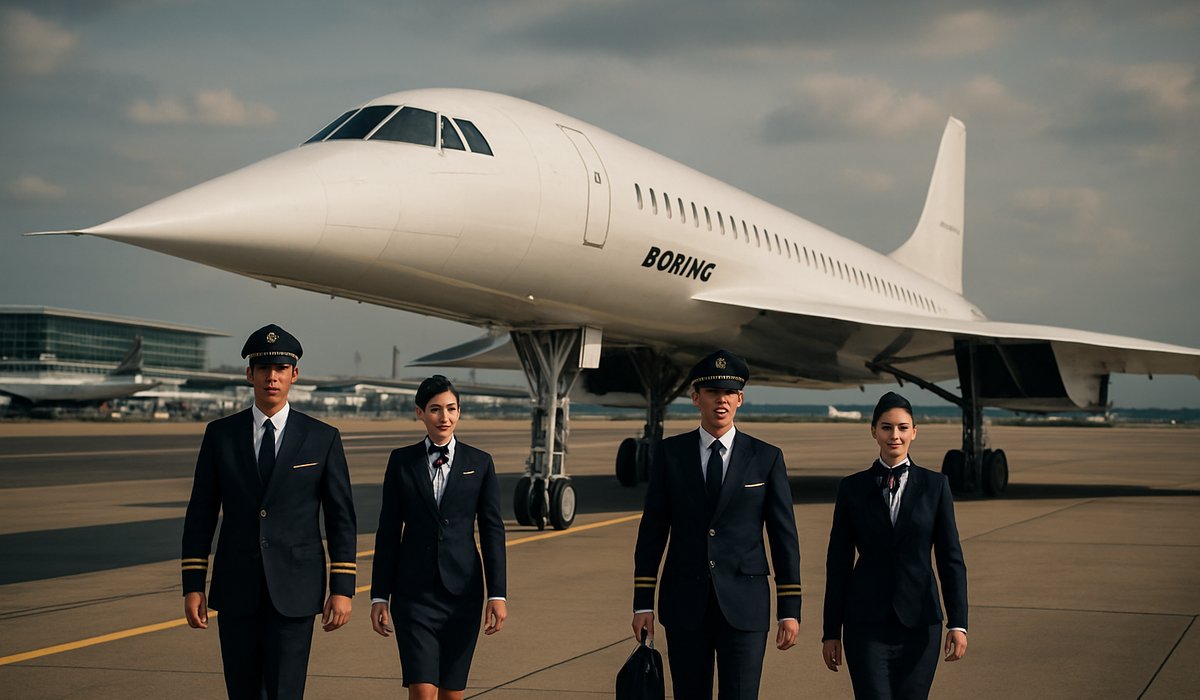
Image generated by AI
The Abandoned Dream: How Cold War Politics Killed America's Supersonic Aviation Program
A declassified chapter in aviation history reveals how geopolitical tensions and economic realities derailed the U.S. government's bold vision for hypersonic commercial flight
The Race That Never Finished
During the height of Cold War aerospace competition, the United States pursued an extraordinarily ambitious aviation initiative that ultimately never materialized—a domestically-developed supersonic airliner that would have rivaled the Anglo-French Concorde and Soviet Tupolev Tu-144. Unlike its international counterparts, which achieved operational status and commercial service, the American supersonic project was shelved entirely before advancing beyond the conceptual phase, marking a significant capitulation in the global aviation race.
Why Washington Pulled the Plug
The cancellation represented a pivotal moment when geopolitical ambition collided with economic pragmatism. While aerospace engineers had designed what many considered engineering marvels capable of Mach speeds, government officials ultimately determined the venture was fundamentally incompatible with sustainable commercial operations and budgetary constraints. The project fell victim to the harsh realities of aviation economics—development costs, operational expenses, and limited market demand proved insurmountable obstacles.
The Supersonic Context
The Concorde and Tu-144 demonstrated that supersonic flight was technically achievable, yet both programs ultimately struggled financially. The Concorde, despite its legendary status, operated at a loss for most of its service life, supported primarily by government subsidies. These cautionary tales likely influenced American decision-makers when evaluating their own supersonic ambitions.
The U.S. program's cancellation reflected a broader recognition within the aviation industry that cutting-edge technology alone cannot sustain commercial viability. Airlines and manufacturers must balance innovation with operational costs—a principle that continues shaping aviation development today.
Historical Significance
This abandoned project remains a fascinating artifact of Cold War technological competition, illustrating how political ideology and competitive pressures drove aerospace innovation during that era. While the Concorde eventually became an icon of luxury aviation before its retirement in 2003, America's supersonic aspirations quietly disappeared from public discourse.
The cancellation underscored an enduring lesson for the aviation sector: engineering capability and government funding alone cannot guarantee commercial success in competitive global markets.
FAQ: Understanding America's Lost Supersonic Program
Q: Did the U.S. ever build a working prototype of its supersonic airliner? No. The American supersonic project was terminated before any prototype achieved flight status, distinguishing it from the Concorde and Tu-144, which both entered operational service.
Q: Why was the program cancelled when the Concorde succeeded? While the Concorde flew commercially, it operated at significant financial losses, requiring government subsidies throughout its service life—a cautionary outcome that influenced American budget decisions.
Q: Could modern technology resurrect supersonic commercial aviation? Several startups are currently exploring supersonic travel with advanced materials and engines, though regulatory and environmental concerns remain substantial obstacles.
Q: What happened to the engineers and research from the cancelled program? Most aerospace personnel redirected their expertise toward other military and civilian aviation programs during the ongoing Cold War competition.
Q: How does this compare to modern aviation development challenges? Today's aviation industry faces similar economic constraints, with airlines and manufacturers carefully balancing technological innovation against fuel costs and operational sustainability.
Related Travel Guides
- Breaking Airline News: Major US Carriers Trigger Travel Chaos with Covert Route Terminations and Sudden Schedule Shifts
- Air New Zealand's Skynest Bunk Beds: What Travelers Actually Pay Beyond the $292 Headline Price
- Qatar Airways Extends Travel Flexibility Through 2026: Free Date Changes and Full Refunds Now Available
Disclaimer
This article is for informational and educational purposes only. It does not constitute legal, financial, or professional advice. While we strive to provide accurate and up-to-date information, travel policies, regulations, and conditions change rapidly. Always verify information with official sources before making travel decisions. Nomad Lawyer makes no representations about the accuracy, reliability, completeness, or suitability of the information provided. Readers should consult qualified professionals for advice specific to their circumstances. The views expressed in this article are those of the author and do not necessarily reflect the views of Nomad Lawyer.
Preeti Gunjan
Contributor & Community Manager
A passionate traveller and community builder. Preeti helps grow the Nomad Lawyer community, fostering engagement and bringing the reader experience to life.
Learn more about our team →