
WestJet Flight Attendants Issue 72-Hour Strike Notice as Lockout Looms Over August Long Weekend Travel in 2026
Over 4,000 WestJet flight attendants served a 72-hour strike notice on July 30, 2026, prompting a lockout warning that threatens August long weekend flights across Canada.

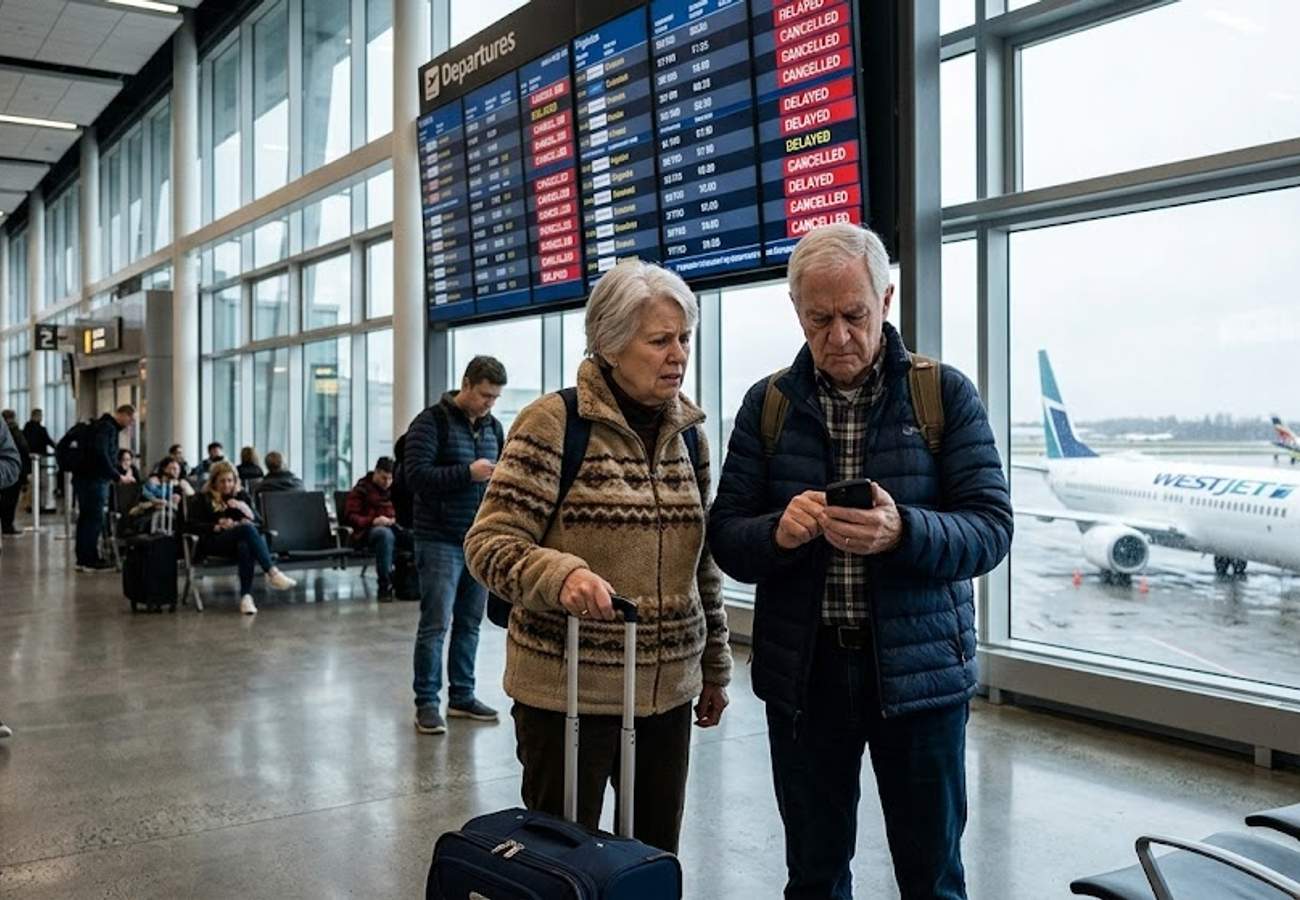
Image generated by AI
Over 4,000 WestJet flight attendants served a formal 72-hour strike notice on July 30, 2026, and the Calgary-based carrier immediately responded with its own lockout warning—setting up a potential service collapse during the peak August long weekend.
Strike and Lockout Notices Set Up Early August Showdown
The Canadian Union of Public Employees local representing more than 4,000 WestJet flight attendants delivered formal strike notice on July 30, 2026. Under federal labour rules governing the Canada Labour Code, a legal work stoppage by either party can occur only after a 72-hour notice period, which follows a mandatory cooling-off phase.
WestJet responded within hours by issuing a corresponding 72-hour lockout notice to cabin crew. A lockout allows the airline to preemptively halt work by unionized flight attendants and begin cancelling or consolidating flights before employees walk off the job.
The duelling notices mean that unless a last-minute settlement is reached, service could be curtailed as early as the first weekend of August 2026. This is a peak travel window for domestic holidaymakers and transatlantic passengers alike.
Flight and Airport Impact Breakdown
Our analysis of previous WestJet labour disruptions indicates the carrier is likely to follow a familiar wind-down playbook:
- Calgary hub: WestJet is expected to park portions of its fleet at its Calgary base, consolidating aircraft for a controlled shutdown rather than risking stranded planes.
- Toronto operations: Similar fleet positioning at Toronto Pearson is anticipated, with priority given to core domestic and transcontinental routes.
- Leisure and regional routes: Secondary regional connections and leisure destinations are considered the most vulnerable to short-notice cancellations.
- Transatlantic services: Repatriation of aircraft and crews from overseas destinations typically begins 48 to 72 hours before a potential stoppage.
- WestJet affiliates: Flights operated by WestJet mainline and its affiliate carriers could both be affected, according to public advisories.
During the 2023 WestJet pilots dispute and the 2024 aircraft mechanics standoff, the carrier preemptively cancelled hundreds of flights as negotiations reached critical stages. Court filings and regulatory documents from those periods confirm that WestJet begins reducing schedules ahead of a potential strike date.
What the Dispute Centers On
According to recent union communications, WestJet flight attendants are seeking improvements to three core areas:
- Wages: Cabin crew argue their compensation lags behind both domestic rivals and international competitors.
- Unpaid work time: Flight attendants are typically not paid their full hourly flight rate during boarding, deplaning, and ground-based tasks, despite being responsible for safety and customer service throughout those periods.
- Scheduling rules: Union messaging has framed the dispute as an attempt to force the airline to recognize the full scope of cabin crew responsibilities.
The WestJet union secured a strong strike mandate earlier in July 2026, with a large majority of voting members authorizing job action if negotiations failed. This follows a broader North American trend where cabin-crew unions at multiple carriers have focused on compensation for unpaid duties as a central bargaining issue.
The 2025 Air Canada flight attendants' strike and recent contract settlements for pilots and mechanics have helped set new benchmarks for pay and work rules in the Canadian market. WestJet has publicly positioned itself as a value-focused carrier and has argued in past labour disputes that significant cost increases could threaten its competitive model.
Passenger Rights and Advisory
For the affected passenger, this dispute raises immediate questions about compensation, rebooking, and refunds under Canada's Air Passenger Protection Regulations.
Our analysis of the policy suggests the following:
- Within airline control: Advocacy groups have argued in past WestJet disputes that large-scale cancellations announced days in advance of a labour deadline should be considered within the airline's control, since they result from management decisions about how to handle negotiations. This distinction matters because within-control disruptions typically entitle passengers to compensation under APPR rules.
- Airline counter-argument: WestJet and other carriers have countered that they are responding to the threat of a work stoppage and prioritizing safety, which could complicate compensation claims.
- Minimum entitlements: Regardless of the control debate, passengers facing cancellations are generally entitled to rebooking on the next available flight or a full refund. If a flight is cancelled within 14 days of departure, additional compensation may apply depending on the classification of the disruption.
- Voluntary change policies: WestJet has previously issued flexible booking options around potential disruption windows. Passengers should check the airline's current travel advisories for voluntary change or cancellation policies that may allow rebooking without fees.
Practical Steps for Passengers
Travelers booked on WestJet between late July and the first week of August 2026 should take the following actions:
- Confirm your contact information is current in your WestJet reservation to receive real-time notifications.
- Download the WestJet app for push alerts on schedule changes.
- Consider purchasing travel insurance that explicitly covers labour disruptions, as not all policies do.
- If you have critical travel connections—such as cruises or long-haul international flights—explore alternative routings that avoid WestJet's network entirely.
- Keep records of all communications, booking confirmations, and receipts for expenses incurred due to disruptions, as these will be needed for any compensation claim.
Industry Analyst View
The current standoff is likely to renew scrutiny of how labour disruptions are handled under Canada's consumer-protection framework. Legal filings and previous Canadian industrial-relations cases show that employers may treat flight cancellations stemming from their own lockout decisions as within their control, which contrasts with some interpretations of passenger rights during unforeseen safety or weather events.
Travel-industry analysts suggest the next 24 to 48 hours will be critical. Signs that negotiators are making progress—such as announcements of intensive bargaining sessions or reference to a framework for a tentative deal—could reduce the likelihood of widespread cancellations. Conversely, indications that talks have stalled may prompt WestJet to accelerate schedule cuts.
Historically, Canadian airline labour disputes have often been resolved in the final hours, either through direct bargaining or with the assistance of federal mediators. However, both a strike and a lockout are now legally possible once the 72-hour window expires.
The coming days will test not only WestJet's relationship with its cabin crew but also the resilience of Canada's already stretched summer air-travel system during one of the busiest periods of the year.
With both sides legally positioned for a work stoppage, passengers hold the least leverage—and the most at stake.
Related Travel Guides
Disclaimer
This article is for informational and educational purposes only. It does not constitute legal, financial, or professional advice. While we strive to provide accurate and up-to-date information, travel policies, regulations, and conditions change rapidly. Always verify information with official sources before making travel decisions. Nomad Lawyer makes no representations about the accuracy, reliability, completeness, or suitability of the information provided. Readers should consult qualified professionals for advice specific to their circumstances. The views expressed in this article are those of the author and do not necessarily reflect the views of Nomad Lawyer.
Preeti Gunjan
Contributor & Community Manager
A passionate traveller and community builder. Preeti helps grow the Nomad Lawyer community, fostering engagement and bringing the reader experience to life.
Learn more about our team →