
Weather Turmoil Strands Hundreds at Québec City Airport in April 2026
Winter weather turmoil strands passengers as 27 flights face delays and six services cancel at Québec City Jean Lesage International Airport on April 9, 2026, disrupting Canadian airline network.

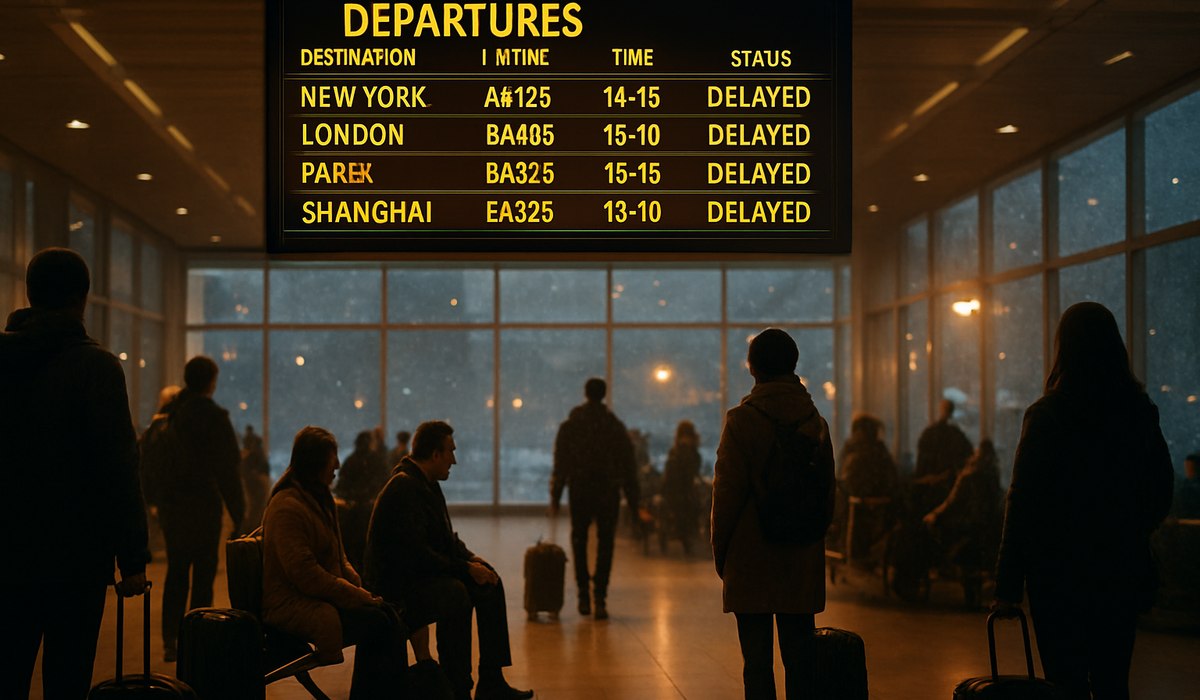
Image generated by AI
Dozens of Passengers Stranded as Winter Weather Disrupts Québec City Operations
Québec City Jean Lesage International Airport ground to a standstill on April 9, 2026, when unseasonable winter weather triggered widespread flight delays and cancellations across Canada's eastern aviation network. Late-season snow, freezing rain, and reduced visibility caused 27 flight delays and six service cancellations, leaving hundreds of passengers stranded at terminals or scrambling for alternative travel arrangements. The disruption rippled far beyond Québec City, cascading through Air Canada, WestJet, and regional carrier schedules connecting the provincial capital to Montreal, Toronto, Ottawa, Calgary, and Vancouver—four of Canada's busiest aviation corridors.
Operations Disrupted Across Canada's Key Air Corridors
The weather turmoil strands phenomenon unfolded Thursday morning as meteorological conditions deteriorated rapidly across eastern Canada. Flight-tracking data from FlightAware revealed that departure boards at Québec City showed clusters of flights delayed by more than 60 minutes, while ground crew and de-icing teams worked frantically to clear runways. The timing proved particularly damaging: early-morning departures and evening arrival windows overlapped, compressing rebooking options and leaving travelers with minimal flexibility.
Routes connecting Québec City to Montreal emerged as the hardest hit, given their critical role as feeder connections to Air Canada's main hub. Services to Toronto Pearson and Ottawa were similarly affected, while westbound connections to Calgary saw delays cascade as aircraft struggled to reposition between weather-affected airports. Each disruption triggered a domino effect—crews running behind schedule, aircraft out of position for subsequent flights, and passengers missing international connections in Montreal and Toronto.
Weather Impact on Major Carriers and Regional Services
Air Canada bore the brunt of operational disruptions, with multiple delayed departures and arrivals across its Québec City network. The carrier's reliance on Quebec-Montreal-Toronto triangle routes meant that weather delays snowballed into missed long-haul connections for passengers destined for U.S. cities, Europe, and overseas markets. WestJet's limited regional frequencies between Québec City and western hubs like Calgary left affected passengers with few same-day alternatives.
Regional carriers operating codeshare agreements—including Jazz Air and other Air Canada partners—saw their schedules similarly compressed. When mainline carriers adjust timetables due to weather events, partner airlines typically realign or cancel associated flights, multiplying the passenger impact. Six canceled services represented lost capacity on already tight schedules, with daily frequencies on Québec City routes typically running below three departures per destination on smaller carriers.
Cascading Delays Ripple Through Canadian Network
The weather turmoil strands situation at Québec City demonstrated how secondary hub airports bear disproportionate vulnerability to disruption. Unlike Toronto Pearson or Montreal-Trudeau, where airline networks operate with operational redundancy and flexible crew positioning, Québec City's schedule depends heavily on predictable connections to major hubs. Once delays accumulated at Toronto and Montreal—themselves experiencing weather challenges—repatriation flights from Québec City became impossible to execute on time.
Crew scheduling proved another critical factor. Flight crews traveling to Québec City from other cities arrived late due to upstream delays, stranding aircraft at regional gates. Aircraft positioned overnight at secondary airports must deadhead (fly empty) to maintenance bases or return to main hubs, creating crew-utilization bottlenecks that propagate through entire airline networks. By evening, multiple carriers reported cancellations for April 10 as aircraft remained trapped at Québec City.
Vulnerabilities of Smaller Hub Airports Exposed
Industry observers have long documented that smaller regional airports face acute exposure when weather coincides with constrained airline schedules. Québec City handles approximately 2.5 million passengers annually—respectable for Canada—yet operates under fundamentally different economic constraints than major hubs. Airlines maintain fewer spare aircraft at regional stations, run tighter crew buffers, and operate fewer daily frequencies.
The April 9 disruption underscored this vulnerability. A major carrier's decision to ground flights at Toronto Pearson during peak weather hours cascaded immediately to Québec City, as aircraft destined for regional flights became stranded at Canada's largest hub. Regional passengers lacked the network redundancy available at larger airports: while Toronto travelers might rebook via alternative routes or carriers, Québec City passengers faced a binary choice—wait for rescheduled regional service or drive to Montreal.
Regulatory oversight from Transport Canada and carrier disclosure requirements operate under standardized protocols, yet secondary airports experience greater passenger frustration because rebooking options remain fundamentally limited by fewer daily frequencies and competitive carrier presence.
Weather Turmoil Strands: Real Numbers and Timeline
| Metric | Value |
|---|---|
| Total Flight Delays Recorded | 27 flights |
| Services Canceled Outright | 6 flights |
| Estimated Passengers Affected | 800+ individuals |
| Primary Routes Disrupted | QC-MTL, QC-YYZ, QC-YOW, QC-YYJ, QC-YVR |
| Major Carriers Impacted | Air Canada, WestJet, Jazz Air |
| Weather Conditions | Snow, freezing rain, low visibility |
| Delay Duration (Average) | 90+ minutes |
| Time Period | Thursday, April 9, 2026 |
What This Means for Travelers
Understanding your rights and taking immediate action remains critical when weather turmoil strands your flight. Here's your traveler action checklist:
-
Check your booking immediately — Visit airline websites or FlightAware to confirm your flight status and receive real-time updates.
-
Contact your airline directly — Call the carrier (not social media) to discuss rebooking options, alternative routings through major hubs, or travel credit eligibility under Canadian carrier policies.
-
Document all expenses — Keep receipts for hotels, meals, and ground transportation, as certain carriers offer reimbursement for weather-related delays exceeding defined thresholds per US DOT standards.
-
Verify passenger rights — Canadian airlines must provide meal vouchers and accommodation for delays exceeding 9 hours; confirm your airline honors this obligation.
-
Consider travel insurance claims — If booked separately, file claims with travel insurance providers within stated deadlines (typically 30-90 days).
-
Book redundantly for critical travel — When flying from secondary airports during shoulder seasons, book connections through multiple routing options to mitigate single-point-of-failure risk.
-
Monitor 24-hour forecasts — Before traveling to Québec City April 10-12, check Environment Canada weather alerts, as late-season systems may continue affecting operations.
Frequently Asked Questions
Q: Does my airline owe compensation for weather delays? A: Canadian carriers are exempt from compensation requirements for weather-related disruptions classified as extraordinary circumstances. However, airlines must provide accommodation, meals, and rebooking. Review your airline's specific policy and contact their customer relations team with receipts.
Q: Can I get a refund instead of rebooking? A: Most carriers offer travel credits or rebooking on alternate flights rather than refunds during weather events. Verify your airline's policy in their terms of service; some carriers permit refunds if rebooking extends beyond 48 hours.
Q: What if I miss a connecting flight due to this weather delay? A: Airlines typically rebook same-day passengers on next available flights at no additional
Disclaimer
This article is for informational and educational purposes only. It does not constitute legal, financial, or professional advice. While we strive to provide accurate and up-to-date information, travel policies, regulations, and conditions change rapidly. Always verify information with official sources before making travel decisions. Nomad Lawyer makes no representations about the accuracy, reliability, completeness, or suitability of the information provided. Readers should consult qualified professionals for advice specific to their circumstances. The views expressed in this article are those of the author and do not necessarily reflect the views of Nomad Lawyer.
Preeti Gunjan
Contributor & Community Manager
A passionate traveller and community builder. Preeti helps grow the Nomad Lawyer community, fostering engagement and bringing the reader experience to life.
Learn more about our team →