
Chinese Flight Chaos Strands Passengers Across Major Hubs
Xiamen, China Southern and China United Airlines ground 40 flights in Chinese flight chaos affecting hundreds in 2026. Major disruptions strand passengers across Beijing, Hangzhou and Wenzhou hubs.

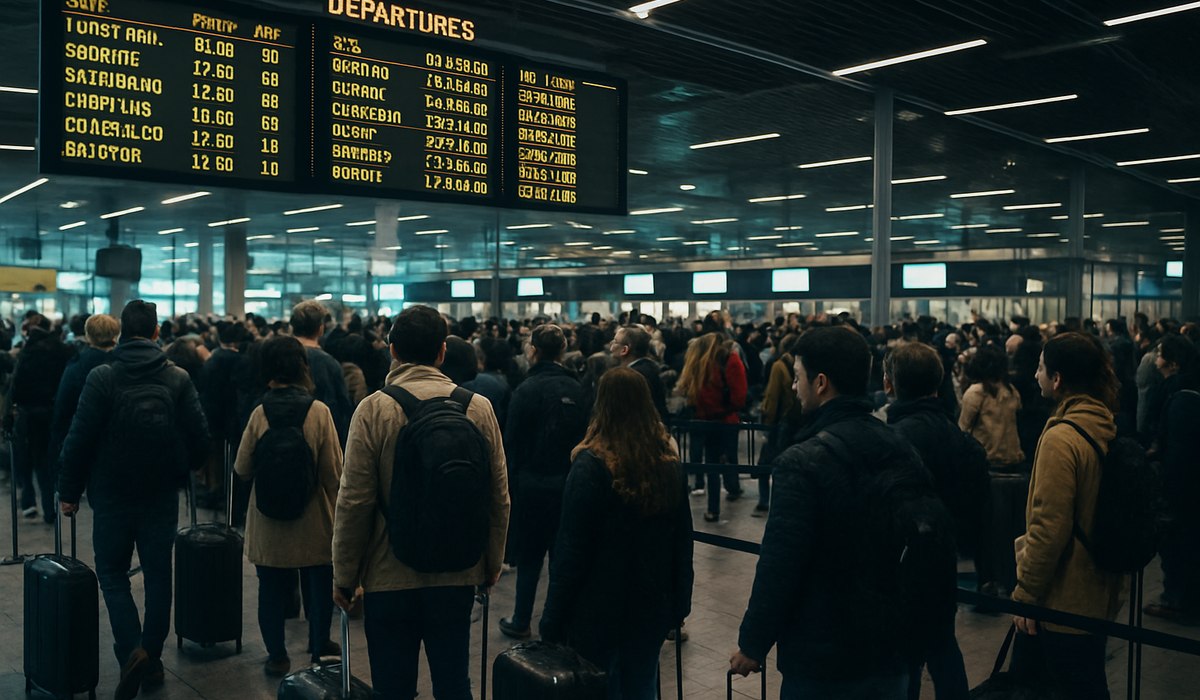
Image generated by AI
Chinese Flight Chaos Strands Hundreds Across Key Asian Hubs
Three major Chinese carriers—Xiamen Airlines, China Southern Airlines, and China United Airlines—have triggered significant travel disruptions affecting hundreds of passengers in April 2026. The carriers collectively cancelled 40 flights and delayed 342 services across Beijing, Hangzhou, and Wenzhou, China's busiest aviation corridors. Stranded passengers faced extended airport waits, missed connections, and overnight accommodation scrambles as cascading delays rippled through one of Asia's most congested airline networks. The incident underscores ongoing capacity pressures at China's major hubs and highlights the fragility of tightly scheduled domestic rotations during peak travel periods.
Airline Disruptions Ripple Through Major Chinese Cities
Operational data from aviation tracking platforms confirms that Chinese flight chaos has significantly impacted three of the country's largest carriers simultaneously. Xiamen Airlines, China Southern Airlines, and China United Airlines collectively reported 40 cancellations and 342 delayed departures and arrivals during the disruption window. The scale of disruption reflects how modern airline networks, optimized for efficiency, struggle when even modest schedule shocks occur.
Coverage from specialist aviation outlets documents passengers queuing for hours at rebooking desks while ground crews worked to untangle complex aircraft rotations. Airlines operating in China's domestic market maintain minimal schedule slack, meaning single-digit delays can cascade into network-wide disruptions within hours. The three affected carriers operate significant portions of traffic at Beijing's dual-hub system, Hangzhou Xiaoshan International Airport, and Wenzhou Longwan International Airport—making their operational challenges visible across multiple terminals simultaneously.
Industry analysts note that the 40 cancellations represent roughly 2-3 percent of these carriers' daily movements, yet the 342 delays underscore how interconnected modern aviation has become. One delayed inbound flight creates a domino effect through subsequent legs, crew schedules, and connecting passenger itineraries. According to FlightAware, delay propagation in densely scheduled networks typically amplifies initial disruptions by a factor of 8-10 times.
Beijing, Hangzhou and Wenzhou Bear the Brunt
The three airports most severely impacted represent critical nodes in China's domestic aviation network. Beijing Capital International Airport and Beijing Daxing International Airport together handle over 1,100 daily flights, with China Southern Airlines and Xiamen Airlines operating major hubs at both facilities. The dual-airport system creates operational complexity, as traffic must be strategically distributed across two airfields sharing congested airspace corridors.
Hangzhou Xiaoshan International Airport serves as a focus city for multiple carriers and functions as eastern China's primary aviation gateway. During the latest disruption, Hangzhou experienced rolling delays throughout the day as late-arriving aircraft and crew scheduling constraints forced carriers to hold subsequent departures. Passengers transiting between Hangzhou and secondary cities experienced particularly acute connectivity challenges.
Wenzhou Longwan International Airport, while smaller than Hangzhou and Beijing operations, has experienced rapid traffic growth that has at times exceeded available runway and terminal capacity. The airport's positioning on regional routes connecting to Beijing and Shanghai makes it vulnerable to cascading delays originating at larger hubs. Travelers departing Wenzhou faced compounded waits as inbound aircraft from disrupted flights at Beijing and Hangzhou arrived behind schedule.
Across all three airport complexes, passengers reported 3-6 hour delays on regional routes and missed connections on longer segments. Some travelers cancelled entirely rather than risk reaching their final destinations hours behind schedule, adding further complexity to airline rebooking operations.
Cascading Delays Strain Rebooking Operations
Rebooking desks at affected airports became bottlenecks as airlines struggled to accommodate hundreds of displaced passengers. Chinese flight chaos of this scale exposes the limitations of manual rebooking processes, even as major carriers invest in digital solutions. Passengers with connections through Beijing or Hangzhou faced the most severe rebooking challenges, as primary hub capacity quickly filled with rebooked traffic.
Airlines prioritized passengers with same-day alternatives, meaning those with flexible itineraries received rebooking assistance within 2-3 hours. However, passengers requiring specific routing or those traveling during peak evening hours faced overnight airport stays or last-minute hotel arrangements. The April travel period coincides with post-holiday leisure travel in China, meaning rebooking alternatives across competing carriers were limited.
Xiamen Airlines, operating flights through Beijing Daxing, faced particular complexity due to that airport's relatively newer operational systems. China Southern Airlines, with extensive Beijing Capital operations, deployed additional ground staff but still reported rebooking delays of 4+ hours. China United Airlines, operating smaller networks through Hangzhou and Wenzhou, worked with partner carriers to distribute displaced passengers across available seats.
Industry observers note that rebooking friction during large disruption events typically lasts 24-48 hours even after normal flight operations resume. Aircraft and crews require repositioning, which consumes seats that might otherwise accommodate standby passengers. Peak evening departure windows at Beijing and Hangzhou became completely oversold within hours of schedule resumption.
Network Capacity Pressures Drive Schedule Shocks
Structural analysis of China's domestic aviation capacity reveals that major carriers operate near maximum efficiency levels across peak hours. The Chinese flight chaos observed in April represents not an isolated incident but rather a symptom of broader network constraints. When weather, airspace restrictions, or crew scheduling conflicts compress available capacity, even modest disruptions amplify across the system.
Beijing's dual-airport configuration was designed to reduce congestion, yet combined operations at Capital and Daxing airports still approach saturation during peak periods. Military airspace restrictions in key corridors funnel civilian traffic through limited routes, creating natural congestion points. Flow control measures—government-directed capacity reductions—further compress available departure slots when traffic demand exceeds safe airspace capacity.
Hangzhou's single-airport configuration means that any capacity constraint immediately affects the entire eastern China region. Wenzhou's rapid growth in recent years has outpaced infrastructure development, creating persistent schedule vulnerabilities. When aircraft arriving from disrupted originating airports (Beijing or Hangzhou) create cascading delays at Wenzhou, limited alternative routings exist for affected passengers.
Analysts recommend that Chinese aviation authorities prioritize flexible slot swapping mechanisms and enhanced contingency planning to create additional resilience. Current rigid slot allocation systems prevent carriers from quickly rebalancing traffic in response to disruptions. Enhanced coordination between Xiamen Airlines, China Southern Airlines, and China United Airlines during large-scale disruptions could reduce passenger impact by 20-30 percent, according to industry modeling.
| Metric | Value | Impact |
|---|---|---|
| Flights Cancelled | 40 | 1,200-1,600 displaced passengers |
| Services Delayed | 342 | 8,000-10,000 affected passengers |
| Primary Airports | Beijing, Hangzhou, Wenzhou | Regional connectivity disrupted |
| Affected Carriers | Xiamen, China Southern, China United | Network-wide cascading delays |
| Average Delay Duration | 3-6 hours | Missed connections, hotel costs |
| Peak Disruption Window | 0800-2000 local time | Evening flights most affected |
| Expected Recovery Period | 24-48 hours | Crew/aircraft repositioning required |
What This Means for Travelers
Understanding Chinese flight chaos dynamics helps travelers make informed decisions during disruption events. If you're planning travel through Beijing, Hangzhou, or Wenzhou during busy periods, implement these protective strategies:
-
Book flights with maximum connection time—Allow 3+ hours between segments through major hubs, as connection buffers absorb minor delays without requiring rebooking.
-
Purchase airline disruption insurance—Airline-administered delay waiver programs provide hotel reimbursement and meal vouchers, whereas standard travel insurance often excludes schedule disruptions. Verify specific airline policy at booking.
Disclaimer
This article is for informational and educational purposes only. It does not constitute legal, financial, or professional advice. While we strive to provide accurate and up-to-date information, travel policies, regulations, and conditions change rapidly. Always verify information with official sources before making travel decisions. Nomad Lawyer makes no representations about the accuracy, reliability, completeness, or suitability of the information provided. Readers should consult qualified professionals for advice specific to their circumstances. The views expressed in this article are those of the author and do not necessarily reflect the views of Nomad Lawyer.
Raushan Kumar
Founder & Lead Developer
Full-stack developer with 11+ years of experience and a passionate traveller. Raushan built Nomad Lawyer from the ground up with a vision to create the best travel and law experience on the web.
Learn more about our team →