
Runway Closure SFO: 6-Month Disruption Cuts Bay Area Airport Capacity in 2026
San Francisco International Airport's runway closure SFO impacts Bay Area travel through October 2026. Combined with new [FAA](https://www.faa.gov) landing restrictions, the airport faces a one-third reduction in arrival capacity, disrupting thousands of passengers.

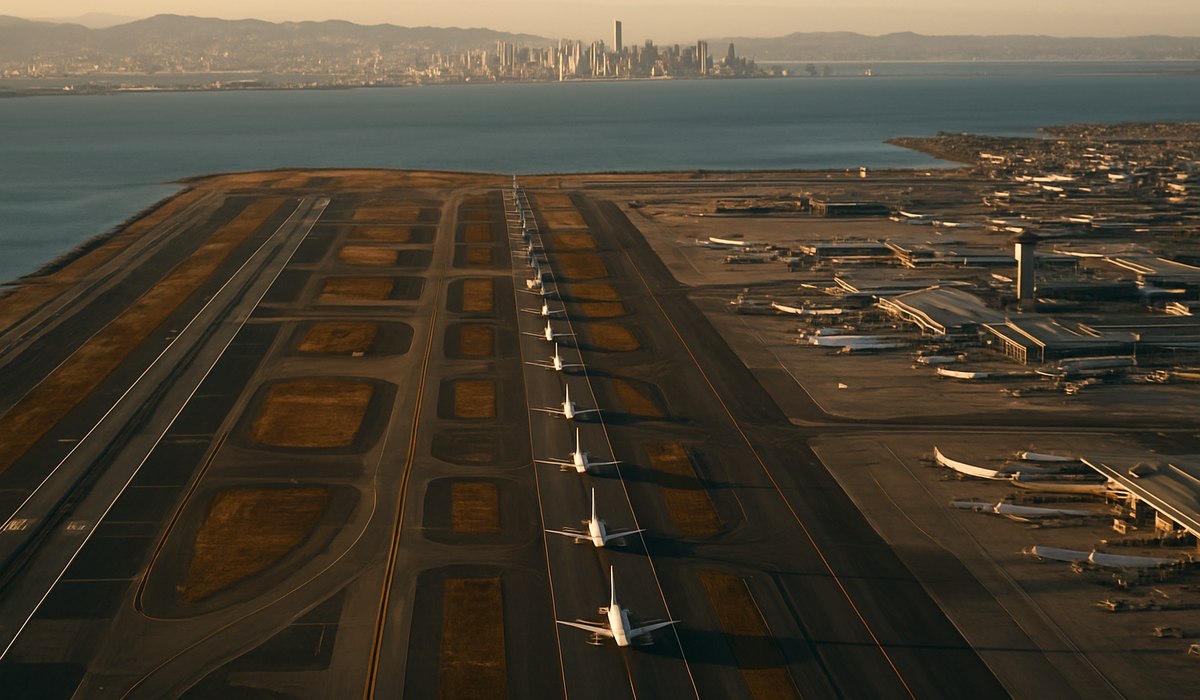
Image generated by AI
Runway Closure SFO Creates Perfect Storm for Bay Area Air Travel Disruptions
San Francisco International Airport faces a dual capacity crisis through early October 2026, combining a six-month runway closure with new Federal Aviation Administration landing restrictions that will reduce hourly arrivals by approximately one-third. Beginning March 30, 2026, the closure of Runway 1R/19L for critical infrastructure modernization coincides with stricter FAA operating limits on parallel landings, creating unprecedented constraints for Bay Area air travelers. The convergence of these two factors will trigger widespread flight delays, schedule adjustments, and traffic diversions across Northern California's aviation network.
Runway 1R Closure Cuts Capacity Through Early October
Runway 1R/19L will remain completely closed from March 30 through October 2, 2026, for a $180–200 million comprehensive rehabilitation project. This north-south runway, positioned on the airport's eastern side near Highway 101, serves as a critical operational asset during peak travel periods and challenging weather conditions. The six-month project encompasses full pavement rehabilitation, lighting system upgrades, drainage improvements, and taxiway connection enhancements required for modern aircraft operations.
During construction, Runway 1L will operate in limited capacity as a taxiway serving the work zone, further reducing aircraft movement flexibility. San Francisco typically relies on this runway pair to manage peak traffic efficiently, and the closure eliminates crucial operational alternatives during wind pattern changes. The Federal Aviation Administration has provided grant support for this modernization initiative, which airport planning documents characterize as time-sensitive and safety-critical work that must occur between peak travel seasons.
Industry analysts estimate that the runway closure alone reduces airport capacity by approximately 15–20 percent during normal operations. When combined with wind restrictions or weather-related runway preference changes, the constraint becomes significantly more pronounced. Learn more about airport modernization projects.
New FAA Landing Rules Reduce Arrivals by One-Third
The Federal Aviation Administration has implemented stricter safety parameters for closely spaced parallel landings on Runways 28L and 28R, the primary westbound arrival corridors serving San Francisco Bay. Previous operations permitted simultaneous side-by-side landings supporting approximately 54 arriving flights per hour during optimal conditions. New FAA protocols cap arrivals at roughly 36 flights per hour, representing a 33 percent reduction in peak arrival capacity.
This regulatory change reflects updated risk assessments for complex Bay Area airspace and reduced operational flexibility caused by the temporary loss of Runway 1R. Aviation safety officials determined that previous landing spacing intervals required adjustment to maintain safety margins consistent with modern air traffic management standards. The FAA noted that some form of arrival constraint tied to updated safety parameters will likely persist even after Runway 1R returns to service in October 2026.
The combination of physical runway capacity loss and regulatory landing restrictions creates a compounding effect on airport operations. Terminals, gates, and ground support infrastructure designed for higher traffic volumes will operate significantly below normal throughput. [Review FAA guidance on airport operations](https://www.faa.gov/).
Impact on Bay Area Air Travel and Passenger Alternatives
The runway closure SFO effects will be felt across the entire Northern California aviation network. Industry forecasts predict that approximately 25 percent of arriving flights will experience ground holds exceeding 30 minutes during peak periods, particularly during morning and evening departure banks when runway constraints are most acute. Low-visibility weather conditions and strong wind patterns will further exacerbate delays by limiting available runway configurations.
Airlines operating major hubs at San Francisco are implementing proactive schedule management strategies, including aircraft type substitutions and strategic rerouting through alternative West Coast gateways. Los Angeles International Airport, Seattle-Tacoma International, and Denver International will absorb displaced traffic during the construction period. Several carriers have already announced reduced San Francisco frequency for certain routes, with service shifted to secondary hubs in California and the Pacific Northwest.
Oakland International and San Jose International airports are positioning themselves to capture incremental traffic during the disruption window, mirroring capacity-relief patterns from previous San Francisco construction cycles. Business and leisure travelers should anticipate price volatility on Bay Area routes as airlines adjust schedules and demand management strategies. Connection planning through San Francisco requires additional buffer time of 60–90 minutes beyond normal connecting procedures.
Nomad professionals and remote workers based in Northern California should evaluate travel timing carefully and consider departing from Oakland or San Jose when possible. Premium cabin availability will tighten considerably during this period as business travelers adjust routing strategies.
Timeline and Modernization Project Details
The Runway 1R infrastructure project represents phase two of San Francisco International Airport's multi-year capital modernization program. Contract awards and budget approvals date to 2025, with planning documents indicating the project completion is essential for supporting long-term capacity growth. The work schedule was specifically designed to conclude before the October peak travel season, minimizing disruption to Thanksgiving and winter holiday operations.
Project components include full pavement reconstruction addressing surface deterioration, installation of modern lighting systems compatible with next-generation aircraft navigation systems, and drainage infrastructure replacement. Taxiway connectivity improvements will enhance ground movement efficiency once the runway returns to service. The $180–200 million budget reflects Bay Area construction costs and specialized airport work requirements.
Airport commission materials emphasize the compressed timeline and safety-critical nature of the project. Construction activities occur 24/7 with specialized equipment and crews working in defined zones to maintain airfield safety. Weather delays could potentially extend the October 2 completion target, though project managers are implementing weather contingencies.
Post-closure operations will feature updated runway performance metrics and enhanced safety capabilities, supporting approximately 10–15 percent future capacity growth compared with pre-2026 configurations. The modernized facilities will accommodate larger aircraft types and improved turnaround procedures.
Capacity Impact Summary: Key Data
| Metric | Pre-Closure Baseline | During Runway Closure | Impact Percentage |
|---|---|---|---|
| Peak Hour Arrivals | 54 flights | 36 flights | -33% |
| Practical Runway Configurations | 4 primary | 2 primary | -50% |
| Available Runway Pairs | 3 pairs | 2 pairs | -33% |
| Project Duration | — | 185 days | March 30–Oct 2 |
| Project Cost Estimate | — | $180–200M | FAA grant-supported |
| Forecast Ground Delays (25%+ flights) | 8–12 min avg | 30–45 min avg | +250% |
| Regional Capacity Diversion | — | 15–20% to OAK/SJC | Temporary relief airports |
| Expected Operational Constraints | Minimal | High (wind/weather) | Peak periods most affected |
What This Means for Travelers
The runway closure SFO event will significantly impact Bay Area air travel through October 2026. Here are essential actions for affected passengers:
-
Book early and verify flight times – Schedule flights with 90-minute connection buffers through San Francisco and monitor airline notifications for potential schedule changes or cancellations during peak periods.
-
Consider alternative airports – Oakland International and San Jose International offer viable alternatives for Bay Area travel, with potentially shorter connection times and reduced delay exposure during the construction window.
-
Purchase flexible tickets – Premium cabin fares and flexible economy options will provide greater scheduling protection if your original flight experiences significant delays or schedule modifications.
-
Plan for longer connection times – Morning (6 AM–10 AM) and evening (4 PM–8 PM) departure banks face maximum constraint. Mid-day and red-eye flights may experience better reliability.
-
Monitor weather forecasts – Low-visibility conditions (fog, rain) will amplify delays by limiting remaining runway options. Check conditions 3–5 days before travel and prepare
Disclaimer
This article is for informational and educational purposes only. It does not constitute legal, financial, or professional advice. While we strive to provide accurate and up-to-date information, travel policies, regulations, and conditions change rapidly. Always verify information with official sources before making travel decisions. Nomad Lawyer makes no representations about the accuracy, reliability, completeness, or suitability of the information provided. Readers should consult qualified professionals for advice specific to their circumstances. The views expressed in this article are those of the author and do not necessarily reflect the views of Nomad Lawyer.
Kunal K Choudhary
Co-Founder & Contributor
A passionate traveller and tech enthusiast. Kunal contributes to the vision and growth of Nomad Lawyer, bringing fresh perspectives and driving the community forward.
Learn more about our team →