
Virgin Australia Emergency Landing: Onboard Vape Fire Proves Aviation Safety Systems Work as Designed
Virgin Australia flight VA328 from Brisbane to Melbourne declared an urgency call after a passenger's lithium-ion vape device ignited during descent on March 15, 2026. Safe landing and crew response demonstrate why aviation remains the safest transportation mode.

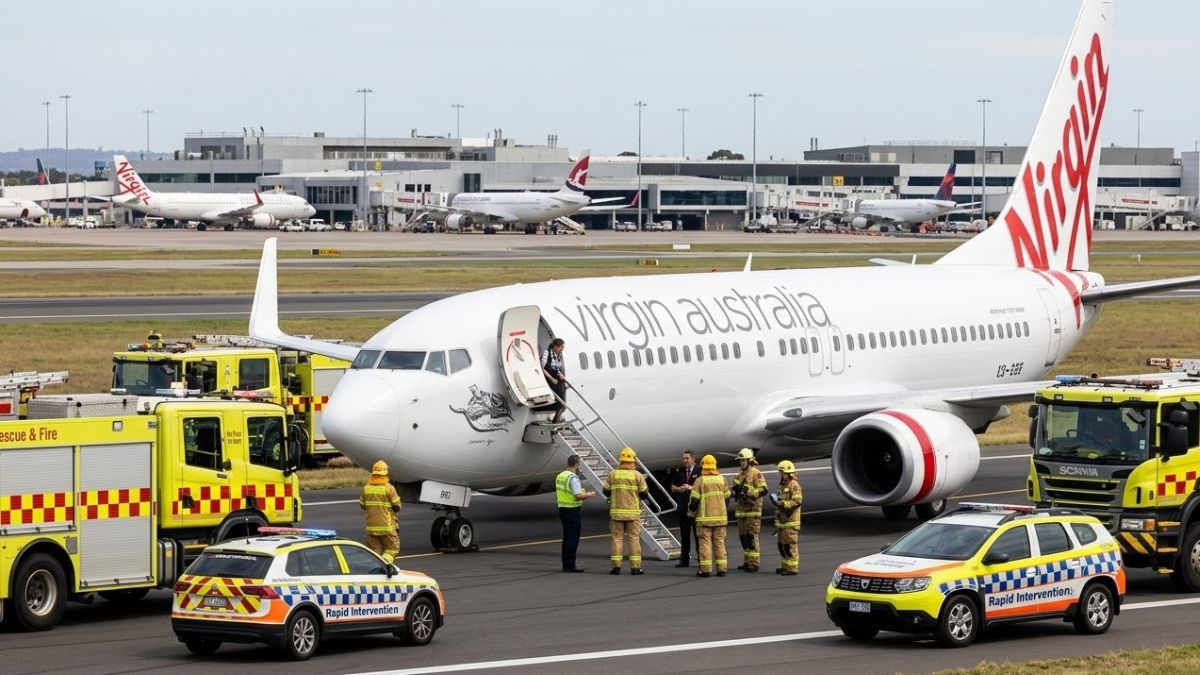
Image generated with AI
Quick Summary
- Virgin Australia flight VA328 (Brisbane–Melbourne, Boeing 737-800) declared PAN urgency call on March 15, 2026 after passenger's lithium-ion vape device ignited in cabin during descent
- Crew response: Cabin staff immediately located and secured burning device; pilots prioritized Melbourne landing over diversion; no injuries reported, all 180+ passengers disembarked safely at gate
- Emergency protocols: Melbourne Airport fire crews met aircraft on tarmac, boarded to cool device, confirmed containment — demonstration of how aviation safety systems respond to modern traveler-device risks
- Broader context: Lithium-ion battery incidents remain rare but increasingly common as travelers carry more personal electronics; Virgin Australia, CASA (Civil Aviation Safety Authority), and global airlines continuously refine device-carriage regulations
Virgin Australia flight VA328 executed a textbook emergency response on March 15, 2026, when a passenger's malfunctioning lithium-ion vape device ignited in the cabin during the aircraft's descent toward Melbourne Airport. The Boeing 737-800 declared a PAN (Possible Assistance Needed) urgency call — the recognized signal for priority handling without immediate danger — allowing pilots to continue the approach while Melbourne Airport positioned fire and rescue services.
The safe landing, rapid crew containment, and coordinated emergency response validated decades of aviation safety protocol development. All 180+ passengers disembarked normally at the gate with zero injuries, transforming a potentially serious incident into a powerful reminder of why aviation remains the world's safest transportation mode.
How the Emergency Unfolded at 15,000 Feet
As VA328 descended toward Melbourne on Sunday afternoon, cabin crew detected visible smoke and chemical odor emanating from a passenger's seat row. Flight attendants immediately initiated cabin crew emergency procedures, locating the source as a burning vape device powered by a lithium-ion battery.
Witnesses described a brief period of visible smoke before crew members swiftly moved through the aisle, deploying fire-resistant gloves and specialized containment equipment designed specifically for lithium-ion device fires. The malfunctioning vape was secured in a fireproof containment pouch — standard equipment on all Virgin Australia aircraft.
The PAN Call Decision
Rather than declaring a full MAYDAY emergency (indicating immediate danger), the flight crew transmitted a PAN call to Melbourne Air Traffic Control. This signals priority handling while accurately reflecting the situation: the fire was contained by crew action, and the aircraft remained safe to fly.
This decision reflected both crew assessment and proximity to destination. Melbourne Airport lay just 12-15 minutes ahead. Continuing the approach minimized disruption to downstream flights and passenger connections while maintaining absolute safety priority.
Ground Emergency Response: Every System Engaged
As VA328 touched down at Melbourne Airport, Aviation Rescue Firefighting Services (ARFF) and paramedics were already positioned, having received advance warning from the PAN call. Fire crews met the aircraft on the tarmac as it taxied, boarded immediately upon parking, and conducted rapid assessment and cooling procedures on the damaged vape device.
No structural damage to the aircraft was detected. No injuries among passengers or crew materialized. The device was fully cooled and secured within minutes, allowing passengers to disembark normally through the jet bridge to the terminal gate.
Melbourne Airport Authority confirmed that the Boeing 737-800 taxied under its own power and proceeded to the gate without additional incident — evidence that established coordination between airline, airport, and rescue services functioned exactly as engineered.
Why Lithium-Ion Batteries Require Special Aviation Rules
Lithium-ion batteries power modern life — smartphones, laptops, vape devices, power banks, wireless headphones. The problem: under certain failure conditions (manufacturing defects, physical damage, overcharging), these batteries enter thermal runaway — an uncontrollable exothermic reaction generating extreme heat and flammable electrolyte vapors.
On the ground, a burning lithium-ion battery can be doused with water and contained. In a sealed aircraft cabin at altitude, thermal runaway becomes catastrophically dangerous, potentially propagating to adjacent devices or causing rapid cabin pressurization changes.
International Regulations Born from History
Modern aviation regulations reflect hard lessons. The Federal Aviation Administration (FAA) and International Civil Aviation Organization (ICAO) restrict lithium-ion batteries in cargo holds (where crew cannot respond), mandate cabin-carriage only, and require airlines to train crews in device-fire response.
Australia's Civil Aviation Safety Authority (CASA) enforces strict guidelines: vape devices, power banks, and other portable electronics must remain in the cabin and accessible to crew throughout the flight.
Virgin Australia's Safety Culture: Training, Equipment, Procedure
Behind the routine disembarkation lay months of crew training and aircraft-specific preparation.
Cabin Crew Training Protocol
Virgin Australia's flight attendants undergo annual recurrent training in smoke and fire response, including:
- Device identification: Recognizing signs of lithium-ion thermal runaway (hissing sound, visible smoke, chemical odor)
- Containment techniques: Using fire-resistant gloves and specialized isolation pouches to separate burning devices from adjacent materials and oxygen sources
- Non-water extinguishing agents: Class D dry powder agents suited to lithium-ion fires (water can accelerate thermal runaway)
- Passenger communication: Reassuring travelers while maintaining emergency focus
Onboard Emergency Equipment
Boeing 737-800 aircraft operated by Virgin Australia carry:
- Fire-resistant protective gloves — rated for 800°C+ temperatures
- Specialized lithium-ion fire containment pouches — insulated containers designed to isolate burning batteries
- Dry powder fire extinguishers — Class D rated for electronic device fires
- Communication systems — Direct crew-to-ATC priority channels for emergency declarations
Pre-Flight Briefings and Signage
Every Virgin Australia flight includes standard passenger safety briefings emphasizing portable device policies. Clear cabin signage prohibits:
- Charging electronic devices during flight
- Using damaged or recalled devices
- Storing devices where they might be pinched between seats
These prevention measures form the first line of defense — most vape fires and battery incidents occur because devices are damaged, defective, or improperly stored.
The Broader Context: Battery Incidents Across Global Aviation
Virgin Australia's March 15 incident represents one data point in a growing pattern. While still statistically rare (thousands of flights daily globally carry millions of lithium-ion devices with incident frequencies below 0.001%), battery-related events do occur regularly across international fleets.
Recent examples include:
- 2025 Virgin Australia power bank fire — cabin crew extinguished device fire; aircraft continued to destination
- 2024 Qantas overhead locker incident — phone battery fire contained by crew
- Global incidents: FAA and EASA data record increased lithium-ion device incidents correlating with rising personal electronics adoption
The Industry Response
Airlines worldwide have responded with:
- Enhanced crew training — all carriers now mandate lithium-ion fire response procedures
- Improved equipment — specialized containment pouches now standard on all aircraft
- Stricter carriage rules — tightened restrictions on large power banks and non-standard devices
- Passenger communication — explicit education on device safety during boarding briefings
ICAO and the FAA continue refining guidance as battery technology evolves and consumer adoption expands.
Why This Story Matters for Travelers
For business travelers flying Brisbane–Melbourne weekly, leisure tourists exploring Australian cities, and international visitors connecting through Australian hubs, the VA328 incident carries important takeaways:
- Aviation safety systems work. When incidents occur, multiple layers of prevention, training, detection, and response activate automatically.
- Crew training matters. The professionalism and rapid action of Virgin Australia's flight attendants directly prevented injury or aircraft damage.
- Device safety is serious. Travelers should inspect devices before flight, avoid using damaged electronics, and follow airline guidance on device carriage and charging.
Frequently Asked Questions
Q: Was the aircraft damaged? A: No. The device was contained by crew action and specialized equipment, and fire crews confirmed zero structural damage upon landing.
Q: Are lithium-ion batteries actually dangerous on airplanes? A: Statistically, extremely rare — but yes, they require careful management. Thermal runaway represents a known risk, which is why airlines maintain strict carriage and crew-response procedures. Regular incidents worldwide (while still rare) justify these precautions.
Q: Can I bring my vape on a flight? A: Yes, but it must be carried in your personal cabin baggage only — never checked. The device must be properly functioning and stored where crew can access it if needed. Many airlines now require vape devices to be powered off and separated from batteries during flight.
Q: What should I do if my device shows signs of overheating? A: Immediately alert flight crew — don't wait. Remove the device from pockets or enclosed spaces. Crew can isolate and monitor the device. Never attempt to cool a lithium-ion fire with water; alert crew and allow trained personnel to respond.
Q: Will this incident change travel procedures? A: Likely not — aviation already has strict lithium-ion device protocols. The VA328 response validates that existing procedures work as designed. CASA will likely review the incident internally but may not mandate new requirements.
Q: Is Virgin Australia a safe airline? A: Yes. Virgin Australia maintains strong safety records and demonstrated excellent emergency response on VA328. The incident actually showcases safety culture working correctly — crew training, emergency procedures, and ground coordination all functioned as engineered.
Pro Tips for Safe Device Travel
- Inspect devices before flight — visible damage, dents, or battery swelling indicate potential thermal runaway risk; don't fly with compromised devices
- Keep devices powered on and in pockets/bags — never store phones or vapes between seat cushions where they could be pinched and damaged
- Follow airline guidance on charging — most airlines prohibit device charging during flight; charge before departure
- Declare damage to crew — if your device is damaged during flight, immediately alert cabin crew
- Keep devices accessible — never pack them in inaccessible locations where crew cannot reach them in emergencies
Bottom Line
Virgin Australia flight VA328 represents exactly how modern aviation should respond to emerging traveler-device risks. Comprehensive crew training, specialized onboard equipment, established emergency procedures, and coordinated airport emergency response transformed a potentially serious incident into a successful emergency resolution.
As CNN Travel and Reuters Aviation have covered extensively, lithium-ion device incidents will likely continue as travelers carry more electronics. The aviation industry's response — continuous training refinement, equipment upgrades, and procedure enhancement — keeps these rare incidents from becoming catastrophic.
For travelers planning domestic Australian flights or using Virgin Australia internationally, the March 15 incident offers reassurance: when incidents occur, aviation's multi-layered safety culture responds with professionalism, training, and coordination that has made flying statistically safer than driving despite carrying millions of portable batteries.
Fly with confidence. Crews are trained. Procedures work. Safety remains the priority.
Disclaimer
This article is for informational and educational purposes only. It does not constitute legal, financial, or professional advice. While we strive to provide accurate and up-to-date information, travel policies, regulations, and conditions change rapidly. Always verify information with official sources before making travel decisions. Nomad Lawyer makes no representations about the accuracy, reliability, completeness, or suitability of the information provided. Readers should consult qualified professionals for advice specific to their circumstances. The views expressed in this article are those of the author and do not necessarily reflect the views of Nomad Lawyer.
Preeti Gunjan
Contributor & Community Manager
A passionate traveller and community builder. Preeti helps grow the Nomad Lawyer community, fostering engagement and bringing the reader experience to life.
Learn more about our team →