
SunExpress Boeing 737-800 Medical Emergency: Flight XQ593 Declares Squawk 7700, Returns to Manchester
SunExpress Flight XQ593 declared emergency at 18,000 feet due to serious medical crisis, returned safely to Manchester Airport via Squawk 7700 protocol before resuming to Antalya.

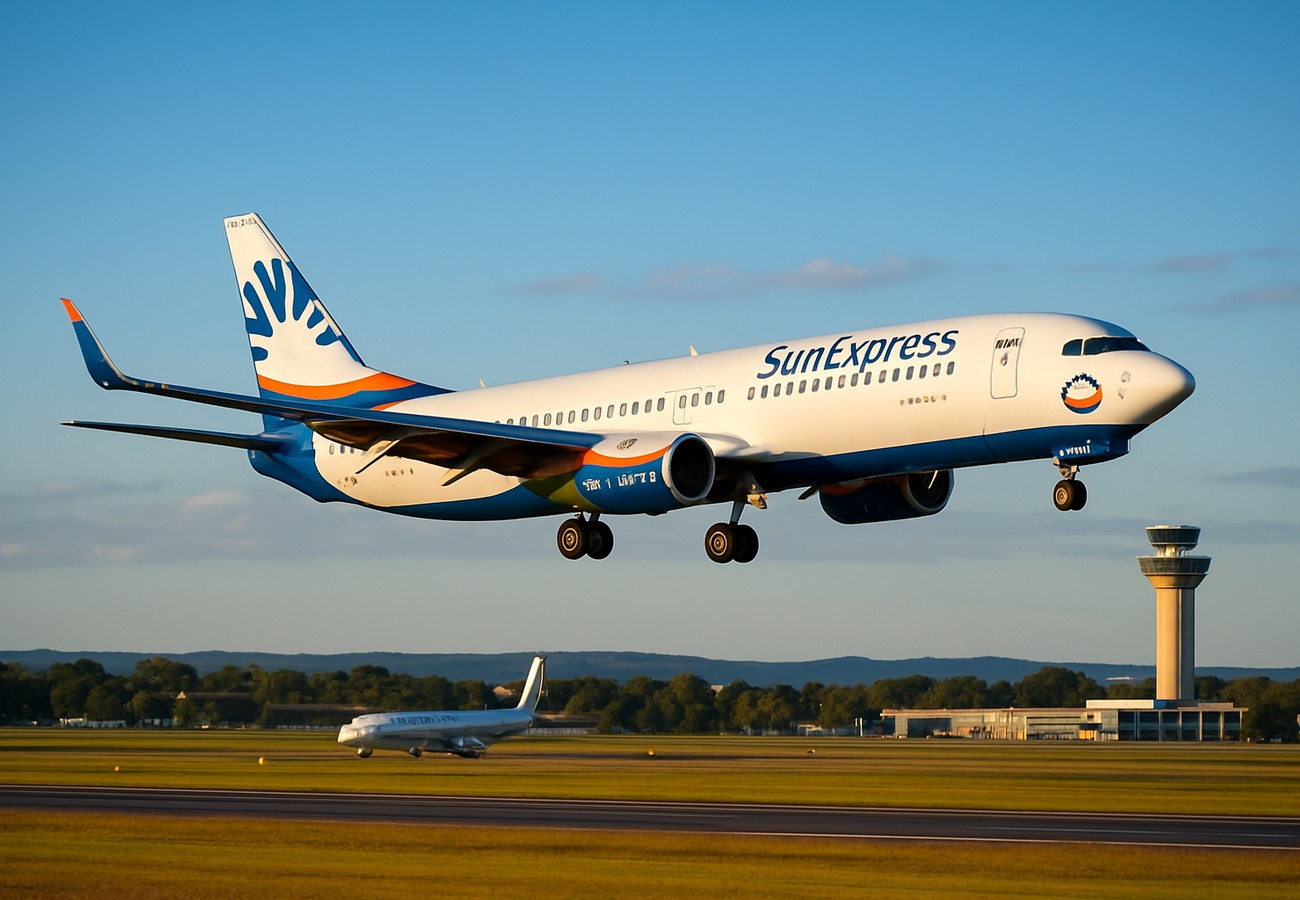
Image generated by AI
SunExpress Flight XQ593 declared a full aviation emergency and returned to Manchester Airport after a serious medical crisis unfolded in the cabin at approximately 18,000 feet. The Boeing 737-800 transmitted the internationally recognized Squawk 7700 code and landed safely within 45 minutes, with emergency services providing immediate medical intervention before the aircraft resumed its journey to Antalya, Turkey.
Why This Matters
The incident underscores how rapidly routine commercial flights can transition into critical safety scenarios and the vital importance of crew training and emergency protocols. A passenger experienced a serious medical condition that required immediate hospital-level care, forcing the flight crew to prioritize passenger welfare over schedule adherence—a decision that reflects aviation's unwavering commitment to safety standards.
This emergency response demonstrates the seamless coordination required between pilots, air traffic control, cabin crew, and ground emergency services. According to IATA (International Air Transport Association) aviation safety standards, such medical diversions are handled with zero tolerance for delay when passenger health is compromised mid-flight.
Routes and Regions in Focus
Flight XQ593 operates the popular Manchester-to-Antalya route, one of Europe's busiest leisure travel corridors connecting the UK to Turkey's Mediterranean coast. Antalya remains a premier destination for British holidaymakers, with consistent year-round demand for charter and scheduled services.
The diversion highlighted the critical infrastructure at Manchester Airport, which maintains 24/7 emergency response capabilities and coordinates with regional NHS trusts for rapid medical transfers. This incident reinforces why major UK regional airports invest heavily in emergency preparedness protocols.
| Metric | Details |
|---|---|
| Aircraft Type | Boeing 737-800 |
| Flight Number | XQ593 |
| Departure Airport | Manchester (MAN) |
| Intended Destination | Antalya (AYT) |
| Emergency Altitude | ~18,000 feet |
| Emergency Code | Squawk 7700 |
| Return Time | ~45 minutes |
| Departure Time | 1:33 PM BST |
| Landing Time | 2:18 PM BST |
| Landing Runway | 23R |
| Outcome | Safe landing, medical intervention, flight resumed |
What Travelers Get
- Immediate medical response: Emergency services positioned on standby before landing, with ambulances boarding within moments of aircraft arrival.
- Crew professionalism: Cabin staff stabilized the passenger using onboard medical kits while pilots coordinated with air traffic control for priority handling.
- Flight resumption: After medical clearance and aircraft inspection, Flight XQ593 continued to Antalya with remaining passengers, minimizing overall travel disruption.
- Overweight landing protocol: The Boeing 737-800 executed a safe overweight landing by adjusting approach speed and descent profile, with engineers conducting post-landing structural inspections.
- Real-time coordination: Air traffic control cleared Runway 23R immediately, demonstrating seamless ground-air communication during high-pressure situations.
What This Means for Travelers
Passengers on SunExpress and other carriers should understand that medical emergencies triggering immediate diversions reflect aviation's safety-first culture, not operational failure. Crew training in first aid and emergency response is extensive, yet certain conditions—cardiac distress, severe respiratory complications, or acute neurological events—require hospital-level intervention that cannot be provided in-flight. If you experience health concerns before or during travel, inform cabin crew immediately; modern aircraft are equipped with defibrillators, oxygen systems, and communication links to ground medical coordinators. Flight delays caused by medical emergencies are unavoidable and necessary, prioritizing passenger welfare over schedule adherence.
FAQ: SunExpress Emergency Landing Manchester 2026
Q: What does Squawk 7700 mean? A: Squawk 7700 is the internationally recognized emergency code transmitted by pilots to air traffic control, signaling a full emergency situation requiring immediate priority handling, runway clearance, and emergency service positioning.
Q: Why did the aircraft need to perform an overweight landing? A: The Boeing 737-800 had climbed to only 18,000 feet before the emergency was declared, meaning insufficient fuel had been consumed to reach standard landing weight. Pilots adjusted approach speed and descent profile to safely manage the overweight condition.
Q: Did the flight eventually reach Antalya? A: Yes. After medical intervention at Manchester Airport, the aircraft underwent structural inspection, and Flight XQ593 resumed its journey to Antalya with remaining passengers once cleared for continued operation.
Related Travel Guides
Disclaimer
This article is for informational and educational purposes only. It does not constitute legal, financial, or professional advice. While we strive to provide accurate and up-to-date information, travel policies, regulations, and conditions change rapidly. Always verify information with official sources before making travel decisions. Nomad Lawyer makes no representations about the accuracy, reliability, completeness, or suitability of the information provided. Readers should consult qualified professionals for advice specific to their circumstances. The views expressed in this article are those of the author and do not necessarily reflect the views of Nomad Lawyer.
Kunal K Choudhary
Co-Founder & Contributor
A passionate traveller and tech enthusiast. Kunal contributes to the vision and growth of Nomad Lawyer, bringing fresh perspectives and driving the community forward.
Learn more about our team →