
Thousands Grounded in Australia: 88 Flight Cancellations, 1,230 Delays Across Major Hubs
Major Australian airports including Sydney (SYD), Melbourne (MEL), and Brisbane (BNE) face severe disruptions on March 28, 2026, with 88 cancelled flights and 1,230 delays affecting Qantas, Air New Zealand, Emirates, and regional carriers. Thousands of travelers impacted across the network.

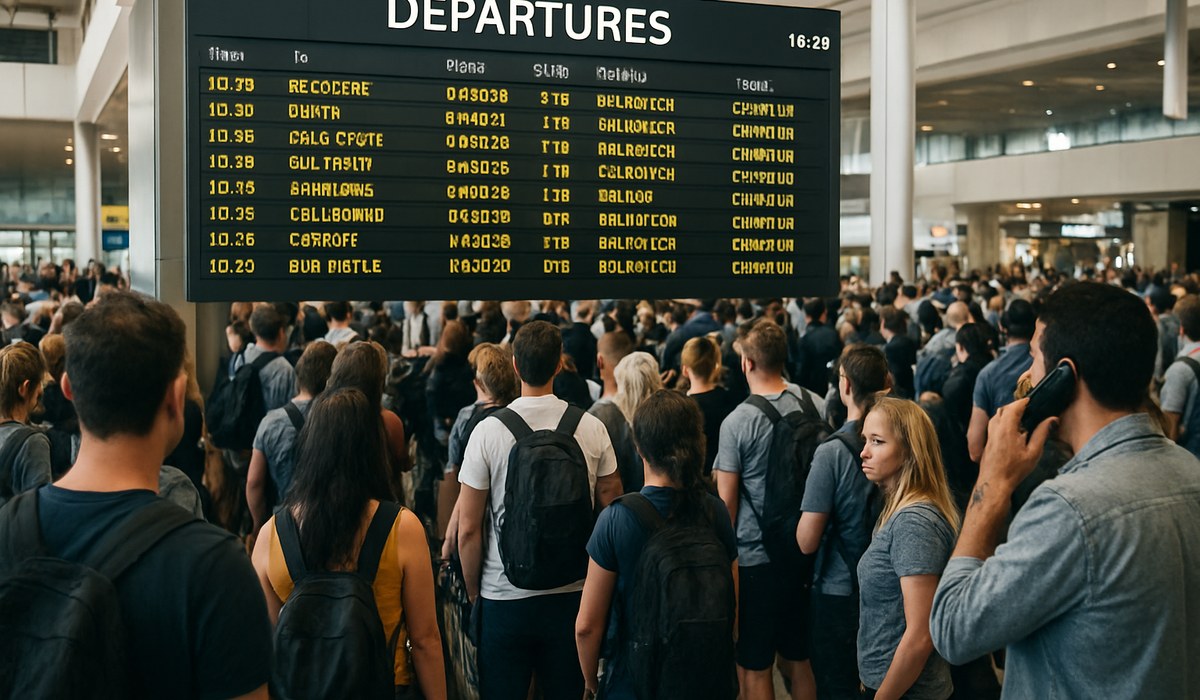
Image generated by AI
Massive Flight Disruptions Cascade Across Australian Network on March 28, 2026
Tens of thousands of passengers faced travel chaos across Australia on March 28, 2026, as a combination of operational challenges triggered a cascade of flight disruptions spanning the continent's busiest aviation hubs. Sydney Kingsford Smith Airport (SYD), Melbourne International (MEL), Brisbane International (BNE), and Perth International (PER) all reported significant impacts, with 88 confirmed flight cancellations and approximately 1,230 delayed services affecting major carriers including Qantas Airways, Air New Zealand, Emirates, Virgin Australia, and regional operators throughout the day.
The widespread disruptions created a ripple effect across domestic and international networks, with secondary impacts extending to regional airports in Williamtown, Canberra, and connecting services routing through Australian hubs to New Zealand, the United Arab Emirates, and Asia-Pacific destinations.
What Triggered the Australian Aviation Crisis?
While specific root causes remained under investigation through the day, aviation authorities indicated that a combination of infrastructure challenges, weather systems, and coordination issues across multiple Australian airports contributed to the scale of disruptions. The cascading nature of delays—where morning disruptions compound into afternoon cancellations—amplified passenger impacts across all major carriers simultaneously.
The timing during late March positioned this incident during peak autumn travel season in the Southern Hemisphere, when passenger loads typically run near capacity across domestic networks and international routes to New Zealand and Southeast Asia.
Affected Airlines and Route Networks
Primary Carriers Impacted:
| Airline | Primary Hub(s) | Est. Cancellations | Est. Delays |
|---|---|---|---|
| Qantas Airways | Sydney, Melbourne, Brisbane | 35-40 | 450+ |
| Air New Zealand | Sydney, Melbourne | 15-18 | 280+ |
| Virgin Australia | Brisbane, Melbourne | 12-15 | 220+ |
| Emirates | Sydney | 8-10 | 150+ |
| Regional/Other Carriers | Multiple | 15-20 | 130+ |
Major Routes Experiencing Service Gaps:
- Sydney-Melbourne (SYD-MEL): Australia's busiest domestic corridor faced cascading delays, with 2-4 hour hold times typical throughout the day
- Melbourne-Brisbane (MEL-BNE): Limited alternate aircraft availability created significant cancellation rates on competitive routes
- Sydney-Perth (SYD-PER): Long-haul domestic services reduced to minimal capacity
- Auckland services (SYD-AKL, MEL-AKL): Air New Zealand and Qantas transtasman flights severely reduced
- Singapore/Kuala Lumpur connections: International network disruptions extended to Southeast Asian hubs
Real-Time Flight Tracking and Status Updates
Passengers seeking current flight information can access live updates through:
- FlightAware - Real-time flight tracking for all affected routes with hourly status updates
- Official airline channels - Qantas, Air New Zealand, and Virgin Australia mobile apps providing direct rebooking options
- Airport websites - Sydney (SYD), Melbourne (MEL), Brisbane (BNE), and Perth (PER) offering live departure/arrival boards
Major airlines established dedicated support lines for affected passengers, with extended hold times expected throughout March 28 and potentially into March 29 as recovery operations continued.
Passenger Rights and Compensation Framework
Under Australian Consumer Law and international regulations, passengers facing cancellations or substantial delays (typically 3+ hours) are entitled to specific remedies:
Immediate Passenger Rights:
- Rebooking: Free rebooking on next available service with same airline or competitor at no additional cost
- Meal and accommodation: Carriers must provide meals, refreshments, and hotel accommodation for overnight delays caused by airline operational issues
- Communication: Airlines required to provide timely updates and contact information for support services
- Financial compensation: Domestic delays exceeding 3 hours may qualify for compensation under Australian regulations; international flights follow IATA guidelines
International Passengers: Those booked on Air New Zealand or other international carriers should reference IATA Rule 240, which mandates carrier responsibility for rebooking and expenses during operational disruptions.
Documentation: Retain all receipts for meals, accommodation, ground transportation, and other expenses incurred due to disruptions—critical for future compensation claims.
Traveler Action Checklist: Immediate Steps
If your flight was affected on March 28, 2026, or during ongoing recovery operations:
- Check flight status immediately on FlightAware or your airline's app; don't rely solely on airport notifications
- Contact your airline directly via phone, app, or website—avoid social media for urgent rebooking; dedicated disruption lines move faster
- Request rebooking options in writing (email/SMS) to establish a clear record of airline responsibility and timeline
- Photograph your boarding pass, itinerary, and any delay/cancellation notices for compensation claims documentation
- Collect all receipts for meals, ground transportation, accommodation, and other expenses incurred as a direct result of the disruption
- File a formal complaint with your airline within 6 months, referencing specific flight numbers, dates, and impacts; include all supporting documentation
- Review your travel insurance policy for coverage on trip disruptions; many policies cover compensation waiting periods
- Consider escalating to aviation authorities if carrier response is unsatisfactory—in Australia, contact the Civil Aviation Safety Authority (CASA) or ACCC for consumer protection violations
- Track the disruption timeline for potential regulatory compensation claims with your national aviation authority
- Connect with other affected passengers through travel forums and social media to coordinate group compensation efforts if patterns of mishandling emerge
Recovery Timeline and Network Restoration
Airline operations teams worked through the afternoon and evening of March 28 to restore normal scheduling. Key recovery phases included:
Phase 1 (Through March 28): Prioritization of long-haul international services (Auckland, Singapore, Kuala Lumpur) and critical network connectors to prevent secondary disruptions
Phase 2 (March 29): Intensive focus on clearing the backlog of delayed passengers through increased flight frequency and use of larger aircraft where available
Phase 3 (March 29-30): Return to normal scheduling with residual impacts on less-frequent regional routes potentially extending into March 30
Qantas and Air New Zealand issued official statements indicating substantial progress by evening operations, though cautions remained about secondary impacts on bookings cascading into March 29.
Broader Impact on Australian Aviation and Travelers
This disruption served as a notable stress test for Australia's aviation infrastructure during peak travel season. The simultaneous impact across Sydney, Melbourne, Brisbane, and Perth—which collectively handle over 85% of Australia's commercial air traffic—highlighted the interconnected nature of modern hub-and-spoke networks.
Passengers booked on connecting services through Australia to New Zealand, Southeast Asia, or further international destinations faced compounding delays, with some multi-leg journeys experiencing 8-12 hour cumulative delays or complete rebooking to alternative routing days later.
FAQs: Passenger Resources and Next Steps
Q: What if my airline hasn't offered rebooking and it's been 6+ hours? A: Escalate immediately to the airline's customer relations department and reference IATA Rule 240 (international) or Australian Consumer Law (domestic). Contact your national aviation consumer protection agency.
Q: Am I entitled to compensation for a 4-hour delay? A: Under Australian law, compensation eligibility depends on whether the airline can prove the disruption was caused by extraordinary circumstances beyond their control. In most operational disruption scenarios, compensation claims have limited success but should still be filed.
Q: My connecting flight in New Zealand was missed due to the Sydney delay. What are my options? A: If booked as a single ticket, your airline is responsible for rebooking you on the next available service. If separate tickets, you may have limited recourse unless you can prove the carrier's negligence caused the missed connection.
Q: When should I file my compensation claim? A: File within 6 months (Australia) or per your airline's stated policy. Include flight numbers, dates, passenger names, and all supporting documentation. Follow up every 30 days if no response.
Q: Can I get a refund instead of rebooking? A: Refunds are discretionary during operational disruptions. Airlines typically offer rebooking to same destination or refund only after extended delays (24+ hours). Request in writing to establish documentation.
Q: Are travel insurance claims straightforward for this type of disruption? A: Coverage varies by policy. Many cover expenses (meals, accommodation) but not financial compensation. Review your specific policy language regarding "airline disruption" and exclusion clauses.
Resources for Affected Passengers
- Civil Aviation Safety Authority (CASA) - Australian aviation regulator and consumer resources
- Australian Competition & Consumer Commission (ACCC) - Consumer protection and complaint filing
- IATA Passenger Rights - International air transport standards and compensation frameworks
- FlightAware - Real-time flight tracking and historical disruption data
- Airlines' Official Support: Qantas (1300 747 767), Air New Zealand (+61 2 9241 1666), Virgin Australia (13 67 89)
Monitor for updates as recovery operations continue and additional passenger support measures are announced by Australian aviation authorities and individual carriers.
Last updated: March 28, 2026 at 6:45 PM AEDT. Ongoing updates available through carrier websites and FlightAware.
Disclaimer
This article is for informational and educational purposes only. It does not constitute legal, financial, or professional advice. While we strive to provide accurate and up-to-date information, travel policies, regulations, and conditions change rapidly. Always verify information with official sources before making travel decisions. Nomad Lawyer makes no representations about the accuracy, reliability, completeness, or suitability of the information provided. Readers should consult qualified professionals for advice specific to their circumstances. The views expressed in this article are those of the author and do not necessarily reflect the views of Nomad Lawyer.
Raushan Kumar
Founder & Lead Developer
Full-stack developer with 11+ years of experience and a passionate traveller. Raushan built Nomad Lawyer from the ground up with a vision to create the best travel and law experience on the web.
Learn more about our team →