
Virgin Australia Deploys Massive 230-Seat Boeing 737 MAX 10 Fleet to Defeat Domestic Travel Chaos and Dominate Brisbane Corridors by 2027
Breaking airline news: Virgin Australia aggressively commits to a massive fleet of 230-seat Boeing 737 MAX 10 aircraft for late 2027, preparing to defeat travel chaos across Australian hubs.

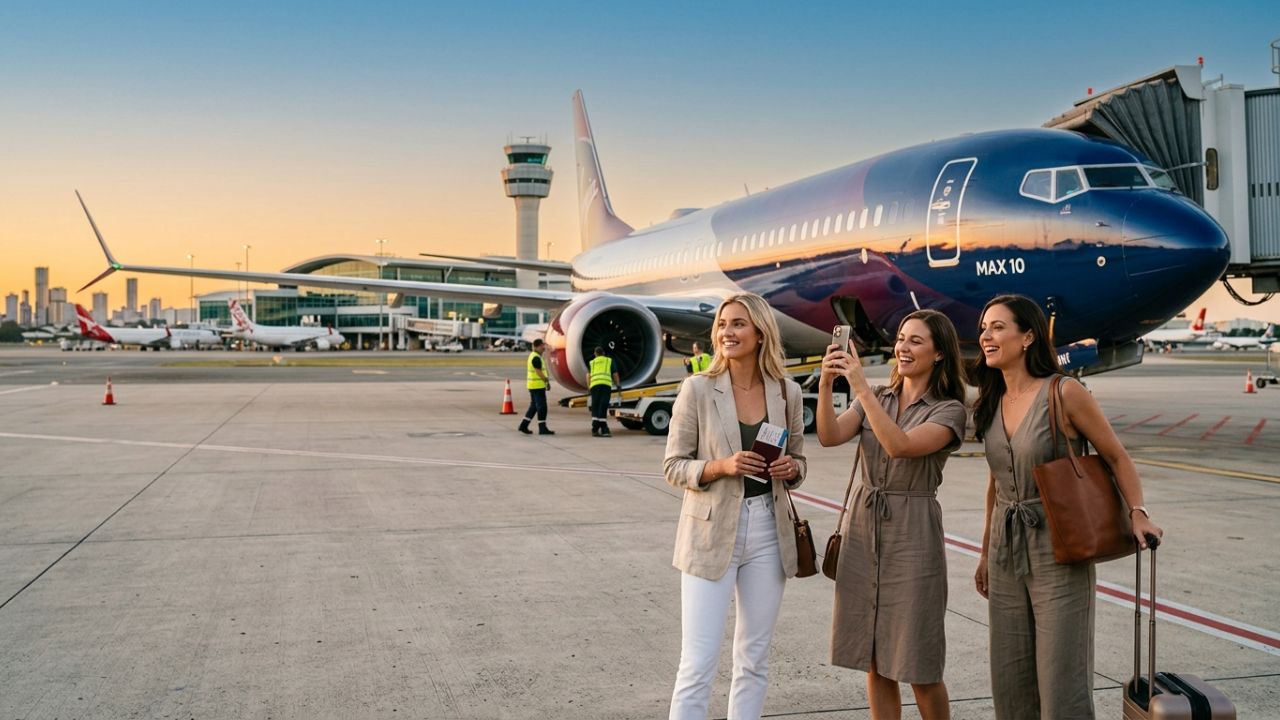
Image representing the highly strategic fleet milestone officially confirmed by Virgin Australia, announcing the late 2027 delivery of its massive 230-seat Boeing 737 MAX 10 aircraft to brutally optimize slot efficiency, defeat severe airport disruptions, and dominate high-density domestic corridors across Brisbane, Sydney, and Melbourne. (Image Credit: Australian Aviation Tracking)
Virgin Australia Deploys Massive 230-Seat Boeing 737 MAX 10 Fleet to Defeat Domestic Travel Chaos and Dominate Brisbane Corridors by 2027
A Massive Structural Shift in Australian Aviation as Virgin Commits to Boeing’s Largest Single-Aisle Aircraft to Obliterate Airport Slot Friction and Dominate Qantas
The incredibly competitive landscape of Australian domestic aviation is officially entering a brutal new phase of high-capacity optimization. According to the absolute latest breaking airline news and highly strategic aviation updates, Virgin Australia has formally confirmed a massive fleet milestone that will structurally reshape the entire Asia-Pacific narrowbody sector. The airline has officially announced it is set to receive its first highly advanced Boeing 737 MAX 10 strictly in late 2027. This massively critical delivery marks the absolute introduction of Boeing’s largest single-aisle aircraft directly into Virgin's operations. This is not simply a routine fleet replacement; this is an aggressive deployment of a 230-seat operational weapon specifically designed to defeat the agonizing travel chaos currently plaguing Australia's incredibly congested hubs. By utilizing massive passenger density rather than desperate flight frequency, Virgin Australia is preparing to entirely bypass the severe airport disruptions that trigger cascading delays across Brisbane, Sydney, Melbourne, and Perth.
What the traveling public and many industry observers are severely underestimating is how deeply this late 2027 delivery timeline is tied to the brutal realities of modern aviation. Airlines are currently locked in a desperate battle against extreme airport slot limitations, incredibly rigid certification delays, and massive long-term sustainability targets. As post-pandemic travel demand violently rebounds across domestic and short-haul international corridors, the traditional model of merely throwing more small aircraft at the problem mathematically guarantees devastating flight cancellations. Virgin Australia’s strategic acquisition of the MAX 10 represents a highly sophisticated structural reset, allowing the airline to radically shift capacity planning and aggressively redefine efficiency benchmarks in direct combat with regional rivals.
Section-Wise Breakdown: The Architecture of the MAX 10 Strategy
The highly detailed operational and engineering data definitively exposes exactly how Virgin Australia plans to weaponize this massive Boeing aircraft:
The 2027 Boeing 737 MAX 10 Delivery Timeline Virgin Australia has formally outlined an incredibly clear expectation that its first Boeing 737 MAX 10 will arrive in late 2027, instantly positioning the massive aircraft as the absolute cornerstone of its next-generation fleet strategy. The airline currently holds ten firm orders for the variant, reflecting a highly calculated and deliberate expansion approach. This specific timeline provides one of the clearest operational signals yet regarding how mid-size carriers intend to manage capacity growth in a highly constrained environment. Virgin explicitly expects to deploy the MAX 10 on incredibly high-demand domestic corridors, specifically those operating out of Sydney Airport (SYD), Brisbane, and Melbourne. Because these specific airports continue to experience agonizing peak-hour congestion and severe slot limitations, integrating higher-capacity narrowbody aircraft provides a massive strategic advantage. It allows Virgin to drastically increase passenger throughput without triggering the systemic airport disruptions caused by adding unnecessary flights to a saturated tarmac.
Engineering the Ultimate High-Density Route Weapon The absolute physical scale of the Boeing 737 MAX 10 defines its massive operational value. Standing as the largest variant in the entire 737 family, the aircraft features an immense length of 143 feet 8 inches and is specifically designed to carry up to 230 passengers in highly aggressive, high-density layouts. Powered by incredibly advanced CFM LEAP-1B engines, the aircraft delivers significantly improved fuel efficiency. Boasting a massive range of approximately 3,300 nautical miles, the MAX 10 is perfectly suited for both domestic Australian trunk routes and highly lucrative short-haul international sectors across the Asia-Pacific. For Virgin Australia, this translates to absolute flexibility in perfectly matching aircraft size to volatile route demand, completely buffering the airline against seasonal travel chaos.
The FAA Certification Bottleneck and Fleet Planning Friction However, a massive regulatory shadow hangs over this fleet integration. Despite immense airline interest globally, the Boeing 737 MAX 10 remains officially uncertified, actively awaiting final validation from the United States Federal Aviation Administration (FAA). This massive regulatory bottleneck has severely delayed entry into service across multiple global carriers. Because the certification process has become incredibly stringent following industry-wide safety reforms, airlines like Virgin Australia are forced to manage immense planning uncertainty. Older aircraft may be forced to remain in service vastly longer than originally planned to prevent sudden flight cancellations, creating immense operational cost pressures. This delay is heavily reshaping global leasing markets and narrowbody resale values.
Fleet Integration Details: The Factual Virgin Australia Boeing 737 MAX 10 Matrix
To provide exact, factual clarity on the immense operational scale of this highly anticipated fleet integration, aviation analysts have mapped the specific engineering and strategic parameters. The following factual matrix details the precise breakdown of the MAX 10 acquisition:
Factual Virgin Australia Boeing 737 MAX 10 Fleet Integration Matrix
| Aircraft / Operational Metric | Factual Strategic Detail |
|---|---|
| Airline Operator | Virgin Australia |
| Aircraft Model | Boeing 737 MAX 10 (Largest 737 Variant) |
| Firm Orders Secured | 10 Firm Orders |
| Expected Delivery Date | Late 2027 |
| Maximum Seat Capacity | Up to 230 passengers (High-density layout) |
| Aircraft Dimensions | Length: 143 feet 8 inches |
| Engine Specifications | CFM LEAP-1B engines |
| Operational Range | Approximately 3,300 nautical miles |
| Fuel Efficiency Gain | Approx. 20% lower fuel burn vs. older generations |
| Target Hub Deployments | Sydney (SYD), Brisbane, Melbourne, Perth |
Data reflects the confirmed firm orders, engineering specifications, and strategic delivery timelines officially recorded for Virgin Australia's fleet expansion. (Source: Australian Aviation Tracking)
Passenger Impact: Bypassing Slot Constraints to Ensure Reliability
For the Australian traveling public, the introduction of a massive 230-seat narrowbody on domestic routes radically shifts the flying experience. The post-pandemic reality is that domestic tourism and corporate travel have stabilized at a massively higher baseline. Consequently, Australian airports are consistently operating at absolute capacity limits. By restructuring its fleet to prioritize massive passenger density over high frequency, Virgin Australia physically guarantees more seats are available during highly contested peak hours. This ensures that a single flight delay doesn't result in massive passenger stranding, effectively providing a highly reliable buffer against the excruciating travel chaos that defines modern domestic flying.
Industry Analysis: Airbus Competition and the Sustainability Imperative
Aviation analysts closely monitoring the highly aggressive Asia-Pacific aviation sector note that the arrival of the MAX 10 places Boeing in direct, brutal competition with the Airbus A321neo family, which has heavily secured adoption across the region. However, Virgin Australia's decision heavily signals absolute confidence in Boeing's long-term roadmap. Furthermore, this massive strategic shift gradually reshapes competition with Qantas on key trunk routes, fundamentally redefining market share dynamics. Crucially, the MAX 10’s 20% reduction in fuel burn proves that sustainability is no longer an environmental narrative—it is a brutal financial efficiency metric required to maintain profitability in an era of intense fuel volatility.
Conclusion: Redefining the Asia-Pacific Aviation Grid
Virgin Australia’s highly anticipated deployment of the Boeing 737 MAX 10 in 2027 explicitly signals a structural transformation in how Australian aviation capacity will be fundamentally managed for the next decade. By aggressively combining higher passenger density, massive fuel efficiency, and highly tactical operational flexibility, Virgin is ensuring it remains utterly dominant in a severely tightening market.
Providing expert clarity on the global implications of this delivery, Mr. Anup Kumar Keshan, Founder and Editor-in-Chief of Travel And Tour World, explicitly stated: "The MAX 10 rollout reflects a deeper shift in global aviation strategy, where airlines are no longer competing only on routes, but on efficiency per seat and long-term sustainability alignment. Australia is becoming a critical testbed for this transformation." As the FAA certification process continues to dominate the timeline, the entire aviation sector is watching Virgin Australia prepare its ultimate high-density weapon. (Source: Australian Aviation Tracking via Nomad Lawyer)
Key Takeaways
- Massive Fleet Milestone: Virgin Australia has officially confirmed the late 2027 delivery of its very first Boeing 737 MAX 10 aircraft.
- Highest Capacity Weapon: The MAX 10 is the absolute largest variant in the 737 family, specifically designed to carry an immense 230 passengers in a high-density layout.
- Defeating Slot Friction: The aircraft will be aggressively deployed on incredibly congested trunk routes out of Sydney, Brisbane, Melbourne, and Perth to bypass airport slot limitations.
- Regulatory Bottleneck: The late 2027 timeline is heavily influenced by the fact that the MAX 10 is still actively awaiting highly stringent certification from the US FAA.
- Financial Sustainability: The aircraft delivers an incredible 20% lower fuel burn compared to older generations, embedding sustainability directly into the airline's financial efficiency model.
✈️ Frequently Asked Questions (Factual Fleet Integration Data)
Which specific aircraft is Virgin Australia integrating into its future fleet? Virgin Australia is officially preparing to receive the massive Boeing 737 MAX 10, the absolute largest single-aisle aircraft in the Boeing 737 family.
When is the first aircraft officially scheduled for delivery? Virgin Australia has outlined a clear expectation that the very first aircraft will arrive strictly in late 2027.
How many firm orders has the airline officially secured? The airline currently holds a highly strategic 10 firm orders for the Boeing 737 MAX 10 variant.
What is the absolute maximum passenger capacity of this specific aircraft? The MAX 10 is explicitly designed to carry up to an immense 230 passengers in highly aggressive, high-density layouts.
Which specific Australian airports will see the heaviest deployment of this aircraft? The MAX 10 is highly expected to be aggressively deployed on high-demand corridors operating specifically from Sydney (SYD), Brisbane, Melbourne, and Perth.
What major regulatory hurdle is currently delaying global deliveries of this aircraft? The Boeing 737 MAX 10 is currently facing a massive regulatory bottleneck as it actively awaits official certification from the United States Federal Aviation Administration (FAA).
What is the precise operational range of the MAX 10? The aircraft boasts an incredibly flexible operational range of approximately 3,300 nautical miles, making it suitable for both domestic networks and select Asia-Pacific short-haul international routes.
How does the MAX 10 directly combat the current travel chaos at Australian hubs? By moving 230 passengers per single aircraft, Virgin Australia can massively increase passenger throughput without triggering the severe airport disruptions caused by adding unnecessary flights to already congested peak-hour slots.
🌍 Related Travel Guides & Flight Resources
- Navigate Airport Disruptions Like a Pro Master the art of surviving unexpected travel chaos with our expert strategies.
- Breaking Airline News & Evasion Routes Stay ahead of the delays with our real-time aviation updates and route intelligence.
- Global Flight Cancellation Defense Grid Essential legal rights and compensation tactics when your flight goes down.
⚖️ Disclaimer
The aircraft delivery timelines, engineering specifications, and fleet planning strategies provided in this report are for informational purposes only. The specific aviation variables regarding Virgin Australia's highly anticipated fleet integration—including the late 2027 delivery of the Boeing 737 MAX 10, the 10 firm orders, the 230-passenger high-density capacity, and the pending FAA certification—are based on official airline data and aerospace engineering specifications active as of June 15, 2026. NomadLawyer does not guarantee the absolute accuracy or current validity of the regulatory certification timelines provided and assumes no liability for sudden unannounced aircraft delivery delays, related flight cancellations due to ongoing fleet constraints, or any financial consequences resulting from the use of this analytical content. Passengers are strongly advised to remain updated on official Virgin Australia fleet announcements regarding specific route capacity upgrades.
Disclaimer
This article is for informational and educational purposes only. It does not constitute legal, financial, or professional advice. While we strive to provide accurate and up-to-date information, travel policies, regulations, and conditions change rapidly. Always verify information with official sources before making travel decisions. Nomad Lawyer makes no representations about the accuracy, reliability, completeness, or suitability of the information provided. Readers should consult qualified professionals for advice specific to their circumstances. The views expressed in this article are those of the author and do not necessarily reflect the views of Nomad Lawyer.
Kunal K Choudhary
Co-Founder & Contributor
A passionate traveller and tech enthusiast. Kunal contributes to the vision and growth of Nomad Lawyer, bringing fresh perspectives and driving the community forward.
Learn more about our team →