
Virgin Australia Deploys Massive Boeing 737-10 Fleet to Defeat Domestic Travel Chaos and Prevent Flight Cancellations Across Sydney, Melbourne, Brisbane, and Perth: Latest Airline News
To combat severe domestic travel chaos, Virgin Australia prepares to inject massive capacity into its network with the late-2027 arrival of the 200-seat Boeing 737-10.

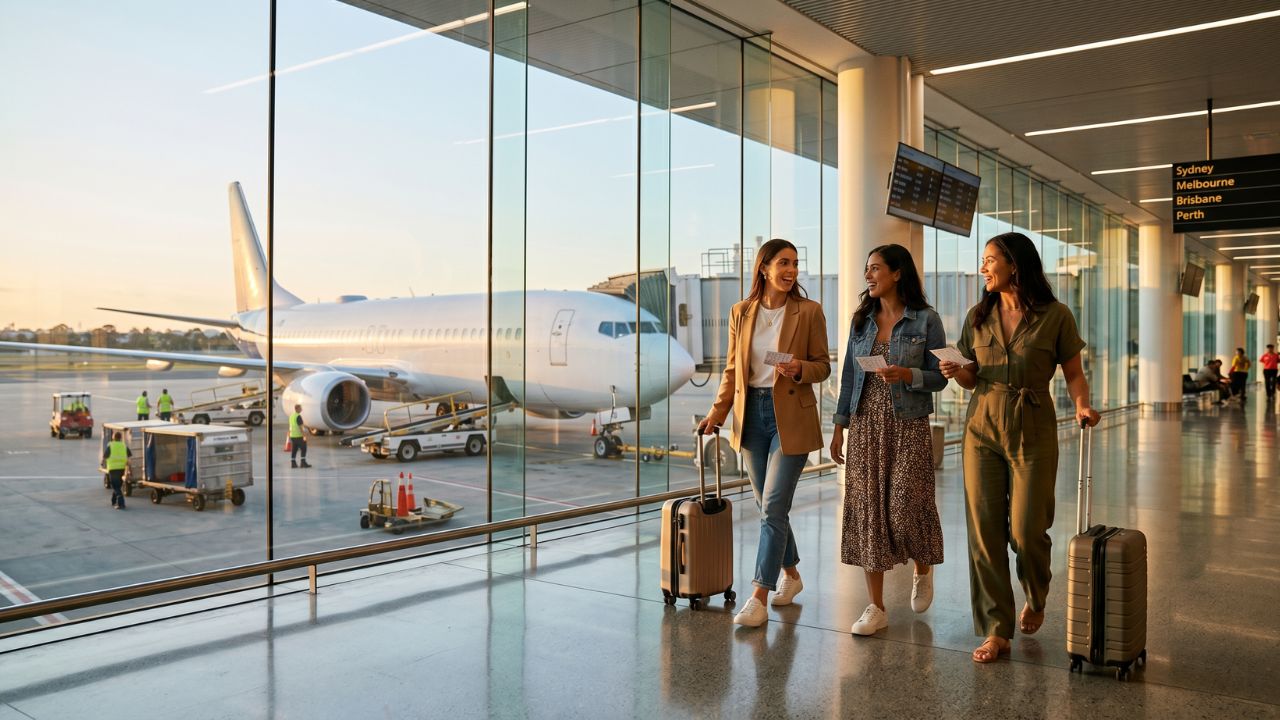
Image generated by AI
In a massive strategic maneuver designed explicitly to protect the Australian domestic network from the devastating travel chaos and rolling flight cancellations that routinely paralyze the nation's congested airspace, Virgin Australia has officially triggered a new era in high-capacity fleet operations. Confirmed on June 18, 2026, the carrier is aggressively preparing to take delivery of its first highly advanced Boeing 737-10 aircraft in late 2027. Recognizing that business commuters and leisure tourists are entirely exhausted by the severe airport disruptions that plague capacity-constrained routes between Sydney, Melbourne, Brisbane, and Perth, Virgin Australia is executing a critical narrowbody upgauging strategy. By deploying the absolute largest variant of the 737 MAX family—capable of transporting up to 200 passengers—the airline is directly fortifying its trunk routes against the operational meltdowns that trigger sudden network collapse. As panicked passengers desperately demand reliable domestic connectivity and an end to crippling aircraft shortages, this massive capacity injection stands as the premier headline in today's breaking airline news and absolutely vital global aviation updates.
By introducing direct passenger coordination and dynamic scheduling backups, the regional aviation hubs target growing passenger demand across vital commerce sectors. The choice to coordinate flight departures in phases helps to manage gate capacity, supporting the country's broader regional transportation network.
Context: Shielding the "Golden Triangle" From Network Collapse
For the millions of Australian passengers navigating the highly concentrated domestic aviation market, the sheer scale of operational bottlenecks at legacy hubs has transformed routine commuting into an absolute nightmare.
Historically, when peak seasonal demand collides with limited slot capacity at primary airports like Sydney and Melbourne (often referred to as the "Golden Triangle"), the result is instantaneous travel chaos. A single delayed narrowbody aircraft can trigger cascading flight cancellations across the entire domestic network, simply because airlines lack the spare seats to re-accommodate stranded passengers. Virgin Australia is fundamentally rewriting this dynamic with the Boeing 737-10. Instead of attempting to squeeze more low-capacity flights into failing, bottlenecked departure boards, Virgin Australia is simply deploying larger aircraft. The 737-10 will become the largest narrowbody aircraft in the Virgin Australia fleet. This strategic upgauging allows the airline to transport significantly more passengers per departure, heavily insulating the network from the sudden airport disruptions that plague older, lower-capacity operations.
To view live flight schedules, verify the active delay status of your specific itinerary, or to track active regional airspace restrictions, travelers must consult official aviation directories. For direct booking access onto these high-capacity, disruption-proof domestic corridors, travelers should aggressively utilize the official portals for Virgin Australia. To explore live flight tracking and monitor the exact severity of the regional bottlenecks causing the flight cancellations you must now actively bypass, passengers can consult the official FlightAware tracking service.
Section-Wise Breakdown of the Capacity Defense
The Sydney and Melbourne Fortress
The core of this fleet strategy targets Australia’s most congested airports. Sydney and Melbourne routinely suffer from severe capacity constraints and strict curfew hours. By deploying the 200-seat Boeing 737-10 on these routes, Virgin Australia is maximizing the yield of every single departure slot. This direct capacity injection immediately mitigates the travel chaos associated with overbooked flights and guarantees that if a disruption occurs, the airline has the sheer volume of seats required to clear the passenger backlog rapidly.
Brisbane and Perth Expansion
Beyond the Golden Triangle, the 737-10 is critical for stabilizing the vital east-west transcontinental routes. Flights to Perth require exceptional fuel efficiency and reliability. The 737-10’s improved aerodynamics ensure that Virgin Australia can transport massive passenger loads across the country without triggering the sudden, maintenance-driven flight cancellations that frequently ground older 737 variants.
Overcoming Global Certification Delays
The late-2027 delivery timeline explicitly reflects the massive global supply chain constraints and certification delays currently plaguing Boeing’s MAX 10 program. Despite these frustrating delays, Virgin Australia recognizes that waiting for this specific high-density airframe is absolutely necessary; standard 737s simply cannot provide the raw seating capacity required to defeat modern Australian airport disruptions.
Technical Roster: Virgin Australia 737-10 Integration Data
To ensure absolute factual accuracy regarding the exact parameters of this high-capacity disruption-bypass tool, the following matrix details the verified integration data for Virgin Australia's fleet modernization program:
Virgin Australia Boeing 737-10 Integration Data
| Operational Metric | Strategic Specification |
|---|---|
| Operating Airline | Virgin Australia |
| Aircraft Model | Boeing 737-10 (MAX 10 Family) |
| Official Delivery Schedule | Late 2027 |
| Maximum Passenger Capacity | Up to 200 passengers (dependent on configuration) |
| Primary Domestic Deployment | Sydney, Melbourne, Brisbane, and Perth |
| Strategic Network Objective | Fleet modernization, fuel efficiency, and capacity expansion |
Passenger Impact: Eradicating Rebooking Anxiety
For the thousands of corporate road warriors and domestic tourists desperate for reliable inter-city transit, this massive fleet upgrade completely eradicates the psychological torture of being stranded during domestic meltdowns.
The immediate passenger impact is the drastic reduction of rebooking anxiety. Currently, when a flight between Sydney and Melbourne suffers flight cancellations, passengers are trapped in severe airport disruptions because the subsequent flights only hold 170 people and are already full. By injecting the 200-seat 737-10 into the schedule, Virgin Australia is effectively adding thousands of extra seats to the daily network. This means that during peak periods—or when adverse weather temporarily halts operations—the airline possesses the physical capacity to rapidly absorb stranded passengers and get them to their destinations without forcing them into overnight terminal layovers.
Industry Analysis: The Necessity of Narrowbody Upgauging
Aviation industry analysts view Virgin Australia’s commitment to the Boeing 737-10 as definitive proof that airlines must upgauge their fleets to survive the modern era of travel chaos and constrained airport infrastructure.
Analysts note that airlines can no longer rely on simply adding frequency; airports like Sydney simply do not have the slots available. The only mathematical solution to rising demand and frequent airport disruptions is flying larger planes. Industry experts warn that airlines operating older, lower-capacity narrowbody fleets will inevitably suffer massive financial losses when airspace congestion triggers rolling flight cancellations. Conversely, operators like Virgin Australia—who leverage the extended fuselage and upgraded engines of the MAX 10—will capture the premium market share of travelers demanding disruption-proof, high-availability domestic connectivity.
Actionable Advice for Surviving Australian Gridlock
If you are navigating the highly volatile Australian domestic network, execute this strategic planning checklist to fully bypass regional travel chaos until the new fleet arrives:
- Leverage High-Frequency Corridors: When booking travel between Sydney, Melbourne, or Brisbane, always choose an airline that operates high-frequency schedules. If your specific flight suffers flight cancellations, a high-frequency operator can rebook you much faster than an airline with only two flights a day.
- Avoid the Final Flight of the Day: To bypass localized airport disruptions, never book the last flight out of Sydney or Melbourne. Curfew restrictions mean that a minor evening delay instantly transforms into a mandatory overnight cancellation.
- Monitor Aircraft Types: Once the 737-10 enters service in late 2027, actively seek out itineraries operated by this specific aircraft. The higher capacity guarantees a lower likelihood of being bumped due to overbooking during peak travel chaos.
- Pre-empt Perth Disconnects: Transcontinental flights to Perth are highly susceptible to rolling delays. Ensure you build a strict four-hour buffer if connecting in Perth to regional mining or tourism destinations.
FAQ: Virgin Australia 737-10 Operations & Travel Chaos
How is the Boeing 737-10 defeating Australian travel chaos?
By seating up to 200 passengers, the 737-10 injects massive capacity into saturated routes (Sydney, Melbourne, Brisbane, Perth), preventing the severe airport disruptions caused by passenger bottlenecks.
When will Virgin Australia take delivery of the aircraft?
Subject to Boeing's production and regulatory certification timelines, the first Boeing 737-10 delivery is officially scheduled for late 2027.
Why is Virgin Australia waiting despite global certification delays?
The MAX 10 is the largest variant of the 737 family; its superior capacity and fuel efficiency are absolutely essential to replace older aircraft and mitigate future flight cancellations without switching to widebody jets.
The Reality of Domestic Aviation Security
The historic fleet modernization strategy executed by Virgin Australia proves definitively that deploying high-capacity narrowbody aircraft is the ultimate defense against systemic physical travel chaos. By securing the 200-seat Boeing 737-10 to fortify the critical Sydney, Melbourne, Brisbane, and Perth corridors, the airline has provided domestic commuters with a heavily armored, exceptionally reliable bypass to terminal gridlock. As archaic legacy systems desperately struggle to process surging passenger volumes—triggering massive queues, rolling flight cancellations, and severe airport disruptions—travelers must accept a critical new reality: avoiding brutal travel anxiety requires airlines to aggressively upgauge their fleets to physically absorb the relentless demand of the modern aviation network.
Key Takeaways
- Massive Capacity Injection: Virgin Australia will take delivery of the Boeing 737-10 in late 2027, introducing its largest narrowbody aircraft to the fleet.
- 200-Seat Fortress: The aircraft holds up to 200 passengers, providing the raw capacity required to mitigate severe airport disruptions.
- Targeting the Core Network: The 737-10 will directly fortify high-demand trunk routes including Sydney, Melbourne, Brisbane, and Perth.
- Overcoming Boeing Delays: The late 2027 timeline reflects global certification delays affecting the MAX 10 program across the industry.
- Passenger Survival: Australian commuters must actively leverage high-capacity flights to guarantee their itineraries are protected from the travel chaos triggered by sudden flight cancellations.
Related Travel Guides
Massive Travel Chaos Paralyzes Chicago O'Hare with 1,425 Disruptions
Disclaimer
This article is for informational and educational purposes only. It does not constitute legal, financial, or professional advice. While we strive to provide accurate and up-to-date information, travel policies, regulations, and conditions change rapidly. Always verify information with official sources before making travel decisions. Nomad Lawyer makes no representations about the accuracy, reliability, completeness, or suitability of the information provided. Readers should consult qualified professionals for advice specific to their circumstances. The views expressed in this article are those of the author and do not necessarily reflect the views of Nomad Lawyer.
Kunal K Choudhary
Co-Founder & Contributor
A passionate traveller and tech enthusiast. Kunal contributes to the vision and growth of Nomad Lawyer, bringing fresh perspectives and driving the community forward.
Learn more about our team →