
Vietnam Overtakes Thailand as Southeast Asia's Second-Largest Aviation Market in 2026
Vietnam has surpassed Thailand in scheduled commercial seat capacity, signaling a major shift in ASEAN aviation dynamics and tourism flows.

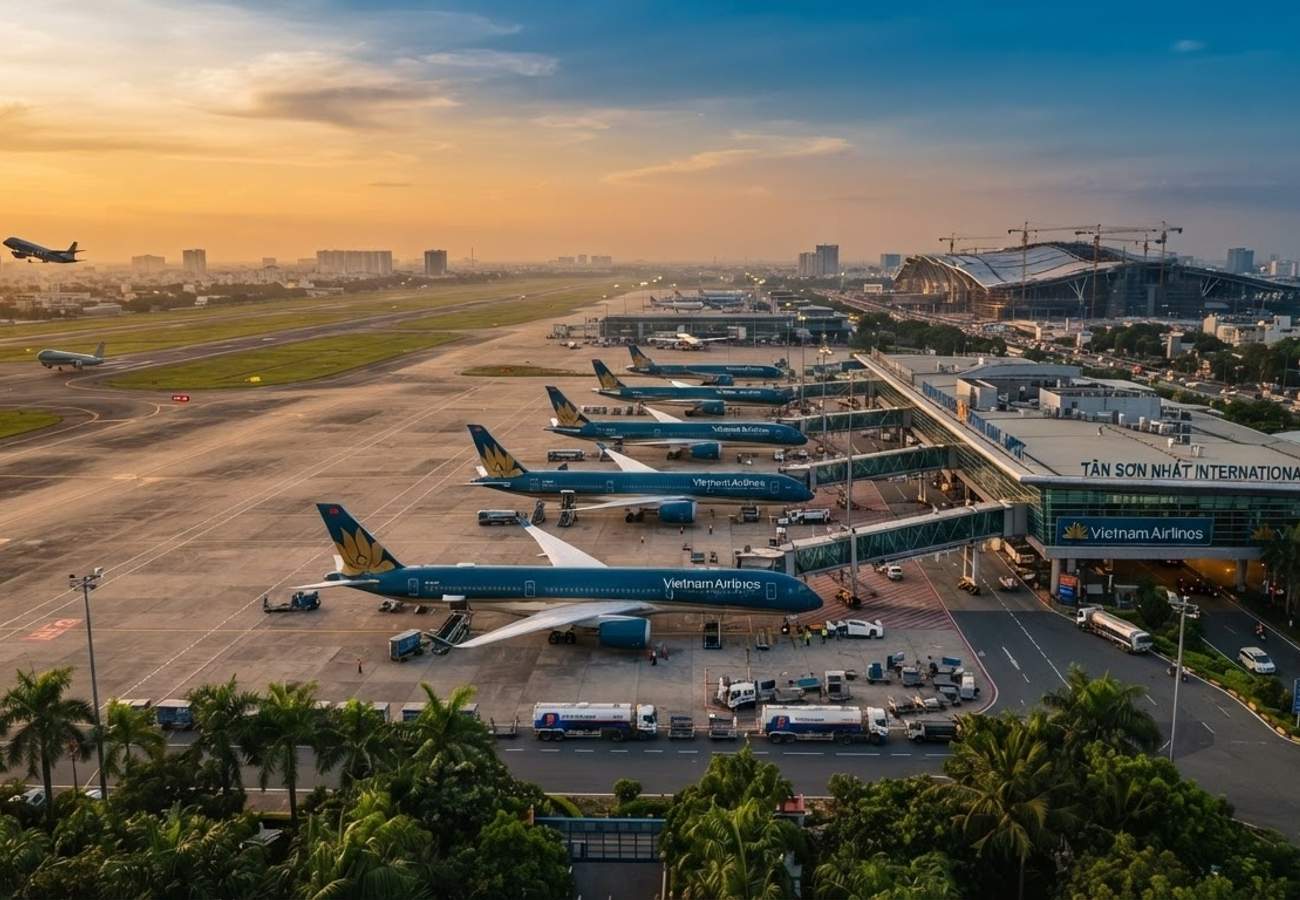
Image generated by AI
Vietnam has officially displaced Thailand as the second-largest commercial aviation market in Southeast Asia. This shift in seat capacity reflects a fundamental change in how airlines perceive regional demand and the growing role of Vietnam as a primary Asia-Pacific gateway.
The redistribution of airline capacity across the ASEAN region suggests that the traditional dominance of established hubs like Bangkok is evolving. According to recent data from OAG, Vietnam's aggressive infrastructure growth and rapid tourism recovery have allowed it to edge out Thailand in scheduled commercial seat availability.
Regional Capacity Rankings and Market Shift
Data compiled for July and August 2026 reveals a clear divergence in growth trajectories between the two nations. Vietnam now offers approximately 7.4 million seats per month, representing a year-on-year increase of 5.6 percent. In contrast, Thailand's capacity has dipped to roughly 6.9 million seats, a 3 percent decline over the same period.
While Indonesia maintains a commanding lead in the region with over 11 million monthly seats, Vietnam's ascent is the most significant structural change in the current market.
Vietnam Airlines has emerged as the largest carrier in Southeast Asia by capacity as of August 2026. The airline operated an estimated 2.8 million seats during that month, marking an 8.2 percent increase compared to the previous year. This growth indicates that Vietnam is no longer viewed as a secondary market but as a central hub for both intra-ASEAN and broader international traffic.
Drivers of Vietnam's Aviation Surge
The rise in capacity is fueled by a robust recovery in both international and domestic travel. In 2024, Vietnamese airports handled approximately 109 million passengers. While domestic traffic has stabilized from pandemic-era peaks, international passenger volumes surged by roughly 26 percent to reach about 41 million in 2024.
Several factors contribute to this momentum:
- Rapid Recovery Index: By mid-2024, Vietnam's overall capacity recovery index nearly reached full restoration, outperforming larger neighbors including Indonesia and Thailand.
- Domestic Strongholds: The Hanoi–Ho Chi Minh City corridor remains one of the world's most active domestic routes, moving more than 10 million passengers annually.
- Tourism Diversification: International air traffic into Vietnam more than doubled in 2024 compared to 2023, drawing travelers who previously utilized Bangkok as their primary entry point.
Infrastructure Expansion and Hub Ambitions
Vietnam's ability to sustain this growth is tied to massive capital investments in airport infrastructure. Tan Son Nhat International Airport in Ho Chi Minh City continues to be a critical gateway, ranking among the top four busiest airports in the region following the addition of a new domestic terminal.
The long-term strategy focuses on the Long Thanh International Airport project. This facility is designed for a future capacity of up to 100 million passengers annually and is intended to alleviate congestion at Tan Son Nhat while attracting more long-haul international flights.
Further expansions include:
- Phu Quoc International Airport: Targeted to handle 18 to 20 million passengers annually by 2027.
- Traffic Growth Targets: Government planning aims for annual passenger-traffic growth between 7.5 and 8.5 percent through 2030.
- Air Traffic Management: Modernization of navigation services to manage increasingly complex ASEAN airspace.
Thailand's Capacity Rationalization
Thailand's slight decline in capacity does not signal a collapse, but rather a period of rationalization. The 3 percent year-on-year dip is attributed to higher fuel costs, restructuring within Thai carriers, and a slower recovery of specific long-haul routes.
Current Thai aviation strategy has shifted toward improving yields over simply increasing seat volume. While routes like Bangkok–Singapore and Bangkok–Hong Kong have seen surges compared to 2023, they have yet to return to pre-pandemic levels.
Thailand continues to invest in its network, including upgrades to Bangkok's primary airports and the development of U-Tapao International Airport near Pattaya as a multi-modal hub. However, financial constraints within the airline sector have tempered the pace of new seat additions.
ASEAN Aviation Capacity Comparison (August 2026)
| Market | Monthly Seat Capacity | Year-on-Year Change | Market Rank |
|---|---|---|---|
| Indonesia | 11 Million+ | Stable/Growth | 1 |
| Vietnam | 7.4 Million | +5.6% | 2 |
| Thailand | 6.9 Million | -3% | 3 |
Key Takeaways
- Market Flip: Vietnam has surpassed Thailand as the #2 aviation market in Southeast Asia by seat capacity.
- Carrier Dominance: Vietnam Airlines is now the largest carrier in the region by capacity (2.8 million seats in August 2026).
- Infrastructure Bet: The Long Thanh International Airport is the linchpin for Vietnam's goal of becoming a global hub.
- Strategic Pivot: Thailand is focusing on profitability and yield per seat rather than aggressive capacity expansion.
FAQ
Why is Vietnam growing faster than Thailand in aviation? Vietnam has seen a more aggressive recovery in international passenger volumes (up 26% in 2024) and is investing heavily in new airport infrastructure like Long Thanh to attract long-haul traffic.
Who is the largest airline in Southeast Asia by capacity? As of August 2026, Vietnam Airlines holds the top spot, operating approximately 2.8 million seats in a single month.
Is Thailand losing its status as a tourism hub? No, but the market is diversifying. While Bangkok remains a primary gateway, more travelers are routing directly into Vietnam, and Thai airlines are prioritizing profit margins over seat volume.
The shift in ASEAN skies signals a new era of competition for the title of Asia's primary transit gateway.
Related Travel Guides
Disclaimer
This article is for informational and educational purposes only. It does not constitute legal, financial, or professional advice. While we strive to provide accurate and up-to-date information, travel policies, regulations, and conditions change rapidly. Always verify information with official sources before making travel decisions. Nomad Lawyer makes no representations about the accuracy, reliability, completeness, or suitability of the information provided. Readers should consult qualified professionals for advice specific to their circumstances. The views expressed in this article are those of the author and do not necessarily reflect the views of Nomad Lawyer.
Preeti Gunjan
Contributor & Community Manager
A passionate traveller and community builder. Preeti helps grow the Nomad Lawyer community, fostering engagement and bringing the reader experience to life.
Learn more about our team →