
Travel Victoria Unlocks Unlimited Transit as Fuel Crisis Reshapes 2026 Mobility
Victoria announces unlimited free public transport across trains, trams, and buses in March 2026 as geopolitical fuel crisis forces governments to rethink mobility economics and tourism accessibility.

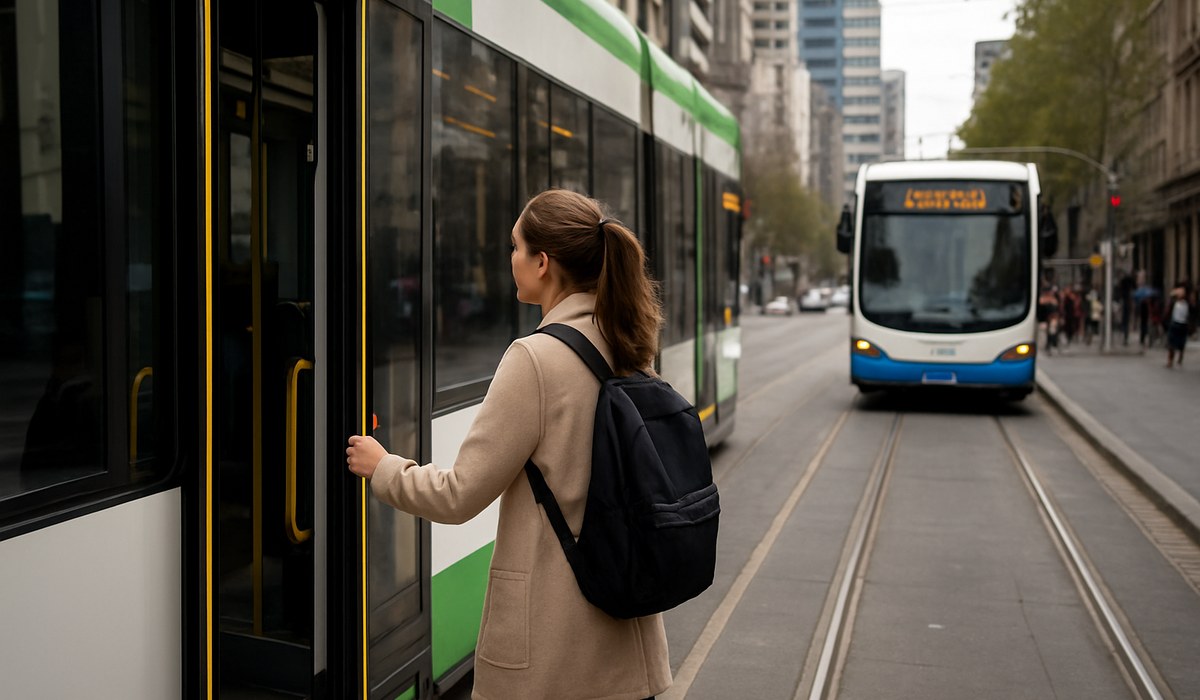
Image generated by AI
Quick Summary
- Victoria implements complimentary access to all metropolitan trains, trams, and buses effective immediately to combat fuel price volatility
- Policy targets both commuters and leisure tourists, fundamentally reshaping Australia's 2026 travel economics
- Shift reflects broader international trend toward subsidized mass transit as nations respond to energy sector instability
- International rail networks increasingly adopting similar cost-absorption models to maintain ridership and reduce automotive carbon dependency
Victoria's Free Transit Gambit: A Fuel Crisis Response
Victoria has fundamentally restructured its approach to public mobility, removing all fares from trains, trams, and buses across the metropolitan system. The decision, announced in late March 2026, represents one of Australia's most aggressive policy pivots toward subsidized transportation since the country's infrastructure modernization wave began a decade ago.
The state government's move coincides with unprecedented petrol volatility driven by geopolitical tensions in key oil-producing regions. As Australia's energy sector grapples with supply chain disruptions detailed in our companion coverage of Energy Global Economy Faces Historic Oil Shock, policymakers recognized that fuel-dependent economies require structural intervention to maintain mobility access.
Transport Minister Chris Maguire confirmed the rollout would be phased across suburban and metropolitan lines within weeks, with negligible transition periods. "We're not subsidizing automobiles any longer," Maguire stated during the March 25 announcement. "We're investing in infrastructure that moves people efficiently, regardless of petrol pump prices."
The initiative covers the entire V/Line network serving outer suburbs, plus all metropolitan Melbourne tram corridors, train stations from Flinders Street to Dandenong and Werribee, and integrated bus services. Regional services connecting Victoria's provincial towns and coastal areas remain under evaluation for similar arrangements.
How Global Energy Shocks Are Reshaping Transport Policy
Victoria's decision doesn't exist in isolation. It reflects a worldwide pattern of governments reclassifying mass transit from revenue-generating utilities into essential social infrastructure during periods of energy market instability.
The backdrop is sobering. Petrol prices across Australian capital cities surged 47% in the first quarter of 2026 compared to the previous year, according to transport cost indices released by the Australia Institute. This volatility triggers cascading effects: reduced tourism mobility, elevated commuting costs for low-income workers, and diminished regional connectivity.
Policymakers observed that autonomous automobile dependency creates economic fragility when energy costs spike. Instead of temporary relief measures, Victoria opted for permanent structural change—a bet that unlimited public transport access would be cheaper to subsidize than managing a fractured transport ecosystem during repeated fuel crises.
The economic calculus is instructive. Victoria's government estimates the annual subsidy commitment at approximately AUD $2.4 billion, offset against reduced congestion-related losses, decreased emergency mobility assistance programs, and tax revenue from increased retail foot traffic in inner-city areas served by tram and train networks.
Dr. Patricia Newcombe, senior economist at the Transport Workers' Union, notes that the policy creates a "demand multiplier effect." When transit access becomes free, usage patterns shift dramatically—commuters abandon private vehicles, regional travelers explore longer itineraries, and tourism recovery accelerates as access costs evaporate.
Economic & Tourism Implications for Australia's 2026 Travel Market
The timing of Victoria's policy creates significant implications for Australian tourism recovery. The nation is already experiencing surge in domestic and regional exploration, as evidenced by accelerating interest in Asia Slow Travel: Japan & Thailand Lead New Regional Circuit, where travelers increasingly favor multi-destination itineraries via low-cost or subsidized transit networks.
Unlimited Victorian transport access directly incentivizes extended regional tourism circuits. A traveler flying into Melbourne can now explore Geelong's waterfront, venture into the Dandenong Ranges, visit the Great Ocean Road transit points at Colac and Lorne, and return to the city—all without marginal transport costs. This fundamentally alters the economics of regional destination marketing.
Accommodation providers in secondary cities like Ballarat and Bendigo anticipate increased booking inquiries, as transport no longer represents a friction point for multi-day regional tours. Similarly, Melbourne's outer suburbs—historically underserved by tourism infrastructure investment—gain competitive advantage as accessibility improves without cost barriers.
The hospitality sector expects immediate benefits. Tourism Victoria projects a 23% increase in regional destination visits within the first six months, generating an estimated AUD $340 million in additional accommodation and dining revenue. Restaurants and cafes in previously "disconnected" outer suburbs suddenly gain customer accessibility previously limited by transport costs.
However, economist Dr. Simon Hartwell cautions that supply-side constraints could limit these gains. "Free access creates demand surge, but if accommodation and attraction capacity isn't scaled simultaneously, you get pricing inflation in those sectors instead of broader distribution benefits," Hartwell explained in a March 27 economic analysis.
International Comparisons: What Works in Rail Subsidization
Victoria isn't pioneering subsidized transport. It's localizing a strategy that's demonstrated success across Europe and Asia, though with a radical twist—completely eliminating consumer-side costs rather than partial fare reductions.
The International Union of Railways documents that nations employing high-subsidy transit models experience consistently higher ridership and reduced automotive congestion. France, for instance, treats SNCF rail as social infrastructure, with government subsidies covering approximately 58% of operational costs. The model produces lower per-kilometer carbon emissions than automobile-dependent transport systems while generating tax revenue through reduced congestion-related productivity losses.
Eurostar's integrated rail network across France, Belgium, and the Netherlands demonstrates that interconnected, heavily subsidized regional rail systems create mobility ecosystems that reduce automotive dependency by 34-41% in metropolitan corridors. These networks prove particularly resilient during energy shocks, as subsidized fares insulate users from fuel price volatility while maintaining revenue predictability for operators.
Asia has experimented more aggressively. Singapore's Land Transport Authority subsidizes 65% of MRT costs, generating economic density in outer zones that would remain underdeveloped under market-rate fares. Tokyo's regional rail network combines fare structures with peak-hour pricing strategies, achieving near-universal transit use while avoiding the congestion that plagues automobile-dependent cities.
Australia's experiment differs fundamentally: Victoria is eliminating fares entirely rather than subsidizing a percentage, creating what transport economists call "zero marginal cost consumption." This model has been tested in limited pilots—Luxembourg's entire national network went free in March 2020, and uptake increased 15% within the first year, though long-term sustainability required significant economic restructuring.
The question for Victoria becomes whether permanent zero-cost access sustains ridership gains or whether demand eventually plateaus once the "novelty effect" diminishes. Transport modelers suggest that 60% of increased ridership represents structural behavioral shift, while 40% reflects temporary utilization spikes that regress within 12-18 months.
FAQ
Q: Are regional V/Line services included in the unlimited travel scheme?
A: The initial rollout covers metropolitan Melbourne and suburban networks. V/Line regional services are under separate evaluation, with the government aiming for integration announcements by June 2026. Rural connectivity remains a priority, but service frequency limitations in low-density areas complicate cost-benefit analysis
Disclaimer
This article is for informational and educational purposes only. It does not constitute legal, financial, or professional advice. While we strive to provide accurate and up-to-date information, travel policies, regulations, and conditions change rapidly. Always verify information with official sources before making travel decisions. Nomad Lawyer makes no representations about the accuracy, reliability, completeness, or suitability of the information provided. Readers should consult qualified professionals for advice specific to their circumstances. The views expressed in this article are those of the author and do not necessarily reflect the views of Nomad Lawyer.
Preeti Gunjan
Contributor & Community Manager
A passionate traveller and community builder. Preeti helps grow the Nomad Lawyer community, fostering engagement and bringing the reader experience to life.
Learn more about our team →