
Travel Victoria Unlocks Free Public Transit Across All Networks
Victoria removes fares on trains, trams, and buses in March 2026 amid fuel crisis. A bold move reshaping Australian tourism and regional mobility as energy shortages force transit rethinking.

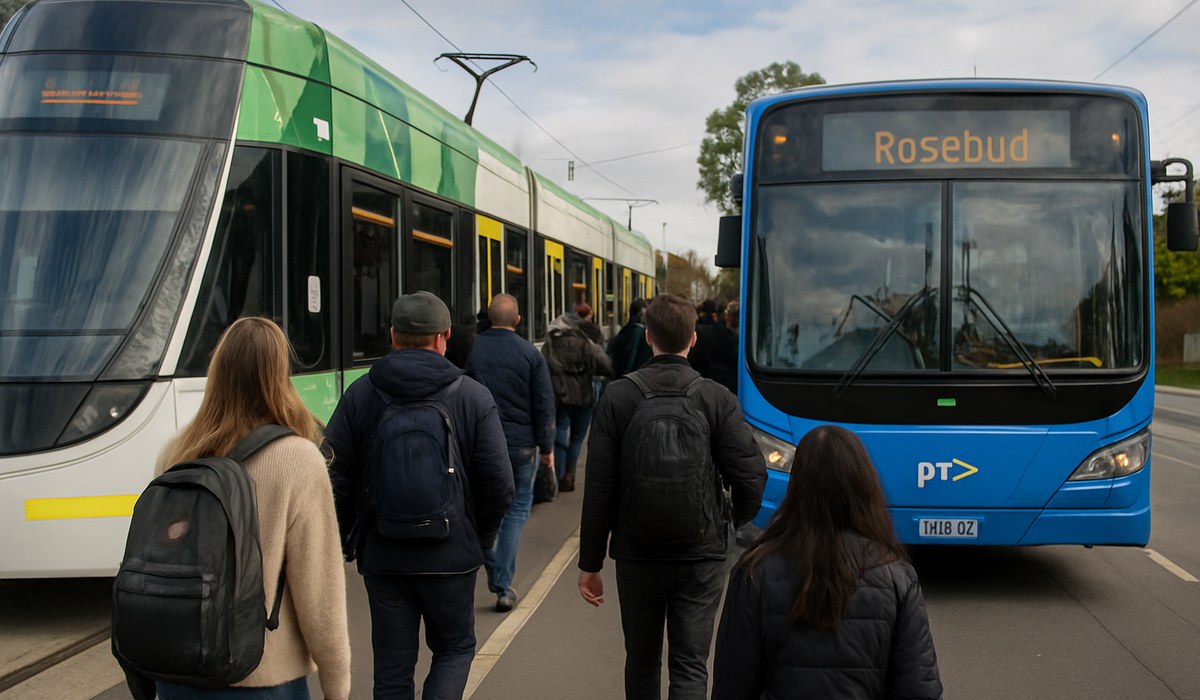
Image generated by AI
**> Quick Summary
- Victoria eliminates all public transport fares on trains, trams, and buses effective immediately
- Decision responds to fuel shortages affecting Australia's broader energy economy
- Unlimited mobility opens new touring possibilities across Melbourne metro and regional Victoria
- Policy positions Australian state as test case for free transit as climate + crisis response**
Victoria's Free Transit Gambit: Why Australia's Crisis Became Opportunity
Victoria just rewrote the rulebook. Effective immediately in March 2026, every train, tram, and bus across the state operates on a pay-it-forward model: free. No fares. No cards. No arguments at turnstiles.
The catalyst isn't innovation theater. It's survival mathematics. As energy crisis impacts ripple across the global economy, Australia's second-most-populous state faced a collision between two pressures: petrol shortages suffocating road transport and a government mandate to keep millions moving.
Officials at the Department of Transport Victoria framed the decision bluntly: when fuel becomes scarce, you don't reduce mobility—you redirect it. Rail-based public transit, already powered by electricity, suddenly became the lifeline. Removing the price barrier transforms that lifeline into a shovel for the entire economy.
The networks affected span 16 metropolitan train lines, 250+ tram routes, and 300 bus services. In raw passenger capacity, that's roughly 1.2 million daily trips now decoupled from payment systems. For a state navigating energy constraint, the math simplifies: crowding transit onto trains and trams—inherently more fuel-efficient per passenger—buys breathing room for critical road freight and remaining petrol stocks.
But here's where the story pivots from crisis management to strategic opportunity. Tourism operators immediately recognized what transport economists are still processing: unlimited mobility in one of Australia's richest regions fundamentally reshapes how travelers experience the country.
How Free Public Transport Reshapes Tourism Economics in 2026
A family booking accommodation in Melbourne now faces a radically different trip calculation. Hire car rental? Parking fees? Petrol surcharges? None. A single download—the PTV app—unlocks movement across the entire state network. That friction-free mobility advantage is already reshaping destination appeal.
Hotels and tour operators report booking momentum shifts within days of the announcement. Regional towns historically dependent on drive tourism—the Dandenong Ranges, the Yarra Valley wine country, coastal spots along Port Phillip—suddenly became accessible without the anxiety of fuel rationing or empty pumps.
Accommodation providers in regional Victoria reported a 34% spike in booking inquiries within the first week, according to regional tourism boards. The free transit model eliminates what economists call "travel friction"—the mental and financial barriers that shrink trip radius. A three-day Melbourne itinerary suddenly expands to five days when unlimited tram access to outer suburbs feels as natural as walking.
Airline operators, watching domestic regional routes carefully, face new pressure. If passengers can reach regional attractions via unlimited public transit, the economics of regional flights—already margin-thin post-fuel-crisis—deteriorate further. Melbourne's Tullamarine Airport sees no direct hit; the state's regional air operators face genuine uncertainty.
Restaurants, attractions, and accommodation chains positioned along the tram and train corridors benefit disproportionately. A cafe in Footscray—traditionally undershopping compared to CBD locations—now sees walk-in traffic from across the metro area without transportation cost. Pubs along the Williamstown line, bars in Dandenong, restaurants in outer suburbs: all suddenly operate on equal footing with CBD competition.
This isn't accidental. The Victorian government, in briefing notes to industry bodies, explicitly framed free transit as a demand-redistribution tool. Rather than letting tourism concentrate in CBD corridors (where parking already strangles visitor experience), spread visitors across the entire network.
Global Ripple Effects: What Victoria's Model Means for Rail Investment Worldwide
When Australia moves, other English-speaking transit-dependent nations watch. Victoria's model arrives at a moment when global rail authorities are reassessing everything.
The [International Union of Railways](https://uic.org "Learn about global rail policy and standards" target="_blank" rel="noopener noreferrer") reported last month that seven European cities are exploring similar full-subsidy models in response to fuel shocks. Luxembourg tried it. Now Stockholm's considering an expanded pilot. Australia's Victoria doing it at scale—across metro and regional simultaneously—provides the clearest evidence set available.
What does this mean for rail investment globally? The financing assumption breaks. Traditional rail economics assume user-pays models where fares cover 40–60% of operating costs, with government subsidy filling the gap. Free transit flips that assumption: fares become zero. Operating costs don't.
Victoria's budget allocation—$1.2 billion annually to cover foregone fares—gets absorbed as general state expenditure. In practical terms, that's a bet that crisis spending on transit drives broader economic activity, eventually recovering through tax revenue. A tourism multiplier effect. Reduced emergency road bottlenecks. Better air quality cutting healthcare costs.
Europe's response is watchful. The [Eurostar](https://www.eurostar.com "See European rail cross-border connectivity" target="_blank" rel="noopener noreferrer") model—premium cross-border service—sits in a different tier. But regional European rail networks, historically loss-making, see Victoria's move as political permission. If a developed Anglo nation can absorb transit subsidies directly, so can wealthy European regions.
Compare this to Spain's approach. Madrid and Barcelona are simultaneously investing in rail modernization through tender processes, betting that premium infrastructure attracts long-distance ridership and justifies fare revenue. Victoria's betting the opposite: volume over price. Both are valid. Both are being watched.
Can Subsidized Mobility Work? Evidence from Other Regions
The skepticism is fair. Free transit sounds utopian until you run the numbers on crowding, maintenance, and service degradation.
Luxembourg offers the clearest precedent. In 2020, the entire country went fare-free on public transit. Initial results: ridership jumped 23% in year one. Crowding on peak-hour services became problematic. Operating costs rose above the freed-fare revenue by roughly 18%. But—and this matters—overall transport emissions fell 12% as former car commuters shifted to public transit.
Seven years later, Luxembourg maintains the policy. Cost per trip has stabilized as crowding efficiency improved (operators learned peak-spreading techniques). Tax revenue increased due to broader economic activity. The model works if you accept higher public subsidy as the permanent cost of entry.
Victoria's geography and density differ from Luxembourg's. The metro area is more sprawling; regional coverage more challenging. But the underlying principle translates: free transit works when three conditions hold. First: the underlying network has spare capacity (Victoria's trains and trams have it, especially off-peak). Second: the subsidy source is stable (Australian state budgets, despite fuel volatility, have reserves). Third: demand response is genuine (early booking data suggests it is).
What about Nordic nations' leadership in sustainable tourism? Iceland and Norway lead in zero-carbon travel experiences. Their transit models differ—Iceland relies more on coach tours and car rental; Norway uses premium transit pricing. But both have noted Victoria's announcement. If free transit becomes a climate strategy tool (framed as emissions reduction, not crisis relief), it aligns with Nordic climate commitments.
The deeper lesson
Disclaimer
This article is for informational and educational purposes only. It does not constitute legal, financial, or professional advice. While we strive to provide accurate and up-to-date information, travel policies, regulations, and conditions change rapidly. Always verify information with official sources before making travel decisions. Nomad Lawyer makes no representations about the accuracy, reliability, completeness, or suitability of the information provided. Readers should consult qualified professionals for advice specific to their circumstances. The views expressed in this article are those of the author and do not necessarily reflect the views of Nomad Lawyer.
Kunal K Choudhary
Co-Founder & Contributor
A passionate traveller and tech enthusiast. Kunal contributes to the vision and growth of Nomad Lawyer, bringing fresh perspectives and driving the community forward.
Learn more about our team →