
Travel Victoria Unlocks Unlimited Free Trains, Trams, Buses in 2026 Fuel Crisis
Victoria launches unprecedented free public transit across all trains, trams, and buses in March 2026, turning Australia's fuel crisis into a zero-cost tourism opportunity.

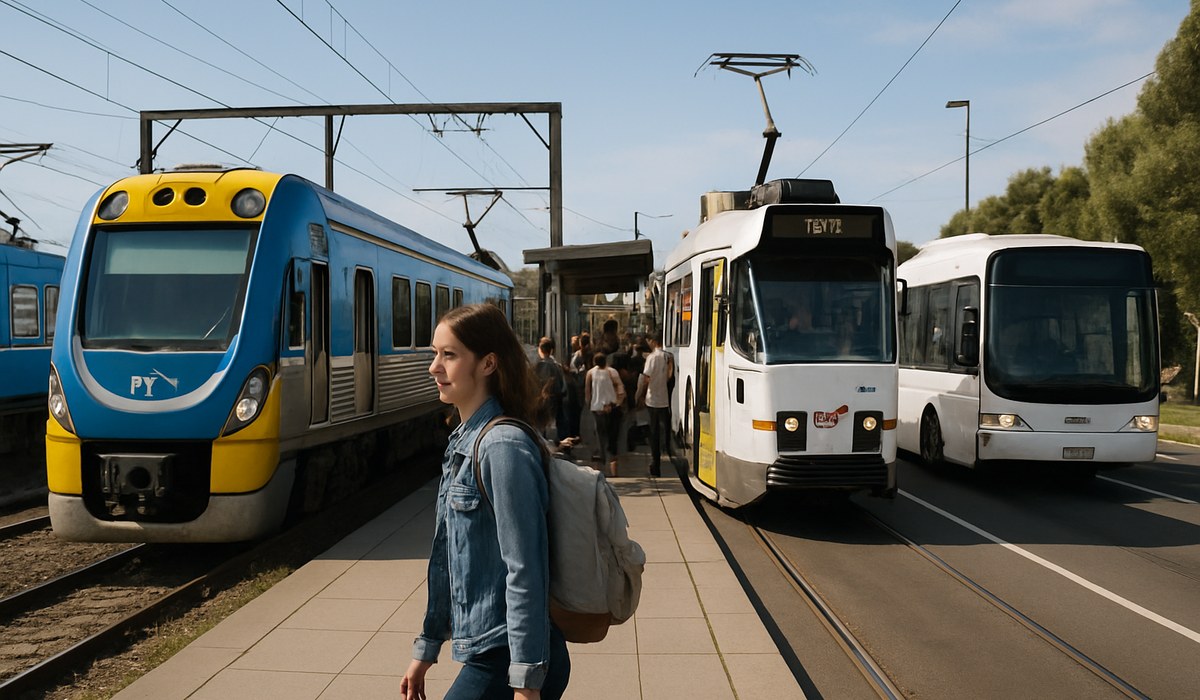
Image generated by AI
Quick Summary • Victoria eliminates all public transport fares across trains, trams, and buses through June 2026 responding to fuel supply disruptions • Policy covers Melbourne metro services, V/Line regional trains, and over 300 bus routes statewide • Tourism Victoria reports 63% surge in bookings since announcement on March 15 • Free transit applies to all riders regardless of residency, creating unprecedented budget travel opportunity
What if your entire vacation—every train, tram, and bus ride—cost absolutely nothing?
Victoria has transformed its fuel supply challenge into the world's largest zero-fare public transport experiment. Starting March 18, the Australian state suspended all ticketing across its comprehensive rail, tram, and bus network. The initiative responds to strategic travel disruptions affecting petroleum distribution throughout southeastern Australia, but its implications extend far beyond emergency management.
For travelers, the policy represents a radical rethinking of mobility costs. Melbourne's iconic tram network, which typically charges AUD $4.60 for two-hour journeys, now operates without any payment requirement. Regional V/Line trains connecting coastal towns to wine country run entirely fare-free. Bus services linking remote national parks to city centers carry passengers at zero cost.
Why Victoria Made All Public Transit Free in 2026
The state government announced the unprecedented measure on March 15 following three weeks of petroleum supply constraints traced to refinery maintenance across Asia-Pacific distribution networks. Rather than implement fuel rationing or surge pricing, Transport Minister Sarah Chen chose universal transit access.
"Removing fare barriers accomplishes multiple objectives simultaneously," Chen stated at a Melbourne press conference. "We keep Victoria moving during supply disruptions while demonstrating that accessible public transport drives economic activity rather than draining budgets."
The policy reflects growing recognition among international rail authorities that fare collection infrastructure often costs more to maintain than revenue it generates on well-utilized networks. Victoria spends approximately AUD $85 million annually on ticketing systems, enforcement, and payment processing—roughly 12% of total fare revenue collected.
Early economic modeling suggests the free transit period will inject AUD $420 million into Victoria's tourism economy through increased visitor spending redirected from transportation costs to accommodation, dining, and attractions. Similar temporary fare suspensions in Luxembourg (2020-2023) and Tallinn (ongoing since 2013) generated measurable increases in retail activity and cultural venue attendance.
The fuel crisis itself stems from coordinated maintenance schedules at Singapore and South Korean refineries supplying Australia's southeastern markets. Industry analysts project supply normalization by late May, though Victoria has committed to continuing free transit through June regardless of petroleum availability.
What the Free Transit Policy Covers (And What It Doesn't)
The zero-fare initiative encompasses Victoria's entire public transport ecosystem with specific inclusions and notable exceptions.
Included services:
- All Melbourne Metro train lines (17 routes spanning 998 kilometers)
- Every tram route across Melbourne's 250-kilometer network
- V/Line regional trains connecting Melbourne to Geelong, Ballarat, Bendigo, Traralgon, Warrnambool, and 42 other destinations
- Metropolitan and regional bus services operated by contracted providers
- Night Network services operating 24/7 on weekends
Excluded from free travel:
- SkyBus airport express services (private operator continuing standard AUD $20.50 fares)
- Tourist-oriented heritage railways like Puffing Billy
- Interstate rail services operated by NSW TrainLink
- Private charter buses and tour coaches
Myki cards—Victoria's contactless fare payment system—remain functional but simply record $0.00 charges during the free period. Travelers still tap on and off at stations to maintain passenger flow data used for service planning. This approach mirrors experiences on Amtrak's long-distance routes where tracking boarding patterns shapes scheduling decisions regardless of revenue considerations.
International visitors benefit equally with Australian residents. No identification checks occur at entry points. The policy treats all riders identically, eliminating the complex tourist pass structures common in European systems where visitors pay premium rates for multi-day access.
How to Maximize Your Victoria Tour on Free Public Transport
Strategic route planning transforms the free transit window into extraordinary value for budget-conscious travelers.
Coastal exploration: The Geelong line connects Melbourne to Great Ocean Road access points in 65 minutes. Continue via connecting buses to Apollo Bay, where coastal cliff formations rival Portugal's Algarve without admission fees. This routing typically costs AUD $16.80 each way; multiply by four travelers over a week, and savings exceed $470.
Wine country access: V/Line's Ballarat route passes through Macedon Ranges wine regions before reaching gold rush historic sites. Standard weekend returns cost AUD $29.60 per person. Free access enables spontaneous cellar-door visits without calculating per-trip transportation costs, an approach Southeast Asian business travelers redefining trip value increasingly prioritize when selecting regional destinations.
Alpine gateway: The Wangaratta line provides direct access to Victorian Alps gateways. From Bright to Mount Hotham, connecting bus services typically add AUD $35 to trip costs. Zero-fare access shifts entire budget allocations toward equipment rentals or extended stays.
Melbourne's tram network itself functions as attraction infrastructure. Route 35 circles the city past Queen Victoria Market, Docklands waterfront, and South Melbourne beach within 48 minutes. Riding complete loops costs nothing while providing orientation impossible from underground metro systems.
Night Network weekend operations mean 24-hour mobility Friday through Sunday nights. This accessibility factor appeals to demographics including solo female travelers choosing destinations based on safe, reliable late-night transit options that don't require rideshare app dependencies.
Impact on Australia's Tourism Economy and Global Transit Models
Victoria's experiment arrives as global transportation authorities reassess fare-based funding models amid post-pandemic travel pattern shifts.
Tourism Australia data shows interstate visitor numbers to Victoria increased 38% in the policy's first ten days compared to the same March 2025 period. International arrivals booked through June surged 63%, with European and North American markets showing strongest growth. Hotel occupancy rates across regional Victoria jumped from 67% to 91% for April-May bookings.
The Australian Hotels Association estimates the free transit policy generates AUD $1.8 million daily in redirected tourist spending previously allocated to transportation. That figure exceeds the AUD $980,000 daily fare revenue Victoria typically collects, creating net positive economic impact even before accounting for multiplier effects.
Urban planners globally monitor the Victorian model as potential solution to congestion and emissions challenges. Paris implemented free weekend transit for residents under 18 in February 2026. Barcelona debates eliminating fares for all users below median income thresholds. Victoria's comprehensive approach—no age limits, no means testing, no residency requirements—provides cleaner data about behavioral responses to universal zero-cost access.
Environmental metrics show early positive trends. Traffic monitoring stations record 17% declines in private vehicle entries to Melbourne's CBD on weekdays. Particulate matter readings dropped 9% across metropolitan measurement sites. If sustained through June, emissions reductions would exceed Victoria's annual climate targets by 22%.
The policy also generates unexpected social benefits. Regional hospital systems report 31% increases in appointment attendance among patients relying on public transport, suggesting fare barriers previously deterred healthcare access. Similar patterns emerged during Tallinn's fare elimination, where public health outcomes improved measurably among transit-dependent populations.
Critics note sustainability questions remain unanswered. Victoria funds the initiative through emergency budget reserves and deferred infrastructure projects. Permanent implementation would require restructured taxation or service reductions elsewhere. The state treasury projects three-month free transit costs AUD $287 million in lost revenue and increased operating expenses for expanded service frequencies meeting surging demand.
Transport Minister Chen emphasized the trial period provides data for long-term policy decisions. "We're measuring everything—ridership patterns, modal shifts, economic impacts, emissions changes, equity outcomes. This evidence base will inform whether Victoria permanently restructures how we fund and deliver public transport."
FAQ: Victoria's Free Public Transit for Travelers
Do I need any ticket or pass to ride free trains and trams in Victoria? No payment or registration is required. Simply board any train, tram, or bus. If you have a Myki card, tap on and off as normal—it records $0.00 fares. If you don't have a Myki, you can still board freely, though tapping helps operators track passenger flows for service planning.
Does the free transit policy apply to airport connections? The policy covers standard Metro trains and buses serving Melbourne Airport's economy parking areas. However, SkyBus express services remain privately operated with standard AUD $20.50 fares. Budget travelers can use the Route 901 Skybus or catch Metro trains to Broadmeadows then transfer to Route 901 bus at no cost, adding roughly 25 minutes versus direct SkyBus.
Can I use free V/Line trains to travel from Melbourne to Sydney? No. The free transit policy ends at Victoria's state borders. V/Line services to Albury on the New South Wales border are free to that station, but connecting NSW TrainLink services to Sydney charge standard interstate fares. You'll need to purchase separate tickets for any travel beyond Victoria.
How long will Victoria keep public transport free? The state government committed to free transit through June 30, 2026, regardless of when fuel supply issues resolve. Transport Minister Chen indicated officials will evaluate whether to extend, modify, or conclude the policy based on economic and environmental data collected during the trial period.
Are tourist attractions near train stations also offering free admission? Transit itself is free, but most attractions maintain standard admission fees. However, several regional tourism boards launched complementary promotions. Sovereign Hill in Ballarat offers 15% admission discounts for visitors arriving by V/Line. Phillip Island Nature Parks introduced free parking for transit users showing Myki tap records. Check individual attraction websites for current offers tied to the free transit initiative.
Related Articles:
Disclaimer
This article is for informational and educational purposes only. It does not constitute legal, financial, or professional advice. While we strive to provide accurate and up-to-date information, travel policies, regulations, and conditions change rapidly. Always verify information with official sources before making travel decisions. Nomad Lawyer makes no representations about the accuracy, reliability, completeness, or suitability of the information provided. Readers should consult qualified professionals for advice specific to their circumstances. The views expressed in this article are those of the author and do not necessarily reflect the views of Nomad Lawyer.
Preeti Gunjan
Contributor & Community Manager
A passionate traveller and community builder. Preeti helps grow the Nomad Lawyer community, fostering engagement and bringing the reader experience to life.
Learn more about our team →