
Travel Victoria Unlocks Free Trains, Trams, Buses in 2026
Victoria launches unlimited free public transport across trains, trams, and buses in March 2026 to combat fuel crisis impacts. What travelers need to know.

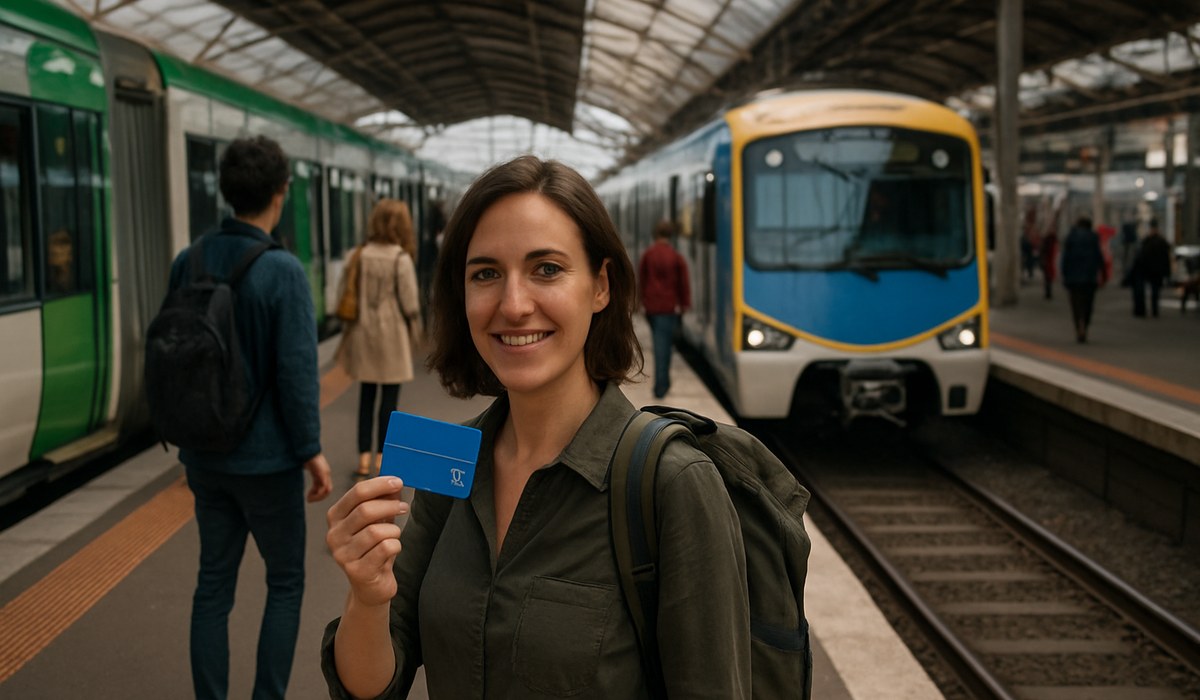
Image generated by AI
Quick Summary
- Victoria launches completely free public transport for trains, trams, and buses starting March 2026
- Policy targets widespread fuel crisis affecting aviation and road transport across Australia
- No ticket purchases required on any metropolitan Melbourne or regional rail network services
- International tourism and domestic visitation expected to surge due to zero-cost transit access
Victoria's Bold Free Transit Response to the 2026 Fuel Crisis
While crude oil surge threatening airfares continues to destabilise the global aviation sector, Victoria has taken an unconventional gamble. The southeastern Australian state is eliminating fares across its entire public transport ecosystem—trains, trams, and buses—effective immediately in 2026.
This represents the most aggressive transit subsidy in Australian history. Residents and visitors alike can now board any service on the Metropolitan Train Network, tram lines across Melbourne, regional rail corridors, and the bus network without purchasing a single ticket. No caps. No restrictions. Unlimited journeys, 24 hours a day, seven days a week.
"We're facing unprecedented pressure on household budgets and fuel supply chains," said a transport authority spokesperson during the announcement. The decision stems from recognition that energy market volatility is cascading through the economy, forcing governments to rethink mobility subsidies as a matter of basic infrastructure policy.
The timing is significant. As international tourism rebounds post-pandemic, Victoria's move positions the state as one of the world's few destinations offering zero-cost mass transit integration—a powerful competitive advantage during periods when traveler budgets are stretched thin.
How the Energy Crisis is Reshaping Australian Travel
Australia's transportation ecosystem has faced mounting pressures throughout 2025 and early 2026. Petrol prices have climbed beyond historical norms. Airlines have slashed domestic routes. Road transport costs have spiked sharply.
UK households depleting savings for basics reflects a broader pattern affecting affluent nations: discretionary travel spending is contracting rapidly. Australians face similar headwinds. Domestic holidays are being postponed. Weekend getaways are being reconsidered.
Victoria's government assessed these realities and concluded that subsidising public transport offered dual benefits: immediate relief for cash-strapped commuters and a tourism marketing tool that few competitors could match. The policy essentially transfers vehicle fuel costs into a state-funded transit model.
Regional railways extending into wine country, coastal communities, and inland destinations now operate at zero marginal cost to passengers. Day-trippers can explore the Great Ocean Road hinterlands, visit regional towns, and tour cultural attractions without transit friction.
Energy analysts note that reducing vehicle mileage through free transit creates environmental co-benefits—lower emissions, reduced fuel demand, decreased pressure on supply chains. Whether the model proves fiscally sustainable beyond 2026 remains an open question.
Free Trams, Trains, and Buses: What Travelers Need to Know
Operationally, the system functions without traditional ticketing infrastructure. No gates require passes. No validators demand activation codes. Platform access is unrestricted. Boarding simply means stepping onto any departing vehicle.
This creates obvious advantages for tourists unfamiliar with Melbourne's transit geography. First-time visitors navigating the city's grid of tram lines can experiment freely, discovering neighborhoods and laneways without fare anxiety. Regional train passengers can conduct extended explorations of Victoria's interior with zero per-journey cost multiplication.
However, travelers should understand operational realities. Timetable frequency remains unchanged. Peak-hour crowding on popular routes—particularly the City Loop trains during morning and evening commutes—persists. The free-access model doesn't increase service capacity; it merely eliminates financial barriers.
Accessibility features, disability accommodations, and priority seating policies remain enforced. Behavioral expectations onboard services are unchanged. Transit operators have emphasized that free access doesn't mean unregulated access.
For international visitors, the announcement eliminates a primary navigation challenge when arriving in Melbourne. Airport express trains, suburban connections, and tram transfers to accommodation can all be accomplished without currency exchange, contactless payment setup, or ticket vending machine confusion.
Domestic travelers from other states face no restrictions. A visitor from Sydney, Brisbane, or Perth boarding a Melbourne train pays nothing. This removes cost differentials that previously discouraged regional Australians from choosing Victoria for short holidays.
Global Implications: Could Other Regions Follow Victoria's Model?
The International Union of Railways, which coordinates transit policy across 200+ member organizations worldwide, has flagged Victoria's initiative as a case study in crisis-driven innovation. The model challenges conventional wisdom that public transit must rely on mixed revenue streams—fares, advertising, sponsorships, and government subsidies.
Luxembourg abolished fares entirely in 2020 with mixed results: ridership surged, but sustainability questions emerged regarding long-term funding. Estonia similarly experimented with zero-fare policies in Tallinn. These precedents suggest Victoria's leaders studied international precedent before implementation.
By contrast, Eurostar's integrated ticketing system, which coordinates cross-border rail and bus services between London, Paris, and Amsterdam, maintains premium pricing as a core revenue mechanism. Most European transit networks blend free-and-paid services: certain demographics receive free or discounted access; general passengers purchase fares.
Victoria's approach is philosophically distinct. It eliminates the distinction entirely. This appeals to equity advocates but worries fiscal conservatives tracking long-term budget impacts.
Other Australian states are watching closely. Queensland, New South Wales, and Western Australia face identical fuel-crisis pressures. If Victoria's policy stabilizes public finances while boosting tourism and reducing congestion, replication becomes likely. If operational costs spiral beyond government capacity, the experiment becomes cautionary.
International destinations competing for traveler attention—particularly Southeast Asian cities, South African hubs, and Caribbean islands—are evaluating whether similar subsidies could generate competitive positioning. Flight cancellations across Peru and regional disruptions demonstrate how supply-chain volatility is forcing creative policy responses globally.
The success metric for Victoria's approach extends beyond ridership numbers. Economic impact on regional towns, tourism spending outside public transport, employment effects, and emissions reductions will collectively determine whether other jurisdictions embrace replication.
FAQ
Q: Do I need to register for anything to use Victoria's free transport? A: No registration is required. Simply board any train, tram, or bus without a ticket. The system operates on an open-access basis across all services.
Q: Are regional trains in Victoria also free, or only Melbourne metropolitan services? A: All regional rail corridors, metropolitan trains, tram networks, and bus services throughout Victoria are completely free. There are no geographic restrictions on the policy.
Q: Will the free policy continue beyond 2026, or is it temporary? A: The government has not announced an expiration date, though fiscal sustainability reviews are planned. Current indications suggest it may continue pending budget assessments.
Q: How does this compare to free transit in other countries? A: Luxembourg operates a similar system; Estonia has tested zero-fare models. However, most developed nations maintain mixed-revenue transit models. Victoria's policy is among the most comprehensive globally.
Q: Can visitors from other countries use the free transport, or only Australian citizens? A: International visitors and Australian citizens have equal access. There are no citizenship or residency requirements to board services.
Related Articles
- Crude oil surge threatening airfares
- UK households depleting savings for basics
- [Flight cancellations across Peru and regional disruptions](/peru-flight-cancellations
Disclaimer
This article is for informational and educational purposes only. It does not constitute legal, financial, or professional advice. While we strive to provide accurate and up-to-date information, travel policies, regulations, and conditions change rapidly. Always verify information with official sources before making travel decisions. Nomad Lawyer makes no representations about the accuracy, reliability, completeness, or suitability of the information provided. Readers should consult qualified professionals for advice specific to their circumstances. The views expressed in this article are those of the author and do not necessarily reflect the views of Nomad Lawyer.
Raushan Kumar
Founder & Lead Developer
Full-stack developer with 11+ years of experience and a passionate traveller. Raushan built Nomad Lawyer from the ground up with a vision to create the best travel and law experience on the web.
Learn more about our team →