
Venezuela Opens Remote Amazonas River Expedition Route to Diversify Adventure Tourism
Venezuela expands adventure tourism with a new river-based route through Amazonas, featuring Cerro Autana, the Piaroa people, and Lake Leopoldo expeditions.
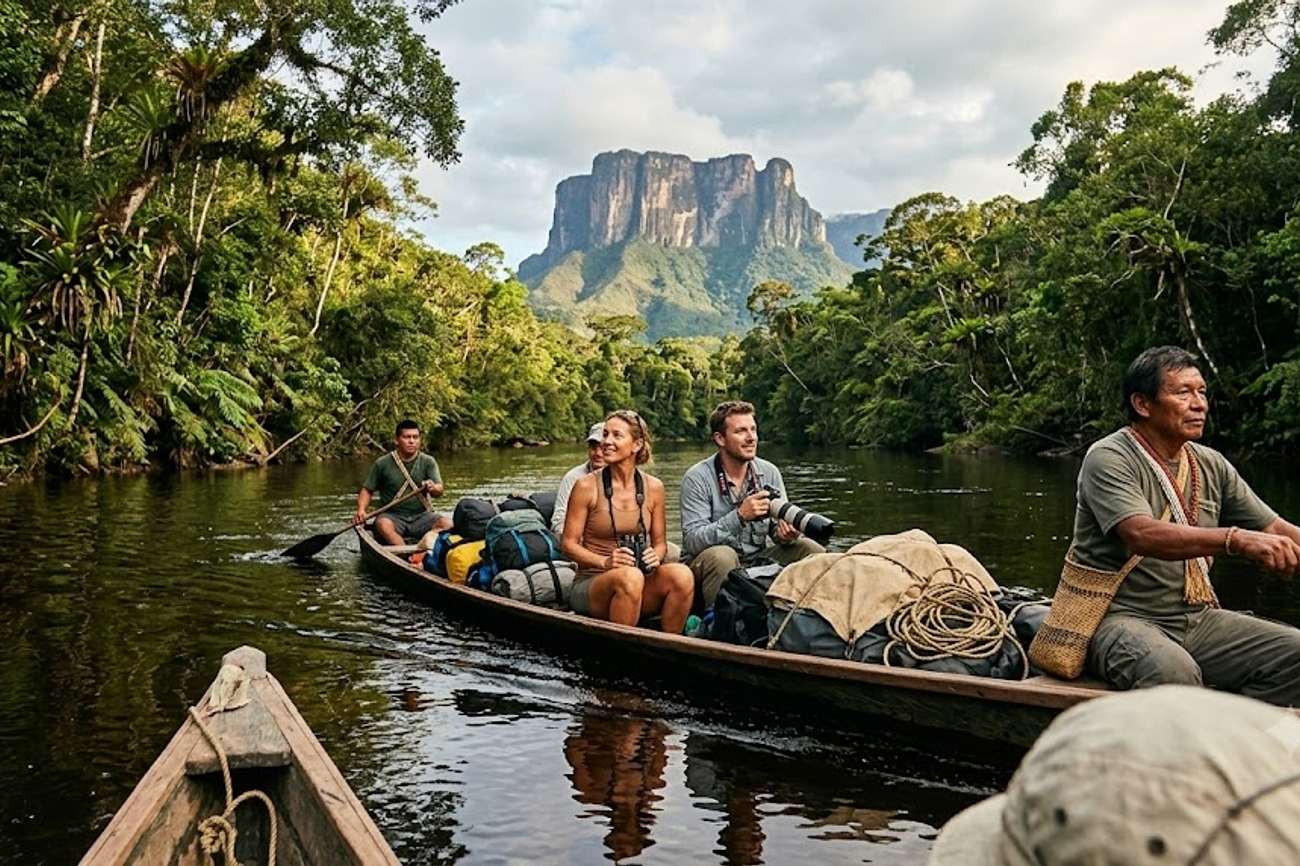
Image generated by AI
Amazonas State expands adventure travel horizons
[Amazonas, September 8, 2026] — Venezuela is officially diversifying its tourism portfolio by opening a specialized adventure circuit in the southern Amazonas region. This new initiative integrates the Sipapo and Cuao rivers, the iconic Cerro Autana, and the remote Lake Leopoldo into a cohesive expedition path designed to move travelers beyond the traditional hotspots of Canaima and Angel Falls.
The strategy marks a shift toward "experiential tourism," moving away from high-volume sightseeing and toward immersive, low-impact exploration of the deep jungle. By leveraging the natural waterways of the south, the Venezuelan government aims to showcase the convergence of indigenous culture, river navigation, and untouched biodiversity.
Sipapo and Cuao rivers serve as primary transit arteries
Unlike traditional tourism models that rely on road infrastructure, the new Amazonas circuit is entirely water-based. The Sipapo and Cuao river systems act as the primary conduits for travelers, transforming the transit process into the core attraction.
Movement through these dense Amazonian waterways is conducted via curiaras—traditional motorized dugout canoes. These vessels are the only viable means of navigating the narrow channels and remote settlements of the region. Because the route penetrates deep into the wilderness, conventional hotel infrastructure is non-existent. Instead, the expedition format utilizes basic bivouac arrangements and hammock camps, forcing a direct and raw connection between the visitor and the surrounding rainforest.
The logistics of these journeys are complex, requiring precise coordination of supplies, river navigation expertise, and timing to ensure safety in one of the world's most remote environments.
Cerro Autana emerges as a cultural and geographic anchor
A central pillar of the new route is Cerro Autana, a massive sandstone formation that dominates the horizon above the canopy. While visually striking, the site is far more than a geological curiosity; it is a sacred landmark for the indigenous Piaroa people.
Integrating Cerro Autana into the tourism circuit changes the nature of the visit from a standard hike to a cultural pilgrimage. Access to the massif is strictly managed through local permissions and community-led interpretation. This ensures that the influx of visitors does not disrupt the spiritual or social fabric of the Piaroa territory.
By establishing Autana as a primary destination, Venezuela is successfully expanding its "adventure map," offering a viable alternative for seasoned travelers who have already visited the more famous tepuis of Canaima.
Piaroa indigenous communities lead tourism logistics
The operational model for the Sipapo–Autana corridor is built on a foundation of indigenous leadership. Rather than importing external tour operators, the circuit relies on the Piaroa people to manage the essential logistics of the journey.
Local community members provide:
- River Transport: Operation of curiaras and navigation of complex river bends.
- Cultural Permissions: Managing access to sacred sites and indigenous lands.
- Camp Management: Setting up and maintaining hammock-based overnight sites.
- Environmental Interpretation: Providing first-hand knowledge of the flora, fauna, and ancestral history.
This decentralized approach ensures that the economic benefits of tourism flow directly into the local economy. It also prevents the need for large-scale, invasive infrastructure, maintaining the ecological integrity of the Orinoco basin. This aligns with the September 2026 updates from the Ministry of Popular Power for Tourism, which emphasizes service excellence and environmental awareness.
Lake Leopoldo provides the ultimate remote frontier
For those seeking the furthest reaches of the circuit, Lake Leopoldo serves as the final frontier. Its extreme isolation distinguishes it from any other tourist site in the country. Reaching the lake requires an extended commitment to river travel and rigorous expedition planning.
The demand for reaching such a remote location has created a niche economy for specialist guides and boat operators. From a logistical standpoint, Lake Leopoldo represents the peak of the "expedition" experience, where the challenge of the journey is as valuable to the traveler as the destination itself.
Balancing adventure travel with rainforest conservation
The development of the Sipapo–Autana corridor is being positioned as a model for sustainable growth. Because the route relies on small-group expeditions, the physical footprint on the environment is significantly minimized compared to mass tourism.
By utilizing established river routes and indigenous knowledge, the circuit avoids the deforestation often associated with road-building. Furthermore, this model provides the Piaroa and other local communities with a sustainable revenue stream that complements traditional economic activities in the region, creating a financial incentive to preserve the standing forest.
Why This Matters: The Shift to High-Value, Low-Impact Travel
For the modern traveler, the opening of the Amazonas river route represents a transition from "sightseeing" to "expeditioning." While Angel Falls offers a breathtaking visual spectacle, the Sipapo-Autana route offers a psychological shift—removing the safety net of luxury hotels and replacing it with indigenous-led survival and cultural immersion.
From a logistical perspective, this creates a new category of travel in Venezuela. It requires a different type of visitor: one who is comfortable with basic amenities and values cultural authenticity over comfort. For the Venezuelan state, this is a strategic move to attract "high-value" tourists—those who stay longer in the country, spend more within local communities, and leave a smaller environmental footprint.
This expansion proves that Venezuela is looking beyond its famous landmarks to monetize its vast, unexplored interior through a lens of conservation and indigenous partnership.
Related Travel Guides
Disclaimer
This article is for informational and educational purposes only. It does not constitute legal, financial, or professional advice. While we strive to provide accurate and up-to-date information, travel policies, regulations, and conditions change rapidly. Always verify information with official sources before making travel decisions. Nomad Lawyer makes no representations about the accuracy, reliability, completeness, or suitability of the information provided. Readers should consult qualified professionals for advice specific to their circumstances. The views expressed in this article are those of the author and do not necessarily reflect the views of Nomad Lawyer.