
Aviation Updates: Severe Travel Chaos Hits Vancouver Airport as Air Canada and Pacific Coastal Cancel 11 Flights
A massive wave of flight cancellations has heavily paralyzed Vancouver International Airport, stranding thousands of passengers across critical Canadian, US, and Asian transit corridors.
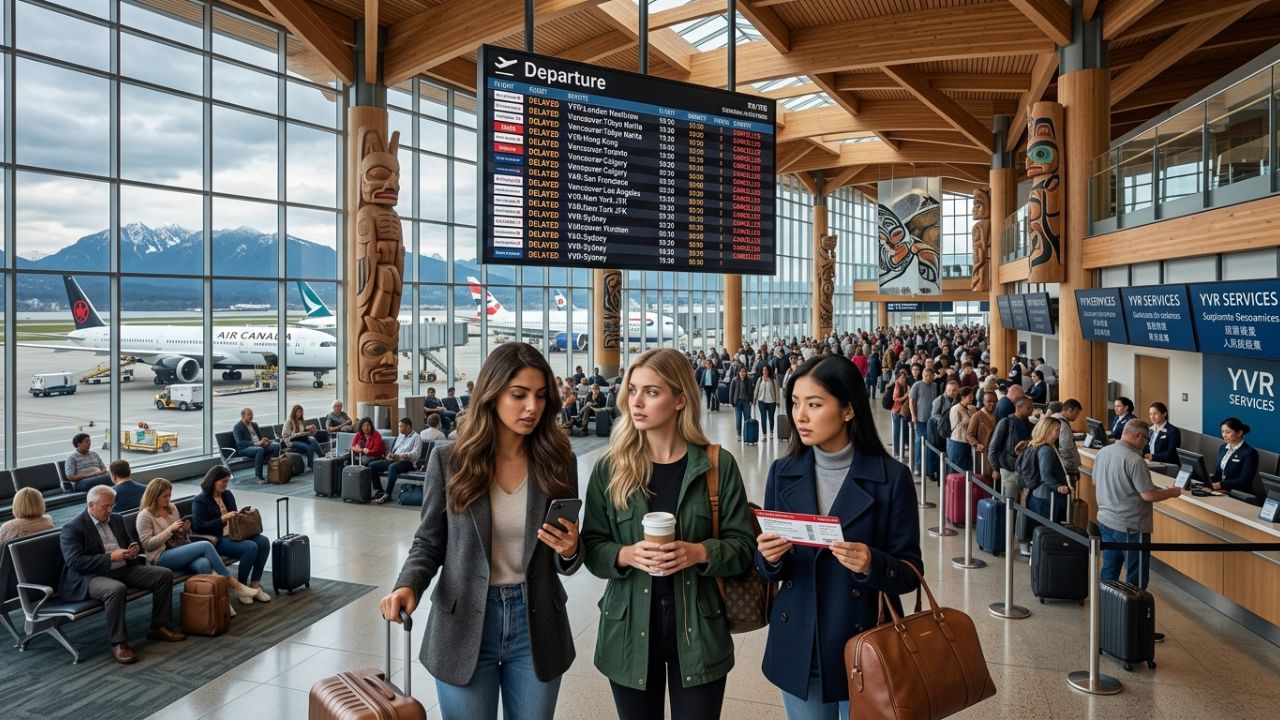
Image generated by AI
Aviation Updates: Severe Travel Chaos Hits Vancouver Airport as Air Canada and Pacific Coastal Cancel 11 Flights
As the massive North American aviation network fiercely battles intense summer operational limits, a highly destructive wave of sudden schedule failures has completely paralyzed Vancouver's primary international gateway, violently stranding domestic and trans-Pacific travelers.
A massive, incredibly disruptive wave of severe travel chaos has violently swept through Canada’s massive western aviation hub today, heavily paralyzing incredibly vital transit corridors connecting North America to the global travel network. According to the absolute latest breaking airline news, catastrophic operational disruptions have been officially recorded at Vancouver International Airport (YVR), where an incredibly devastating combination of outright flight cancellations and severe, rolling delays has completely shattered regional and international air traffic movement.
The absolute most recent, highly verified operational tracking data explicitly confirms that a staggering total of 11 outright flight cancellations and 38 severe delays have been officially reported across the deeply interconnected network. This completely unforeseen logistical failure has heavily crushed tightly scheduled services actively operated by major legacy and regional carriers, prominently including Pacific Coastal Airlines, Air Canada, and Jazz. Because Vancouver explicitly serves as an absolutely vital, massive global transit hub seamlessly connecting Canada with critical American hubs and massive Asian markets, these massive airport disruptions have instantly destroyed passenger movement across incredibly lucrative routes reaching deeply into the United States, Germany, Japan, and Hong Kong.
Aviation Updates: The Scale of the Trans-Pacific Breakdown
The incredibly rapid scale of this localized operational meltdown perfectly illustrates the intense, highly fragile interconnectivity currently dominating the modern international aviation sector.
Vancouver International Airport physically operates as the absolute primary gateway connecting the vast Canadian wilderness to the massive global economy. Because it actively orchestrates highly complex, massive trans-Pacific long-haul routes alongside high-frequency domestic turnaround flights, it must handle an incredibly demanding volume of tightly scheduled daily passenger traffic. When sudden, massive delays violently strike this specific coastal mega-hub, the resulting travel chaos instantly ripples outward, forcefully paralyzing massive overseas corridors. During this heavily scrutinized reporting period, the 11 registered flight cancellations actively triggered a highly notable level of structural collapse. Critical connecting services forcefully impacted by the gridlock instantly contributed to massive, highly visible congestion inside local passenger processing areas, stranding travelers bound for massively remote regional outposts like Yellowknife and Bella Bella.
Section-Wise Breakdown: The Affected Global Corridors
The sudden collapse of operational punctuality actively targeted specific, highly trafficked domestic, cross-border, and international transit routes.
The Trans-Pacific and European Meltdown
The sudden grounding of physical aircraft heavily disrupted connectivity for several highly critical, massive long-haul sectors pushing into Asia and Europe. Massive delays and highly agonizing scheduling failures severely concentrated on high-demand, incredibly lucrative international routes perfectly including Munich, Taipei, Tokyo, Seoul, Manila, Hong Kong, and Osaka. The impact on Asian connectivity was utterly devastating, actively destroying complex, multi-week corporate and leisure itineraries for thousands of trans-Pacific passengers desperately attempting to cross the international dateline.
Cross-Border US Cancellations
Within the North American sphere, massive localized delays heavily struck highly critical cross-border corridors. Major US metropolitan transit hubs perfectly including Sacramento, Boston, Denver, Dallas–Fort Worth, Houston, Las Vegas, Chicago, Phoenix, San Diego, Seattle, Portland, Cincinnati, Salt Lake City, and San Francisco were severely restricted. Notably, Sacramento officially recorded a highly specific outright cancelled flight, further isolating American passengers actively attempting to transit through the Canadian west coast.
The Domestic Canadian Gridlock
Beyond the highly restricted international operations, massive cancellations forcefully affected highly lucrative domestic services flying directly from Vancouver. While YVR remained the absolute epicenter, the rolling gridlock violently extended to Montreal, Toronto, Winnipeg, Nanaimo, Edmonton, Kelowna, Ottawa, Cranbrook, Prince George, Victoria, Calgary, and massive remote outposts perfectly including Yellowknife, Masset, Trail, Bella Bella, Bella Coola, Quesnel, and Powell River. Specifically, Montreal, Bella Bella, Toronto, Powell River, and Winnipeg each experienced at least one absolute flight cancellation within the wider network.
Flight Details and Verified Disruption Matrix
To completely understand the exact scope of this catastrophic operational failure across the participating global and regional carriers, the following data explicitly details the specific cancellation and delay statistics manually recorded via FlightAware tracking systems.
Confirmed Vancouver Disruption & Delay Matrix
| Operating Airline | Total Cancelled Flights | Total Delayed Flights | Operational Network Impact |
|---|---|---|---|
| Pacific Coastal Airlines | 4 | 6 | Suffered a massive 6% cancellation rate across its heavily utilized schedule, crippling vital regional connectivity. |
| Air Canada (Mainline) | 4 | 16 | Accounted for 3% of its massive YVR network being violently suspended, actively destroying trans-Pacific corridors. |
| Jazz (Air Canada Express) | 3 | 16 | Sustained massive domestic cancellations (2% of scheduled services), severely isolating Canadian regional outposts. |
| Total Verified Disruption | 11 | 38 | Massive hub gridlock severely affecting 49 total scheduled flights across the highly congested coastal network. |
Data definitively reflects the highly synchronized operational stress suffered at Vancouver International Airport, where a massive accumulation of international and domestic corridors experienced structural failure.
Passenger Impact: Trapped on the West Coast
For the heavily exhausted and deeply terrified passengers actively engaged in long-haul international travel, the sudden, highly unexpected presence of massive, multi-airline cancellations instantly contributed to highly terrifying unpredictability.
Because Vancouver’s immense operational scale heavily demands massive reliance on flawless, multi-airline turnaround coordination, even brief, localized interruptions severely destroy passenger flow planning. Families anxiously waiting to begin highly anticipated Asian vacations in Tokyo or Manila, and remote workers desperately attempting to secure critical transit into Yellowknife or Bella Bella, found their heavily scheduled, incredibly expensive itineraries completely destroyed. The massive, widespread airport disruptions created intense, agonizing scheduling challenges for travelers actively connecting through YVR, directly leading to massively longer wait times, ruined international connections, and highly frantic, expensive last-minute emergency hotel bookings throughout the entire day.
Industry Analysis: The Vulnerability of Coastal Gateways
Aviation management experts strictly note that while the recorded 11 cancellations and massive 38 delays actively represent an incredibly frustrating operational event, they sadly perfectly illustrate the deep logistical fragility inherent in massive coastal international mega-hubs.
The cascading, rolling delays recorded heavily by the combined Air Canada network and regional specialist Pacific Coastal Airlines are typically triggered by highly interconnected external pressures. While specific mechanical or highly localized weather-related root causes for this specific incident were not immediately broadcast, such intense, localized gridlock is frequently the direct, terrifying result of deeply congested regional air traffic control sectors, sudden ground-staff operational limits, or restrictive tarmac space severely limiting physical aircraft turnaround options at YVR. Because the airport operates incredibly tight, massive wide-body trans-Pacific schedules alongside vital regional propeller flights, a single delayed international flight instantly creates a massive, uncontrollable domino effect across the entire global daily schedule.
Conclusion: A Highly Uncertain Global Recovery
The sudden, highly disruptive operational meltdown at Vancouver International Airport serves as an incredibly stark, undeniable reminder of the massive logistical fragility currently dominating the global aviation sector.
While airline crews and exhausted airport teams desperately worked to manually manage the situation and visibly reduce further delays, the severe travel chaos proved incredibly difficult to contain. As airlines rapidly deploy massive recovery efforts to restore trans-Pacific schedules, travelers actively navigating busy routes across Canada, the US, and Asia must remain completely vigilant. To successfully survive this ongoing era of severe, massive transit meltdowns, travelers must aggressively monitor daily, highly specific aviation updates, build massive, multi-day buffer times into their connecting global itineraries, and maintain total, absolute flexibility regarding their boarding expectations.
Key Takeaways
- Massive Coastal Disruption: Vancouver International Airport suffered an absolute operational collapse, officially recording exactly 11 flight cancellations and 38 severe delays.
- Airlines Battered: Pacific Coastal Airlines, Air Canada, and Jazz forcefully absorbed the massive operational damage across their respective networks.
- International Meltdown: Highly lucrative overseas routes heavily connecting Vancouver to Munich, Tokyo, Hong Kong, and Seoul were severely delayed.
- Remote Outposts Isolated: Vital regional Canadian routes connecting to incredibly remote areas like Yellowknife, Bella Bella, and Powell River were violently severed.
- Passenger Strategy: Affected global travelers are strictly commanded to stay completely clear of airport queues, immediately contacting their airlines digitally via official apps for rapid rebooking options.
- Know Your Rights: Passengers navigating this massive international disruption should aggressively familiarize themselves with airline policies regarding highly regulated flight cancellations and potential Canadian passenger compensation claims.
Related Travel Guides
Massive UAE Visa Bombshell: Strict New 30-Day Escape Window Announced
Travel Chaos Cripples Spain as Iberia and Ryanair Suffer 1,079 Delays
Global Flight Cancellation and Compensation Guide 2026
Disclaimer: This article is strictly for informational purposes only. Flight statuses, highly localized terminal conditions, and complex international airline rebooking policies change by the minute during severe operational disruptions. Always carefully verify your specific itinerary and aggressively monitor real-time departure information directly with your airline before attempting to travel through Vancouver International Airport.