
Prague Culinary Revolution 2026: Michelin Star Expansion, Modern Czech Gastronomy, and Insider Food Guide

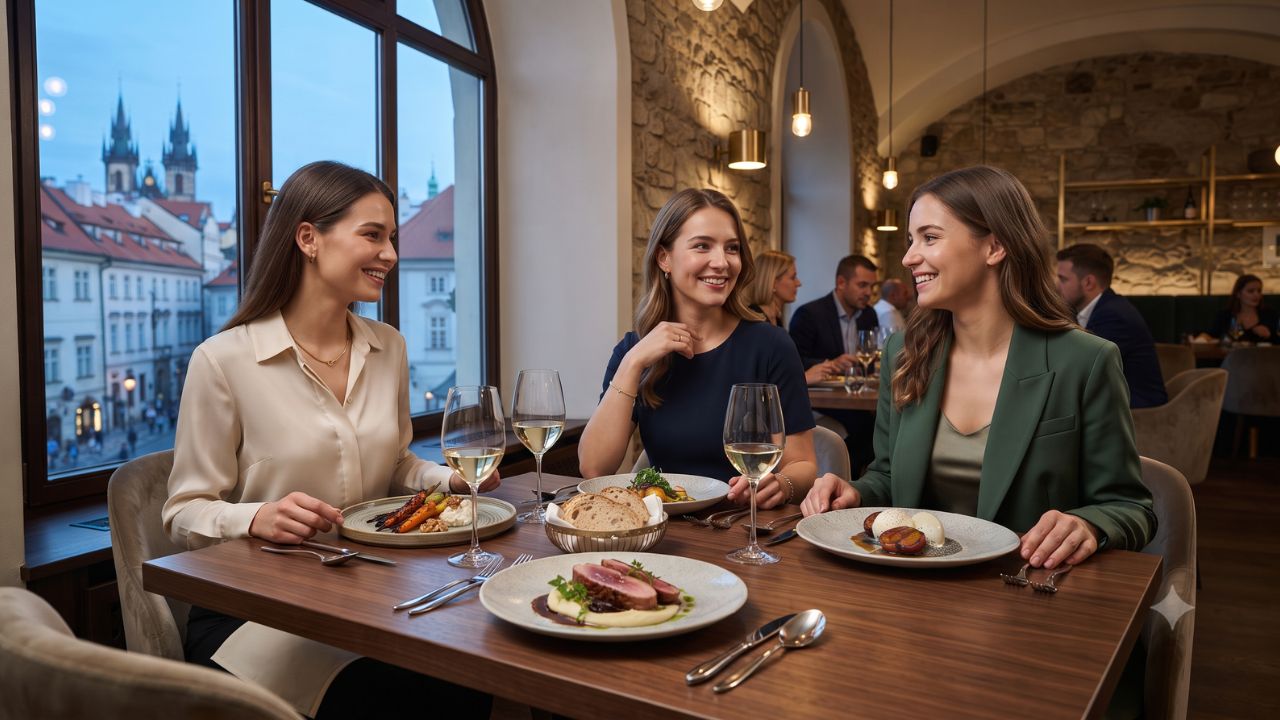
While travelers have long associated Prague with foaming pilsner mugs and heavy goulash platters, Czechia's very first two-Michelin-star restaurant is not located in the historic capital at all—it was awarded to Restaurant Papilio in the quiet Central Bohemian village of Vysoký Újezd. That historic award, unveiled during the Michelin Guide's first nationwide Czechia selection on 11 December 2025 in Mariánské Lázně, recognized 79 dining establishments across the country, prompting Michelin to name Czechia one of its 16 global destinations to visit for food in 2026.
The Nationwide Michelin Selection: Beyond the Capital's Cellars
The red guide's nationwide expansion marked a turning point for Central European culinary tourism. Instead of confining inspections strictly to Prague, inspectors surveyed regional vineyards, spa towns, and Bohemian farmhouses. The final roster featured one two-star restaurant, eight one-star establishments, 18 Bib Gourmand venues recognized for exceptional value, 52 additional recommended restaurants, and four Michelin Green Stars awarded for environmental sustainability.
Prague remains the culinary anchor of the country, claiming five of the nation's eight one-star distinctions: La Degustation Bohême Bourgeoise, Field, LEVITATE, Casa De Carli, and Štangl. However, the recognition of Papilio in Vysoký Újezd demonstrates that high-end travelers are increasingly willing to leave the city center for terroir-driven countryside cooking.
Parallel validation arrived with the release of the second edition of the Gault&Millau Czech Republic guide for 2026. Reviewers evaluated 421 restaurants nationwide, awarding at least one toque to 334 establishments. Four toques were bestowed upon Prague flagships La Degustation Bohême Bourgeoise and LEVITATE, while rising dining concepts Taro and Restaurant 420 earned three toques each, cementing the capital's standing among serious European food cities.
Prague's Premier Gastronomic Landmarks Compared
The following matrix compares Prague and Central Bohemia's acclaimed dining spots, highlighting their culinary styles, accolades, and signature specialties:
| Restaurant Name & Location | Culinary Focus | Guide Accolades (2025–2026) | Signature Dishes & Highlights |
|---|---|---|---|
| Restaurant Papilio (Vysoký Újezd) | Modern European fine dining | 2 Michelin Stars | Country's first 2-star venue; hyper-seasonal tasting menus. |
| La Degustation Bohême Bourgeoise (Haštalská St) | Contemporary Czech heritage | 1 Michelin Star, 4 Gault&Millau Toques | Seasonal Czech degustation, domestic wine pairings, cellar setting. |
| LEVITATE (Prague 1) | Asian-Nordic avant-garde | 1 Michelin Star, 4 Gault&Millau Toques | Botanical ferments, forest game, inventive tasting courses. |
| Field (U Milosrdných St) | Raw Scandinavian-Czech nature | 1 Michelin Star | Earthy presentations, seasonal farm-to-table game and vegetables. |
| Casa De Carli (Vězeňská St) | Contemporary Italian-Czech | 1 Michelin Star | Handmade pastas, imported seafood, elegant neighborhood dining. |
| Štangl (Karlín) | Hyper-local fermentation | 1 Michelin Star, Michelin Green Star | Zero-waste philosophy, heritage grains, house-fermented garums. |
| Taro (Národní St) | Contemporary Vietnamese-Czech | Michelin Selected, Young Chef 2025, 3 Toques | 5-course chef's counter, Vietnamese-Czech immigrant roots. |
| Restaurant 420 (Old Town Square) | Modern Central European | 3 Gault&Millau Toques | Veal tartare, cabbage soup with ham hock, cellar butchery. |
| Le Petit Beefbar (W Prague / Wenceslas Sq) | International luxury steakhouse | Restored historic Grand Hotel Evropa | Japanese, Australian, and Argentine beef, short rib quesadillas. |
| Myšák (Vodičkova St) | Traditional First Republic pastry | Historic café landmark (est. 1911) | Sweet buns with vanilla custard, rakvička with whipped cream. |
| Bjukitchen (Near Wenceslas Square) | Contemporary daytime bakery-brunch | Independent neighborhood café | Pecorino scrambled eggs, grilled cheese, specialty espresso. |
What Makes Prague's Food Scene Different: Heritage, Immigration, and Craft
Prague's dining culture is characterized by three distinct forces that separate it from other Central European hubs promoted by Prague Tourism. First is the resurrection of First Republic gastronomy. Under Austro-Hungarian rule and early 20th-century independence, Prague was renowned for opulent kavárny (grand cafés) and refined bourgeois dining. At La Degustation Bohême Bourgeoise on Haštalská Street, chefs draw inspiration from late-19th-century Czech cookbooks, transforming forgotten ingredients like beef tongue, pickled root vegetables, and freshwater carp into delicate tasting menus served under vaulted historic ceilings.
Second is the deep culinary impact of the Vietnamese diaspora. Established during Cold War student exchange pacts, Czechia's Vietnamese community is the third largest in Europe. On Národní Street, Taro channels this heritage through an open chef's-counter format run by Vietnamese-Czech brothers. Honored with the Michelin Young Chef Award in 2025 and three Gault&Millau toques, Taro prepares an interactive seasonal five-course menu balancing lemongrass, fish sauce reductions, and local Bohemian herbs.
Third is the preservation of architectural craftsmanship. Opposite the Astronomical Clock in the heart of the Old Town—an area protected under the UNESCO World Heritage Centre—Restaurant 420 operates inside an atmospheric glass-covered courtyard. Featuring an active butchery and bakery in its vaulted basement, the kitchen prepares refined regional classics, including veal tartare, confit rabbit leg, and rich cabbage soup accompanied by ham hock croquettes. Across town, the reopening of W Prague inside the historic Grand Hotel Evropa hosts Le Petit Beefbar au Grand Café, where guests dine on premium cuts from Japan, Argentina, and Australia beneath restored pink marble columns and Art Nouveau woodwork.
Visitor Insider Tips: Navigating Prague's Culinary Rhythms
For travelers looking to experience Prague's food revolution without falling into tourist traps, these insider guidelines are essential:
- Book Michelin Star Counters Months Ahead: Tables at La Degustation and Taro fill four to eight weeks in advance, especially for weekend dinner services. Reserve directly through their online reservation systems as soon as your travel dates are set.
- Master the Czech Tipping Custom: Unlike Western Europe where service is frequently included, or North America where 20% is standard, Czech dining etiquette expects guests to round up bills by 10%. State your total payment to the server before tapping your credit card, rather than leaving cash coins on the table.
- Explore Neighborhoods Outside Prague 1: For innovative casual dining, head to Karlín (home to Michelin-starred Štangl) or Vinohrady. These leafy residential quarters feature independent micro-bakeries, specialty coffee roasters, and natural wine bars without the heavy foot traffic of Charles Bridge.
- Pair Meals with Moravian Wines: Czechia produces exceptional white and natural wines from the southern region of Moravia, particularly Grüner Veltliner (Veltlínské zelené), Riesling (Ryzlink rýnský), and Pálava. Request local Moravian pairings instead of standard French imports.
- Experience Daytime Confectionery at Myšák: On Vodičkova Street, avoid mid-afternoon queues by visiting Myšák at 9:00 AM for breakfast. Order warm sweet yeast buns filled with plum jam or a traditional rakvička (crisp pastry tube filled with dense whipped cream) alongside a dark roast espresso.
Cultural and Environmental Context: Regional Agriculture and Sustainable Gastronomy
The emergence of four Michelin Green Stars across Czechia reflects an agricultural movement connecting urban chefs with regional smallholders. For decades during the Soviet era, industrial farming prioritized high-yield cereal crops, eradicating ancient fruit orchards and heirloom livestock. Today, pioneering kitchens collaborate with organic farmers in Central Bohemia, South Moravia, and the foothills of the Bohemian Forest to restore heritage apple varieties, wild forest herbs, and ethically pastured poultry.
Urban food initiatives in Prague also confront food waste. Establishments like Štangl in Karlín utilize hyper-local preservation techniques—including koji fermentations, lacto-fermented root juices, and in-house vinegar aging—to eliminate kitchen scraps completely. By celebrating seasonal vegetables and small-batch Moravian wineries promoted through Visit Czechia, the capital's culinary renaissance is safeguarding regional farming traditions and building an environmentally conscious dining economy.
FAQ: Dining in Prague 2026
Do I need to dress formally for Michelin-starred dining in Prague?
Smart casual attire is welcome across most high-end Prague restaurants. While jacket and tie are not mandatory, tailored trousers, collared shirts, and stylish dresses are recommended for evening tasting menus.
Are vegetarian or non-alcoholic options available at top Prague tasting menus?
Yes. Both La Degustation Bohême Bourgeoise and Taro offer sophisticated non-alcoholic drink pairings featuring fermented kombuchas and cold-pressed juices, alongside advance vegetarian menu adjustments.
How expensive is dining at Prague's Michelin-starred restaurants?
Tasting menus at one-star restaurants generally range between 2,800 CZK and 4,500 CZK (€110 to €180) per person without wine pairings, representing exceptional value compared to Western European capitals.
How do I get to two-star Restaurant Papilio from central Prague?
Papilio is located in Vysoký Újezd, approximately 25 kilometers southwest of Prague. A taxi or rideshare from Old Town takes roughly 30 minutes, or you can arrange private transfers through your hotel concierge.
[From historic vaulted cellars to modern chef's counters, Prague proves that the truest taste of a nation is born when reverence for the past meets fearless culinary imagination.]
Related Travel Guides
Disclaimer
This article is for informational and educational purposes only. It does not constitute legal, financial, or professional advice. While we strive to provide accurate and up-to-date information, travel policies, regulations, and conditions change rapidly. Always verify information with official sources before making travel decisions. Nomad Lawyer makes no representations about the accuracy, reliability, completeness, or suitability of the information provided. Readers should consult qualified professionals for advice specific to their circumstances. The views expressed in this article are those of the author and do not necessarily reflect the views of Nomad Lawyer.
Preeti Gunjan
Contributor & Community Manager
A passionate traveller and community builder. Preeti helps grow the Nomad Lawyer community, fostering engagement and bringing the reader experience to life.
Learn more about our team →