
Uzbekistan Agritourism: Fergana Valley Orchards Replace Cotton 2026

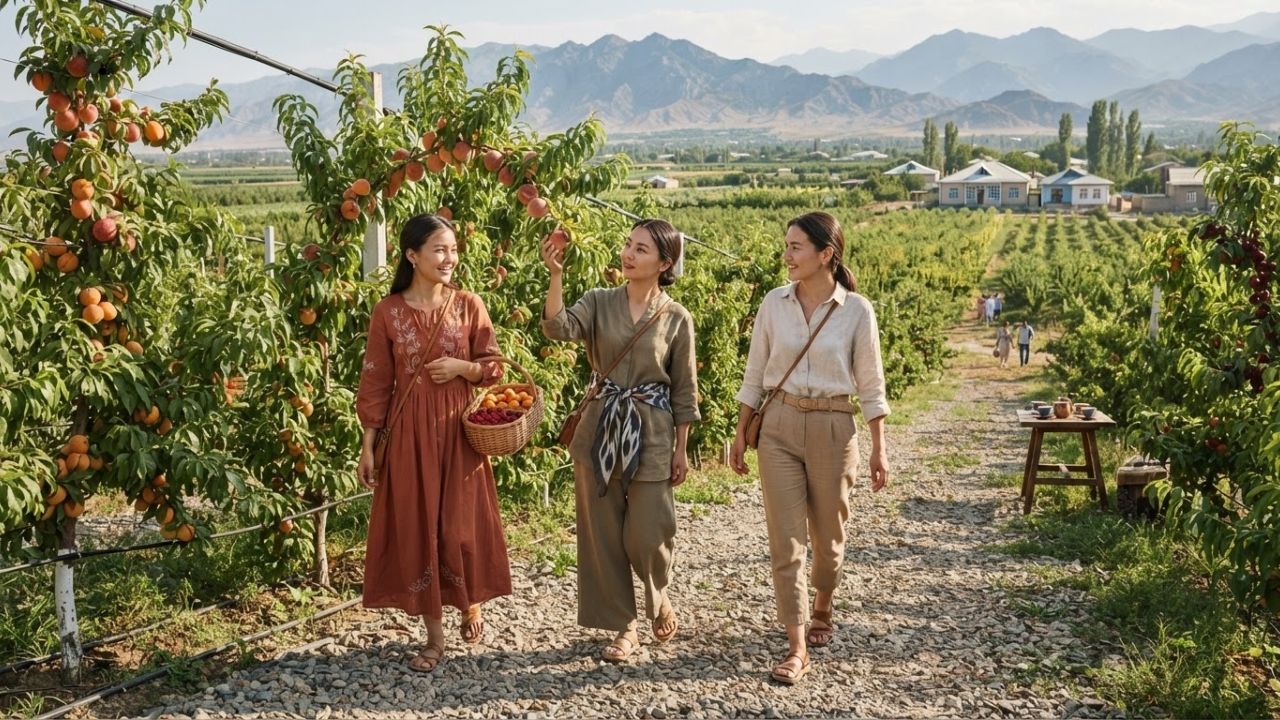
Uzbekistan is fundamentally transforming the agricultural heart of the Fergana Valley, reallocating 50,000 hectares of low-yield cotton and grain fields into super-intensive fruit orchards and agro-tourism corridors. Spurred by regional tourism revenues reaching US$185 million and visitor numbers climbing to 3.8 million in 2025, the initiative integrates working raspberry plantations, lavender fields, and rural farm stays into the Silk Road travel network.
The storied Fergana Valley—long renowned for its Kokand palaces, Rishtan ceramics, and Margilan ikat silks—is pioneering a new agrarian economy. Following decades of cotton monoculture, the Uzbek government announced on April 28, 2026, that 50,000 hectares of inefficient cotton acreage and outdated plantings will be converted into high-yield fruit orchards, backed by the renewal of 5,500 hectares of established groves.
This strategic reallocation pairs agricultural modernization with community-centered tourism. Rather than separating food production from visitor sightseeing, Fergana’s regional master plan connects travelers directly with farm harvests, mountain foothill microclimates, and authentic rural hospitality.
The Local Trend Revealed: From Cotton Monoculture to High-Value Agritourism
Cotton historically dominated the socioeconomic fabric of Uzbekistan, once requiring the seasonal mobilization of nearly two million citizens before comprehensive labor reforms monitored by the International Labour Organization (ILO) eradicated systemic child and forced labor in 2021. Today, under President Shavkat Mirziyoyev’s economic diversification directives, the nation is prioritizing high-value horticulture and services over raw commodity export.
Fergana contains 370,000 hectares of irrigated land, including 55,000 hectares of established orchards and vineyards. Presidential projections indicate that transitioning 50,000 hectares into super-intensive orchards will yield an additional 300,000 tonnes of fruits and vegetables, adding approximately two trillion soums in regional economic value while driving fresh produce exports up 25% to US$500 million.
The Fergana Tourist Zone and the Vodil Raspberry Cluster
The agricultural overhaul connects directly with the designated Fergana Tourist and Recreational Zone, established by presidential resolution on January 12, 2026, spanning 2,396 hectares under a 30-year development mandate.
Central to this green visitor infrastructure is the Vodil raspberry cluster. In the Sanoat and Khosilot mahallas, authorities are constructing dedicated tourist facilities within working berry plantations, integrating cold-storage workshops and fruit-drying facilities with farm-to-table tasting pavilions.
Complementary regional projects include:
- Karkidon Reservoir Tourism Complex: A 508-hectare ecotourism zone in the Quva district featuring 45 chalets, 57 community guesthouses, fragrant lavender fields, a floral botanical park, and an artisanal eco-bazaar.
- Shohimardon–Yordon Alpine Enclave: A year-round mountain resort zone linked by newly paved corridors along the Shohimardon–Yordon and Yordon–Dugoba alpine routes.
- Investment Pipeline: Fergana authorities have slated 50 specialized tourism infrastructure projects worth US$300 million for completion by the end of 2027.
| Regional Metric | Historic Baseline | 2025–2026 Development Target |
|---|---|---|
| Fergana Annual Visitors | 246,000 (2016 baseline) | 3.8M (2025) / >500k foreign tourists |
| Tourism Service Exports | Minimal regional share | US$185 million (2025) |
| Intensive Orchard Conversion | Monoculture cotton/grain | 50,000 hectares converted |
| Outdated Orchard Renewal | Ageing fruit trees | 5,500 hectares upgraded |
| Horticultural Production Gain | Standard yields | +300,000 tonnes / +2 trillion soums |
| Produce Export Target | Unprocessed cotton focus | US$500 million (+25% increase) |
Cultural & Environmental Value: Water Rehabilitation and Rural Livelihoods
For the visitor, the real impact is experiencing a living, sustainable agricultural revitalization that safeguards vital natural resources. The Fergana Valley’s agricultural expansion is intrinsically tied to regional water security.
Outdated Soviet-era earthen canals previously lost more than one billion cubic meters of water annually across the valley. A major rehabilitation program co-financed by the World Bank’s International Development Association (IDA) and the European Union, documented on September 2, 2026, restored 365 kilometers of irrigation canals and nearly 1,500 water-control structures. Benefiting more than 100,000 hectares and 65,000 farmers, the system now saves 130 million cubic meters of water annually, providing the dependable hydration required for drip-irrigated super-intensive orchards and berry clusters.
Culturally, agritourism preserves indigenous horticultural traditions. In Fergana’s rural mahallas, families have cultivated sweet pomegranate, white mulberry, and table grape varieties for generations. Integrating tourists into working orchards ensures that traditional culinary knowledge, dried-fruit craftsmanship, and rural folk songs remain vibrant, transferring economic prosperity directly to smallholder farming families.
Visitor Insider Tips: Exploring Fergana's Orchards and Heritage
Travelers planning an excursion into eastern Uzbekistan should incorporate these practical local recommendations:
- Optimal Harvest Timing: Visit between late May and early July for the peak Vodil raspberry and sweet cherry (gilos) harvests, or plan an autumn trip between September and mid-October for pomegranate, quince, and late table-grape picking. Springtime in April offers spectacular photo opportunities across thousands of blossoming apricot and peach trees.
- Combine Cultural Crafts with Farm Trails: Pair orchard walks with visits to Margilan’s Yodgorlik Silk Factory to witness traditional hand-loomed ikat silk weaving, followed by a stop in Rishtan to observe master ceramists applying cobalt glazes derived from desert plants.
- Respect Local Rural Etiquette: While Fergana hospitality is legendary, dress modestly when touring rural villages and family-owned farms (covering shoulders and knees). Always accept a bowl of green tea (kok-chay) when offered by orchard elders before discussing business or touring fields.
- Savor Regional Gastronomy: Sample Fergana-style plov, prepared with prized local red devzira rice, yellow carrots, and tender mountain lamb, accompanied by flatbread topped with local sesame seeds and sweet sliced onions.
- Border and Transit Planning: Fergana Airport connects directly to Tashkent via regular domestic flights on Uzbekistan Airways. If combining your trip with Kyrgyzstan or Tajikistan, ensure your visa-free or e-visa credentials support land-border crossings at nearby border checkpoints.
Tourism Outlook for Eastern Uzbekistan
Uzbekistan’s nationwide tourism boom—recording 7,749,308 foreign visitors between January and July 2026 (a 22.6% increase) and generating US$3.8957 billion in service exports—proves that international travel to Central Asia is flourishing.
As the nation works toward its ambitious goal of 20 million international tourist arrivals and a 7% tourism contribution to GDP by 2030, the Fergana Valley’s agritourism model offers a vital blueprint. By converting depleted cotton acreage into thriving fruit orchards and eco-resorts, Uzbekistan is proving that agricultural sustainability and authentic cultural hospitality can combine to create a world-class travel corridor.
Related Travel Guides
Disclaimer
This article is for informational and educational purposes only. It does not constitute legal, financial, or professional advice. While we strive to provide accurate and up-to-date information, travel policies, regulations, and conditions change rapidly. Always verify information with official sources before making travel decisions. Nomad Lawyer makes no representations about the accuracy, reliability, completeness, or suitability of the information provided. Readers should consult qualified professionals for advice specific to their circumstances. The views expressed in this article are those of the author and do not necessarily reflect the views of Nomad Lawyer.
Raushan Kumar
Founder & Lead Developer
Full-stack developer with 11+ years of experience and a passionate traveller. Raushan built Nomad Lawyer from the ground up with a vision to create the best travel and law experience on the web.
Learn more about our team →