
USA Travel Trends 2026: 10 Cities Replacing Traditional Hotels with Treehouses, Ranches and Domes
Ten American cities are redefining tourism by prioritizing experiential lodging—from luxury domes in Sedona to treehouses in Oregon—over traditional hotel stays.

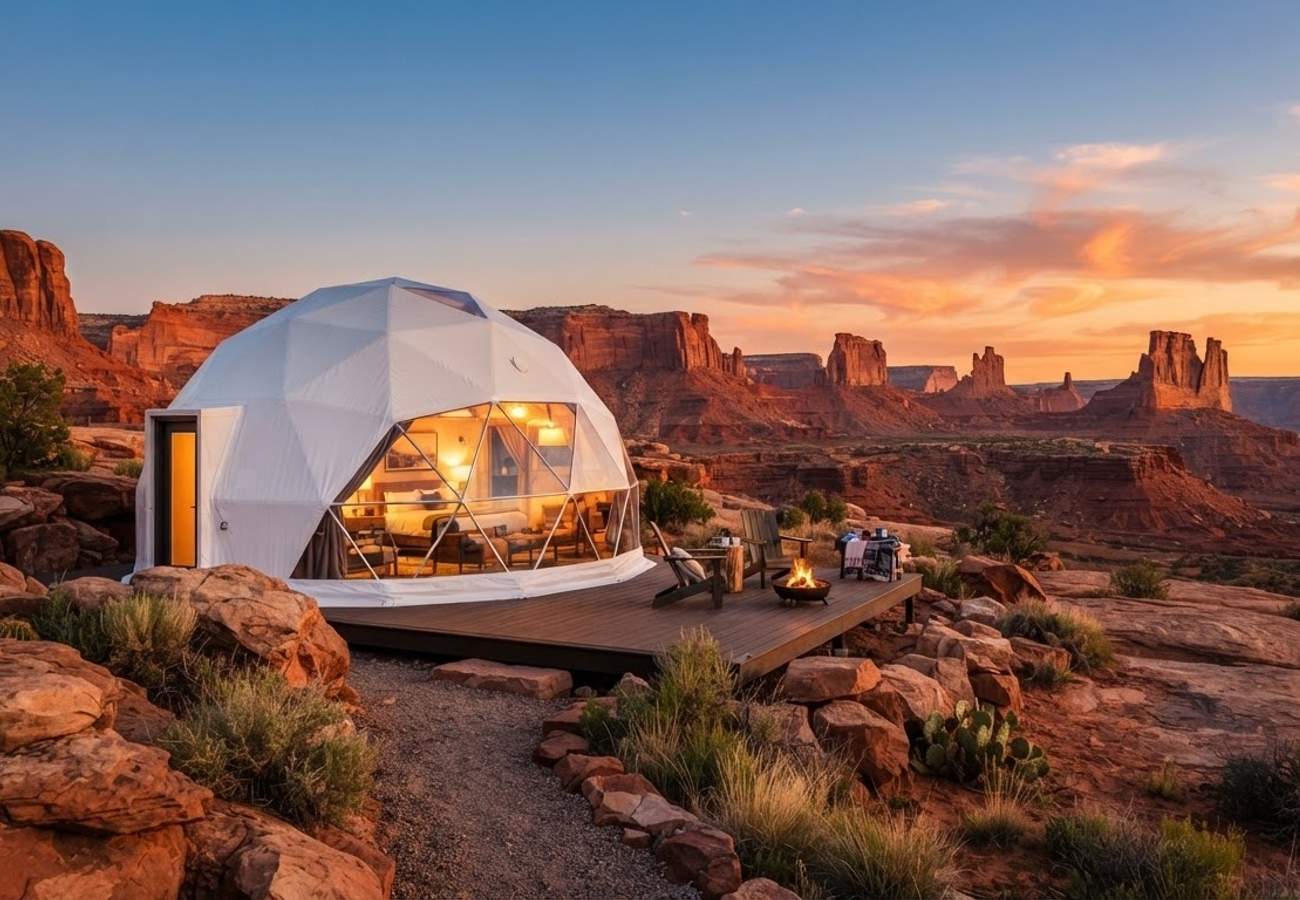
Image generated by AI
A fundamental shift in American tourism is underway as travelers abandon conventional hotel rooms in favor of immersive, architecture-driven stays that serve as the primary attraction of the trip. Across ten specific US destinations, the "where" of a stay has become more important than the "what" of the sightseeing, with luxury domes, floating houseboats, and elevated treehouses driving booking decisions.
The traditional model of using a hotel as a mere base for exploration is being replaced by a philosophy where the accommodation is the destination itself. This trend is particularly evident in regions where the lodging integrates directly with the surrounding geography—whether it is the red rocks of Utah or the coastal vistas of Maine. Industry data suggests that this movement toward "experiential lodging" is not just a preference for luxury, but a desire for authenticity and a deeper connection to the environment.
Moab Transforms Desert Hospitality via Luxury Glamping
In Moab, Utah, the hospitality landscape is moving away from high-density hotel blocks. Visitors are increasingly opting for luxury safari tents and desert domes that place them directly within the red rock scenery.
As the primary gateway to both Canyonlands National Park and Arches National Park, Moab has seen a surge in guests who refuse to leave the natural environment upon exiting the park gates. By utilizing boutique camping experiences, travelers can maintain a constant immersion in nature, turning a night's sleep into a stargazing event beneath wide desert skies.
Jackson Revives the American West through Ranch Tourism
Jackson, Wyoming, is leveraging its cultural heritage to move travelers out of conventional hotels and onto authentic guest ranches. These stays are designed to be immersive, offering a lifestyle experience rather than just a room.
Guests at these luxury ranches participate in activities that define the region: fly fishing, horseback riding across open plains, and engaging with cowboy traditions. This shift ensures that the landscape remains the central focus of the holiday, positioning Jackson as a premier hub for ranch-based tourism.
Gatlinburg Leverages Mountain Cabins as Primary Attractions
In Tennessee, Gatlinburg has successfully pivoted its tourism strategy to highlight mountain cabins over standard hotel lodging. Situated adjacent to the Great Smoky Mountains National Park, the city has seen a massive shift toward luxury chalets, spacious log cabins, and treehouses.
For families and groups, the draw is the combination of privacy and panoramic mountain views. These properties allow for a deeper psychological connection to the forest, effectively making the cabin the centerpiece of the vacation.
Sedona Integrates Wellness and Eco-Lodging
Sedona, Arizona, is utilizing its reputation for spiritual wellness to redefine its accommodation offerings. The city is moving away from high-rise structures in favor of eco-lodges, luxury domes, and wellness retreats.
These stays are strategically hidden among the region's iconic red rock formations, catering to visitors focused on meditation, yoga, and stargazing. The result is a seamless blend of the destination's natural character and the guest's physical environment.
Mariposa Redefines the Yosemite Gateway Experience
Mariposa, California, is capitalizing on its proximity to Yosemite National Park by diversifying its hospitality options. Conventional hotels are increasingly being bypassed for modern Airstream trailers, stylish cabins, and luxury tents.
This shift allows visitors to experience the grandeur of Yosemite's landscapes without sacrificing modern comforts. The demand in Mariposa indicates a broader consumer trend: the desire for "outdoor hospitality" that complements the adventure of the national park.
Cave Junction Pioneers the Treehouse Tourism Model
In Cave Junction, Oregon, the accommodation is the sole reason for the visit. The area has become a national icon for its architecturally stunning treehouses built high within the forest canopy.
These elevated retreats offer a level of privacy and adventure that traditional hotels cannot replicate. By creating a unique "vertical" lodging experience, Cave Junction has proven that a specific type of accommodation can inspire an entire travel itinerary.
Page Transitions to Floating Houseboat Holidays
Page, Arizona, has bypassed the traditional hotel model entirely for a segment of its visitors by promoting houseboat holidays on Lake Powell.
In this model, the accommodation functions as both the residence and the transport. Guests live directly on the water, waking up beside towering canyon walls and exploring the lake at their own pace. This level of mobility and freedom provides a value proposition that static hotel rooms cannot match.
Texas Hill Country Promotes Vineyard and Tiny Home Escapes
The Texas Hill Country, specifically Fredericksburg and Wimberley, is utilizing rural charm to attract high-value tourists.
- Fredericksburg: Focuses on winery estates, vineyard cottages, and ranch stays that integrate local viticulture and regional cuisine.
- Wimberley: Specializes in riverside cabins, boutique retreats, and tiny homes designed to encourage a slower pace of life.
These communities are successfully competing with urban centers by offering memorable, small-scale lodging that celebrates the local agrarian culture.
Bar Harbor Preserves Maritime Heritage via Historic Stays
Bar Harbor, Maine, is integrating the state's nautical history into its lodging. Rather than staying in standardized resorts, visitors exploring Acadia National Park are opting for lighthouse inns and traditional coastal cottages.
These stays provide a personal connection to the Atlantic coast and Maine's maritime legacy, ensuring that the accommodation adds a layer of historical education to the travel experience.
Analysis of the Experiential Lodging Shift
The transition toward these diverse stay options represents a broader psychological change in global travel. Modern travelers are no longer satisfied with "commoditized" sleep; they are seeking narratives. Whether it is the solitude of an Oregon treehouse or the heritage of a Wyoming ranch, the lodging is now a storytelling tool.
From an economic perspective, this trend decentralizes tourism. By moving guests out of urban hotel districts and into rural cabins, domes, and houseboats, more revenue is distributed into smaller communities and local businesses.
Summary of Unique Lodging Types by Location
| City/Region | Primary Alternative Lodging | Key Appeal |
|---|---|---|
| Moab, UT | Luxury Domes & Safari Tents | Red Rock Immersion |
| Jackson, WY | Guest Ranches | Cowboy Traditions |
| Gatlinburg, TN | Log Cabins & Treehouses | Smoky Mountain Views |
| Sedona, AZ | Eco-lodges & Wellness Domes | Spiritual Wellness |
| Mariposa, CA | Airstreams & Luxury Tents | Yosemite Proximity |
| Cave Junction, OR | High-Forest Treehouses | Architectural Adventure |
| Page, AZ | Houseboats | Lake Powell Exploration |
| Fredericksburg, TX | Vineyard Cottages | Wine Culture |
| Wimberley, TX | Tiny Homes & River Cabins | Rural Slow-Living |
| Bar Harbor, ME | Lighthouse Inns | Maritime Heritage |
Why This Matters: The Impact on the Modern Traveler
For the traveler, this shift means that the "hotel" is no longer a neutral space to sleep between activities—it is an active part of the itinerary. This creates a higher expectation for design and integration with nature. From a logistical standpoint, it requires a shift in how trips are planned; travelers must now book their "experience" (the stay) long before they plan their "activities" (the sightseeing), as these unique properties often have much lower inventory than traditional hotels.
Furthermore, this trend highlights a growing demand for "low-impact" and "high-connection" travel. By choosing a tiny home in Texas or a dome in Arizona, travelers are opting for a smaller physical footprint while gaining a larger emotional connection to the destination.
The era of the generic hotel room is fading, replaced by a landscape where the architecture of the stay is the heart of the journey.
Related Travel Guides
Disclaimer
This article is for informational and educational purposes only. It does not constitute legal, financial, or professional advice. While we strive to provide accurate and up-to-date information, travel policies, regulations, and conditions change rapidly. Always verify information with official sources before making travel decisions. Nomad Lawyer makes no representations about the accuracy, reliability, completeness, or suitability of the information provided. Readers should consult qualified professionals for advice specific to their circumstances. The views expressed in this article are those of the author and do not necessarily reflect the views of Nomad Lawyer.
Raushan Kumar
Founder & Lead Developer
Full-stack developer with 11+ years of experience and a passionate traveller. Raushan built Nomad Lawyer from the ground up with a vision to create the best travel and law experience on the web.
Learn more about our team →