
US Wildfire Crisis Reshapes 2026 Travel: Nine Million Acres Burned Across 47 States Disrupt National Parks

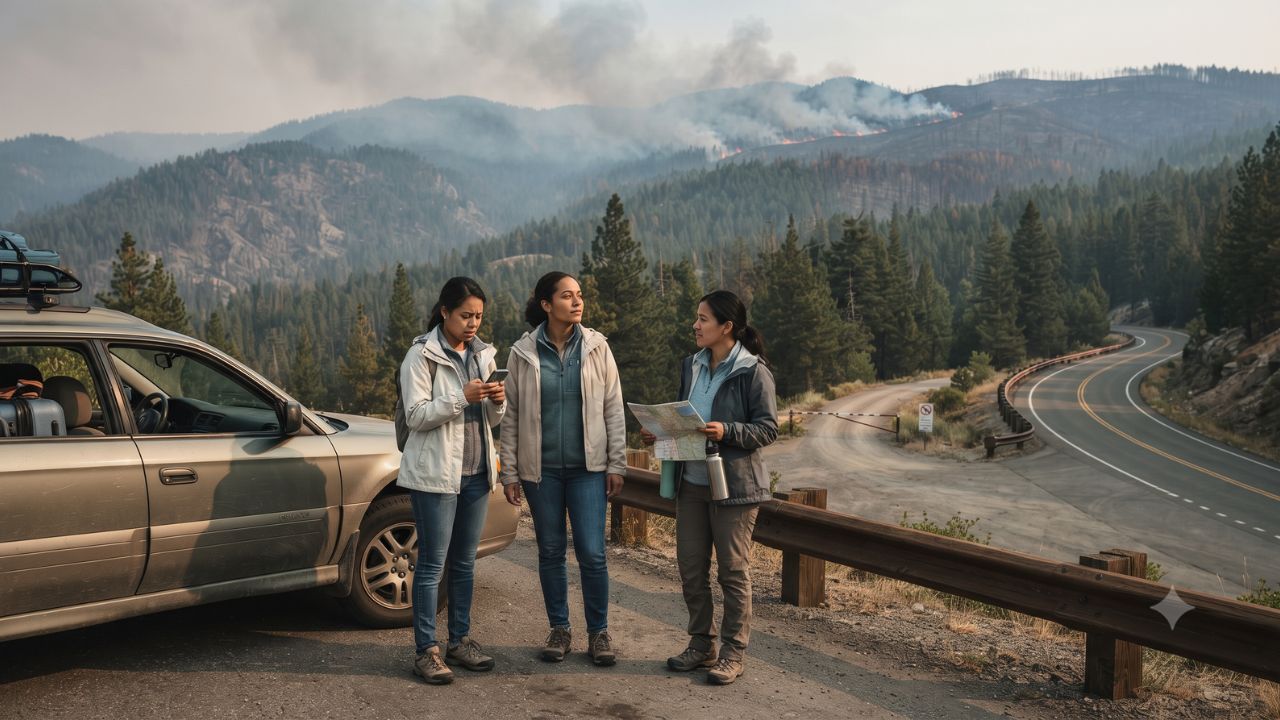
With more than 64,000 wildland fires scorching over nine million acres across 47 states by mid-October 2026, the American travel industry is navigating its most disruptive environmental crisis in recent history. Led by Oregon's catastrophic loss of 2,319,327.6 acres and Nebraska's unprecedented burn of 1,035,503.4 acres, the surge in high-intensity blazes has dismantled conventional domestic itineraries, forcing emergency park evacuations, closing federal highway corridors, and invalidating thousands of campground and backcountry reservations.
Data published by the National Interagency Fire Center (NIFC) reveals an escalating national emergency that expanded rapidly from early September—when 53,000 blazes had consumed 8.3 million acres—into an autumn crisis affecting outdoor recreation nationwide. For long-distance road-trippers, wilderness backpackers, and international tourists, the 2026 wildfire season demonstrates that regional safety depends on hyper-localized route intelligence rather than broad state-level assumptions.
The Pacific Northwest and Great Plains Acreage Crisis: Oregon to Nebraska
The geographical distribution of the 2026 fire season reveals severe geographic asymmetry. While some states recorded thousands of individual ignitions with limited total spread, others suffered catastrophic acreage consumption from a handful of fast-moving infernos.
Oregon emerged as the epicenter of scorched territory, reporting 1,068 wildland fires that consumed an extraordinary 2,319,327.6 acres—more than double any other state in the nation. The resulting damage extended far beyond remote timber stands, severing major transit corridors across eastern and central Oregon. State transportation officials imposed emergency road closures, extended detours, and reduced speed zones, paralyzing self-drive holidays, rural lodging operators, and access to premier river and mountain recreation corridors. Heavy particulate smoke blanketed popular scenic overlooks, turning iconic alpine vistas into hazardous air-quality zones.
East of the Rockies, Nebraska generated the season's most unexpected disruption, recording 646 fires that swept across 1,035,503.4 acres of grasslands, prairie, and river bluffs. In the Nebraska Panhandle, the South Fork Fire triggered the immediate evacuation of visitors from Fort Robinson State Park and the adjacent Peterson Wildlife Management Area. State authorities shut down U.S. Highway 20, halting regional highway travel while park concessionaires scrambled to process emergency refunds and booking transfers. The incident demonstrated to cross-country motorists that catastrophic fire behavior is no longer confined to arid western mountain ranges.
Washington State faced compounding disruptions across 1,258 blazes that charred 649,024.7 acres. Heavy smoke plumes and rapid fire perimeter expansion forced the National Park Service (NPS) to shutter the Sunrise Road corridor, Grand Park trailheads, and backcountry campsites near Mount Rainier, alongside widespread wilderness closures throughout the Lake Chelan basin.
National Park Enclaves Under Siege: Channel Islands, Canyonlands, and Mount Rainier
Direct visitor impacts struck hardest at marquee federal reserves where sudden fire activity disrupted fragile ecologies and unique visitor infrastructure.
In California, where 5,722 wildland fires scorched 345,434.3 acres, the maritime wilderness of Channel Islands National Park suffered severe disruption. The Santa Rosa Island Fire consumed approximately one-third of Santa Rosa Island, prompting an emergency shutdown of all visitor access. While day-use ferry excursions resumed on July 1, backcountry hiking and campground reservations were cancelled through October 13, with extensive tracts of the island remaining strictly closed for the entire 2026 season due to trail instability, weakened root systems, and post-fire erosion hazards. On the mainland, heightened fire danger prompted Joshua Tree National Park to ban all open flames and charcoal campfires during peak autumn visiting weeks.
Utah experienced a severe tourism shock when the Babylon Fire swept toward Utah Highway 211, triggering the emergency evacuation and closure of the Needles district in Canyonlands National Park. The NPS cancelled all campground permits and backcountry itineraries in the district through July 31. Because Canyonlands' Island in the Sky and Maze districts remained operational, travelers who monitored real-time district boundaries saved their vacations, while those assuming the entire park was shuttered abandoned their journeys needlessly.
In the southern desert, Arizona’s Yaqui Fire forced the closure of Montezuma Pass Road and prompted the evacuation of the Coronado National Memorial visitor center, keeping alpine trails shut for safety inspections even after administrative facilities reopened. In Colorado, where 1,094 fires consumed 274,872.0 acres, the Snyder Fire mandated emergency public-land shutdowns across Mesa County before the Bureau of Land Management (BLM) restored limited access.
State-by-State Wildfire Impact and Travel Disruption Matrix
The following table synthesizes official federal wildland fire statistics and confirmed tourism disruptions across the most heavily impacted states through mid-October 2026:
| State & Geographic Region | Reported Wildfires | Recorded Acres Burned | Confirmed Visitor & Transportation Disruptions | Regulatory Interventions |
|---|---|---|---|---|
| Oregon (Pacific Northwest) | 1,068 | 2,319,327.6 | Major central/eastern highway closures; severe air quality alerts | State emergency travel detours; forest recreation bans |
| Nebraska (Great Plains) | 646 | 1,035,503.4 | Fort Robinson State Park evacuated; U.S. Highway 20 shut | Complete state park shutdowns; booking transfer orders |
| Washington (Pacific Northwest) | 1,258 | 649,024.7 | Mount Rainier Sunrise Road and Lake Chelan trails closed | Backcountry permit cancellations; evacuation warnings |
| Utah (Intermountain West) | 1,105 | 559,861.0 | Canyonlands Needles district evacuated; Hwy 211 threatened | All Needles district permits cancelled through July 31 |
| Oklahoma (Southern Plains) | 2,259 | 485,885.2 | Prairie rangeland closures; localized rural road diversions | Regional burn bans; state park campfire restrictions |
| Idaho (Northern Rockies) | 872 | 477,898.7 | Big Grass Fire shut southwestern public lands and motorized routes | BLM off-road travel limits; motorized access bans |
| Nevada (Great Basin) | 688 | 415,499.0 | Dispersed recreation suspended; low-visibility driving corridors | Statewide BLM bans on campfires, charcoal, and target shooting |
| Texas (Southern Plains) | 4,588 | 348,958.5 | Multiple regional grass fire outbreaks; state park advisories | County-level burn bans; outdoor cooking restrictions |
| California (West Coast) | 5,722 | 345,434.3 | Santa Rosa Island fire shut one-third of island; overnight trips barred | Channel Islands overnight ban to Oct 13; Joshua Tree bans |
| Florida (Southeast) | 3,128 | 274,854.0 | Wildfire smoke diversions along interstate connectors | Municipal open-flame bans; state forest restrictions |
| Colorado (Central Rockies) | 1,094 | 274,872.0 | Snyder Fire closed Mesa County public lands; trail delays | BLM emergency parcel closures; fire prevention orders |
| Kansas (Central Plains) | 53 | 171,522.7 | Fast-moving grassland burns; rural highway detours | State agricultural and grassland burn prohibitions |
| New Mexico (Southwest) | 1,119 | 149,874.5 | Bandelier, Valles Caldera, and Pecos historic sites restricted | Strict Stage II federal fire restrictions enacted |
Regulatory Restrictions and Air Quality Hazards Across the Intermountain West
Across the Intermountain West, the primary travel barrier often proved to be regulatory pre-emption rather than active flames. In New Mexico, extreme drought and dry lightning prompted federal land stewards to impose Stage II fire restrictions across high-profile heritage sites, including Bandelier National Monument, Valles Caldera National Preserve, Pecos National Historical Park, and Fort Union National Monument. These orders prohibited all open campfires, charcoal grills, and outdoor smoking, fundamentally altering the camping experience.
In Nevada, where 688 fires burned 415,499.0 acres, the BLM enacted sweeping public-land mandates restricting open fires and recreational shooting. In Idaho, the Big Grass Fire prompted emergency orders shuttering extensive trail networks and off-road driving corridors across southwestern public lands, disrupting multi-day overland expeditions.
Even in states with modest burn acreage, fire volume created systemic friction. North Carolina recorded the nation's highest fire count with 5,973 blazes, yet burned only 20,614.6 acres. Similarly, states like Delaware (1 fire, 0.3 acres), Indiana (10 fires, 47.7 acres), and Hawaii (64 fires, 91.0 acres) suffered minimal physical losses, proving that wildfire risks vary radically by vegetation type and humidity levels.
Expert Analysis: The Economics of Climate Volatility and Concessionaire Liability
The unprecedented scale of the 2026 wildfire crisis signals a structural realignment in domestic travel logistics, insurance underwriting, and concessionaire operations. In previous decades, travelers viewed summer as a low-risk season for outdoor exploration; today, peak summer months represent a period of elevated environmental liability.
For travelers booking this route, the direct consequence is an immediate exposure to non-refundable lodging costs, broken flight itineraries, and unexpected out-of-pocket expenses when federal land closures occur outside formal state-of-emergency declarations. Standard travel insurance policies frequently exclude coverage for air quality deterioration or voluntary cancellations prompted by nearby smoke, leaving visitors financially stranded unless an evacuation order is formally signed.
The pricing pressure this creates means that gateway communities situated adjacent to closed park sectors—such as Moab, Utah, during the Canyonlands shutdown, or Ventura, California, following the Santa Rosa Island blaze—suffer severe revenue losses, while peripheral hotels located 50 miles away capture inflated room rates as displaced travelers search for emergency shelter. As federal agencies expand Stage II bans and cancel commercial permits, national park concessionaires face severe revenue contraction, threatening the economic viability of historic lodges and guiding operations.
Additionally, destination management organizations are being forced to overhaul their communication architectures. Because an outbreak in one remote drainage can lead distant consumers to cancel trips across an entire state, regional tourism boards must deploy high-resolution, interactive mapping platforms to reassure travelers that surrounding recreation corridors remain safe and fully operational.
Key Takeaways
- Nine-Million-Acre Milestone: Wildfires impacted travel in 47 states by mid-October 2026, recording more than 64,000 blazes and over nine million burned acres nationwide.
- Severe Regional Bottlenecks: Oregon suffered the nation's highest loss at 2,319,327.6 acres, while Nebraska followed with an unprecedented 1,035,503.4 acres burned.
- National Park Closures: Key destination assets faced extended shutdowns, including one-third of California's Santa Rosa Island and Utah's Needles district in Canyonlands.
- Stringent Stage II Bans: Federal authorities enacted strict open-flame prohibitions across Bandelier, Valles Caldera, and millions of BLM-managed acres in Nevada and Idaho.
- Micro-Geographic Disruption: High fire incident counts in states like North Carolina (5,973 fires) contrasted with low acreage, demonstrating that localized intelligence is vital for travel planning.
FAQ: United States Wildfire Travel Disruptions 2026
Which states recorded the highest burned acreage during the 2026 fire season?
Oregon recorded the nation's largest burn total with 2,319,327.6 acres across 1,068 fires, followed unexpectedly by Nebraska, which reported 1,035,503.4 acres consumed across 646 separate incidents.
Was Santa Rosa Island in Channel Islands National Park reopened to visitors?
Day trips to Santa Rosa Island resumed on July 1, but all overnight camping stays were cancelled through October 13, with damaged island sectors remaining closed for the rest of the 2026 season.
How did the Babylon Fire affect Canyonlands National Park visitors?
The Babylon Fire forced the evacuation of the Needles district and threatened Utah Highway 211, prompting officials to cancel all campground bookings and backcountry permits in that district through July 31.
Does travel insurance cover cancellations due to wildfire smoke?
Most standard policies exclude claims based solely on smoke or poor air quality. Coverage typically applies only if an official mandatory evacuation order is issued or lodging accommodations are physically damaged.
[When wildfire redraws the map, the most valuable piece of travel gear is not a compass, but real-time intelligence.]
Related Travel Guides
- Rochester Surpasses $1.1 Billion Tourism Milestone: How Medical Travel Rivals America's Urban Giants
- Breeze Airways Scales Dual-Airport Pittsburgh Network: 18 Nonstop Routes at PIT Coupled with Latrobe Expansion
- America's Mountain Parklands Confront Stricter Access Rules: From Glacier's 50-Mile Corridor to Smoky Ridge Trails
Disclaimer
This article is for informational and educational purposes only. It does not constitute legal, financial, or professional advice. While we strive to provide accurate and up-to-date information, travel policies, regulations, and conditions change rapidly. Always verify information with official sources before making travel decisions. Nomad Lawyer makes no representations about the accuracy, reliability, completeness, or suitability of the information provided. Readers should consult qualified professionals for advice specific to their circumstances. The views expressed in this article are those of the author and do not necessarily reflect the views of Nomad Lawyer.
Preeti Gunjan
Contributor & Community Manager
A passionate traveller and community builder. Preeti helps grow the Nomad Lawyer community, fostering engagement and bringing the reader experience to life.
Learn more about our team →