
FAA Warns US Airlines on Saudi Airspace: Riyadh Airport Strikes Trigger Flight Cancellations Across 10 States

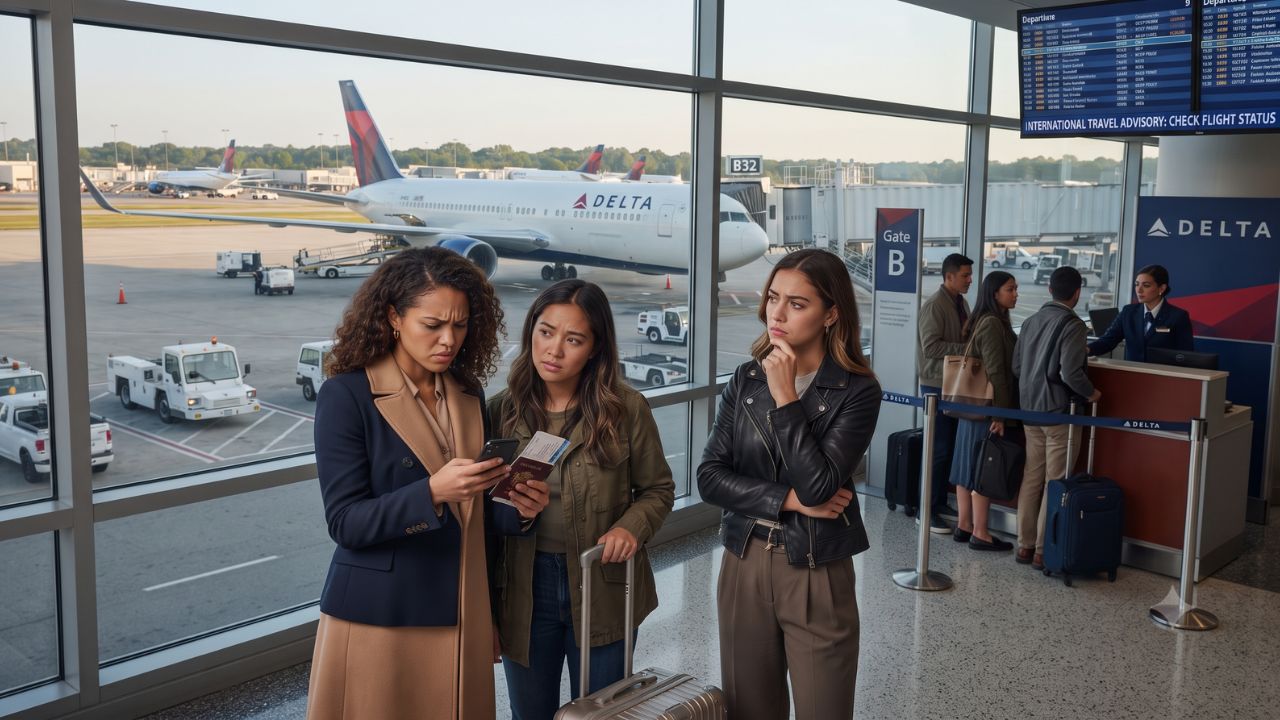
A fatal projectile strike on Riyadh's King Khalid International Airport killing 12 people and injuring more than 300 has triggered an emergency Federal Aviation Administration airspace advisory and nearly 500 daily flight cancellations across international airline networks. The sudden operational shutdown of Saudi Arabia's premier political and financial gateway on 10 October 2026—extended by civil aviation authorities through at least 17 October—has fractured air corridors connecting North America with the Arabian Gulf. Within 72 hours of the attack, claimed by Yemen's Iran-backed Houthi movement, Delta Air Lines postponed its scheduled nonstop route between Atlanta and Riyadh, while international air travelers across ten major US states encountered immediate cancellations, stranded connecting itineraries, and emergency security alerts.
The disruption exposes how modern commercial aviation networks remain deeply vulnerable to regional ballistic and drone threats. While domestic US airports continue normal operations, the ripple effects on transatlantic and trans-Pacific feeder flights have left corporate executives, government contractors, defense personnel, and family travelers scrambling for alternate routings through Europe and the Middle East.
The Riyadh Terminal Strike and FAA Regulatory Directive
The crisis erupted on Saturday, 10 October 2026, when a projectile struck an active passenger terminal at King Khalid International Airport in Riyadh. The blast caused extensive structural damage, claimed at least 12 lives, and injured over 300 passengers and airport staff. Saudi civil aviation authorities immediately halted air traffic, subsequently extending the facility's full operational closure through 17 October 2026 to evaluate safety perimeters, repair damaged infrastructure, and reinforce air defense systems.
In response, the Federal Aviation Administration (FAA) issued a formal safety advisory alerting US commercial aircraft operators, cargo carriers, and pilots to exercise heightened caution when operating within or traversing Saudi Arabian airspace. Citing acute "safety-of-flight risks associated with ongoing military activities," the regulatory warning remains in effect until 10 December 2026. While the FAA advisory does not mandate an outright legal prohibition on American carriers, it imposes stringent risk-assessment protocols that effectively prevent commercial operators from entering conflict-adjacent sectors without comprehensive contingency plans.
Global airline response was immediate. Data published by aviation tracking service FlightAware confirmed nearly 500 daily flight cancellations by Monday morning, 12 October 2026, as international carriers suspended services to Riyadh and rerouted flights away from central Saudi airspace. Simultaneously, the U.S. Department of State and the US Embassy in Saudi Arabia issued urgent security warnings advising American citizens to avoid King Khalid International Airport entirely and urging travelers to reconsider all non-essential trips to the kingdom.
State-by-State Breakdown: Direct and Feeder Hub Exposure
The suspension of services into Riyadh has created distinct logistical bottlenecks across the United States. Direct impacts are concentrated at gateways offering nonstop services to the kingdom, while indirect exposure ripples through major airline alliance hubs handling high volumes of Middle East connections.
| US State | Primary Hub Airport | Direct vs. Indirect Link | Operational Exposure Level | Research and Market Impact Assessment |
|---|---|---|---|---|
| Georgia | Atlanta Hartsfield-Jackson (ATL) | Direct (Planned) | Very High | Confirmed postponement of Delta's inaugural nonstop route to Riyadh until March 2027 |
| New York | New York John F. Kennedy (JFK) | Direct (Active) | High | Saudia nonstop flights grounded; heavy rebooking across European transatlantic partners |
| Virginia | Washington Dulles (IAD) | Direct (Active) | High | Daily Saudia flights disrupted; diplomatic, defense, and consulting travelers stranded |
| California | Los Angeles International (LAX) | Direct (Jeddah) | Moderate | Saudia flights to Jeddah operate, but onward domestic connections to Riyadh remain halted |
| Texas | Dallas–Fort Worth (DFW) / Houston (IAH) | Indirect Connections | Moderate | Energy and engineering corporate travelers forced into European hub detours |
| Illinois | Chicago O'Hare (ORD) | Indirect Connections | Moderate | Star Alliance and oneworld connecting passengers facing canceled Gulf sectors |
| Florida | Miami (MIA) / Orlando (MCO) | Indirect Connections | Moderate | Leisure, visiting friends and relatives, and corporate travelers requiring rerouting |
| Massachusetts | Boston Logan (BOS) | Indirect Connections | Moderate | Academic, medical, and technology business travelers rerouting via London and Doha |
| New Jersey | Newark Liberty (EWR) | Indirect Connections | Lower, Indirect | Secondary New York metro traffic absorbing overflow from disrupted JFK departures |
| Michigan | Detroit Metropolitan (DTW) | Feeder Network | Lower, Indirect | Delta feeder passenger traffic affected by the cancellation of connecting Atlanta departures |
In Georgia, the operational setback was instantaneous. Delta Air Lines had finalized preparations to inaugurate a nonstop service between Hartsfield-Jackson Atlanta International Airport and Riyadh on 23 October 2026, marking a historic direct link between the American Southeast and Saudi Arabia. Following the terminal attack, Delta leadership postponed the route launch until March 2027. Delta Air Lines Chief Executive Officer Ed Bastian confirmed that operating safety remains the definitive benchmark governing new route activations, prioritizing fleet and passenger protection over commercial expansion timetables.
For New York and Virginia, the consequences involve existing, active schedules. Saudia operates direct long-haul flights from New York JFK and Washington Dulles into Riyadh. With King Khalid International Airport closed through 17 October, these direct services have faced cancellations or emergency diversions to Jeddah, stranding high-yield business travelers, government delegations, and transit passengers. In California, Los Angeles International maintains direct services to Jeddah; however, travelers holding onward connections to Riyadh find themselves terminating journeys hundreds of miles short of their destination.
Expert Analysis: Airspace Vulnerability and Airline Route Economics
The regulatory advisory from the FAA and the postponement of commercial links between Atlanta and Riyadh signal deeper economic and operational challenges across the long-haul aviation sector. When hostile actors demonstrate the capability to strike major civil aviation terminals with ballistic or loitering munitions, the financial calculus of international route management shifts instantly.
For travelers booking this route, the direct consequence is an immediate reduction in capacity, forcing thousands of passengers into scarce remaining seats on European and Gulf carriers. Passengers who previously relied on one-stop itineraries through Frankfurt, London Heathrow, Paris Charles de Gaulle, or Doha now face sudden schedule changes as those connecting flights to Riyadh are suspended or diverted to Jeddah, Medina, or Dammam.
The pricing pressure this creates means economy and premium cabin airfares across remaining Middle Eastern corridors will climb sharply through the fourth quarter of 2026. War risk insurance surcharges will inevitably be passed directly to corporate and leisure consumers. Furthermore, avoiding central Saudi airspace forces international carriers operating between Europe, South Asia, and Southeast Asia to adjust flight paths over Egypt, the Red Sea, or northern routes. These diversions add between 45 and 90 minutes of flight time, increasing jet fuel consumption, crew duty expenses, and carbon emissions.
For Saudi Arabia's Vision 2030 tourism and economic diversification targets, the incident represents a substantial short-term headwind. The kingdom has invested billions of dollars to establish Riyadh as a global commercial hub and aviation rival to Dubai and Doha. The postponement of Delta's Atlanta service deprives the market of hundreds of weekly high-spending American business visitors and leisure travelers. Until civil aviation authorities and international carriers establish verified perimeter defense integrity, international airlines will remain hesitant to commit expensive wide-body aircraft to the capital.
Key Takeaways
- Emergency FAA Advisory in Effect: The FAA has warned all US operators of significant military risks in Saudi airspace, maintaining an active advisory through 10 December 2026.
- Riyadh Airport Closed Through 17 October: A terminal strike on 10 October 2026 killed 12 and injured over 300, prompting Saudi authorities to shut King Khalid International Airport for structural and security evaluations.
- Delta Postpones Atlanta–Riyadh Route: Delta Air Lines delayed its planned 23 October 2026 route launch to March 2027 following safety assessments by chief executive Ed Bastian.
- Broad US State Exposure: Ten US states face substantial travel disruptions, led by Georgia's lost route and direct flight cancellations out of New York JFK and Washington Dulles.
- Severe Capacity Crunch: FlightAware reported nearly 500 daily flight cancellations, restricting seat availability and pushing airfares higher across alternative Gulf routes.
FAQ: Saudi Arabia Airspace Disruptions and Flight Cancellations 2026
How long will the FAA Saudi airspace advisory remain active?
The FAA flight warning for US aircraft operators remains effective through 10 December 2026, subject to ongoing security and military risk reviews across the region.
Why did Delta Air Lines postpone its Atlanta to Riyadh flights?
Delta Air Lines postponed its 23 October 2026 route launch until March 2027 following a fatal missile strike on Riyadh's airport, prioritizing passenger and crew safety.
Are domestic flights within the United States affected by this advisory?
No. Domestic flights within the United States operate normally. The disruption is limited to international itineraries connecting US gateways with Saudi Arabia and neighboring Middle Eastern corridors.
What should travelers holding tickets to Riyadh do immediately?
Passengers should contact their airline to utilize rebooking waivers, request full refunds for canceled segments, or arrange rerouting through operational hubs such as Jeddah or European gateways.
[When geopolitical conflict pierces commercial airspace, passenger safety dictates schedules, reminding global travelers that international connectivity is only as reliable as the skies it traverses.]
Related Travel Guides
- US Airports Unleash 2027 Expansion Wave: Newark, Philadelphia, and New Transatlantic Hub Networks
- GoJet Airlines Named North America's Top Regional Carrier: How 50-Seat CRJ-550s Redefined Feeder Aviation
- US State Department Issues Travel Advisories for Italy, Morocco, and Brazil: Abduction Risks and Border Checks
Disclaimer
This article is for informational and educational purposes only. It does not constitute legal, financial, or professional advice. While we strive to provide accurate and up-to-date information, travel policies, regulations, and conditions change rapidly. Always verify information with official sources before making travel decisions. Nomad Lawyer makes no representations about the accuracy, reliability, completeness, or suitability of the information provided. Readers should consult qualified professionals for advice specific to their circumstances. The views expressed in this article are those of the author and do not necessarily reflect the views of Nomad Lawyer.
Preeti Gunjan
Contributor & Community Manager
A passionate traveller and community builder. Preeti helps grow the Nomad Lawyer community, fostering engagement and bringing the reader experience to life.
Learn more about our team →