
Middle East Travel Advisory Escalates: US Issues Level 3 Warning for Saudi Arabia Amid Drone and Missile Risks

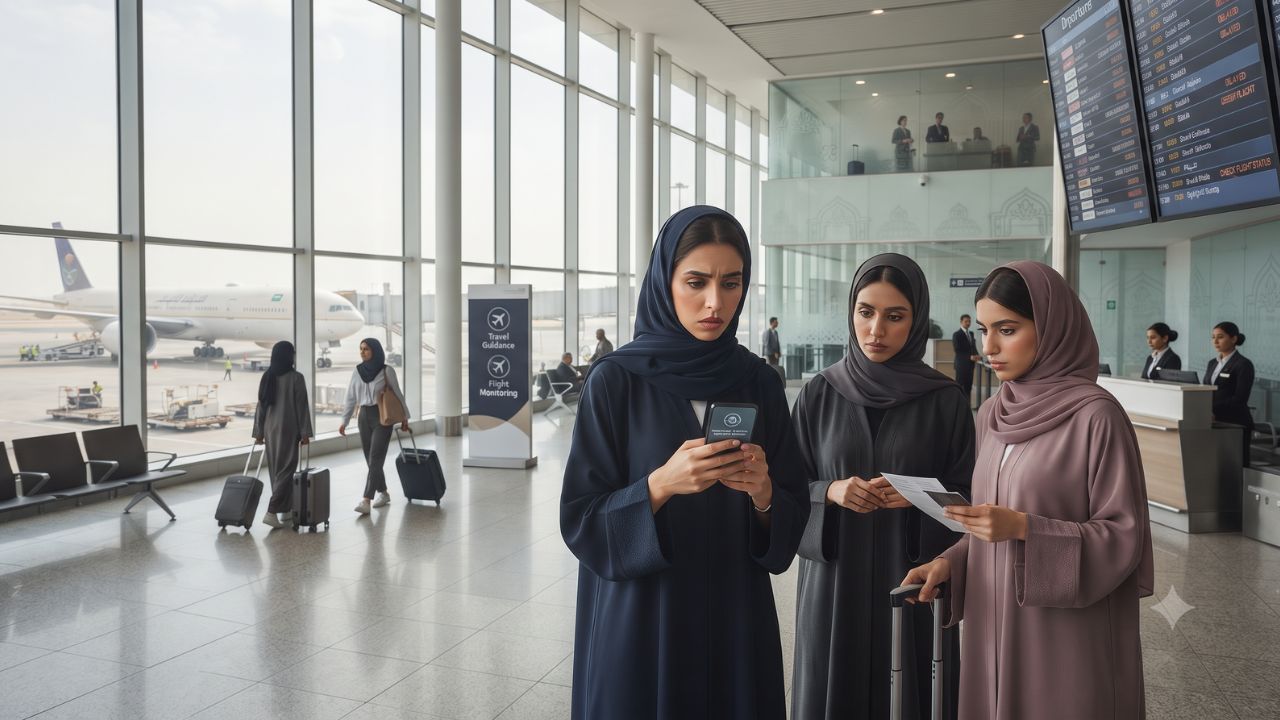
Designating the kingdom under an escalated Level 3: Reconsider Travel advisory while imposing a strict Level 4: Do Not Travel mandate along its southern border with Yemen, the United States Department of State has issued an urgent security directive for travelers across Saudi Arabia and the broader Persian Gulf. Spurred by persistent ballistic missile and drone targeting by Iranian-backed Houthi forces aimed at civilian airports and energy installations, the advisory alerts international travelers and corporate expatriates to the lethal risks of falling aerial interception debris, emergency airspace closures, and aggressive local detention enforcement for photographing security facilities.
The comprehensive alert marks a profound departure from historical baseline advisories that focused primarily on routine tourism precautions, regional cultural norms, and seasonal weather patterns. Administered by the U.S. Department of State, the updated guidance reflects an intensely volatile security environment spanning the Arabian Peninsula, the Persian Gulf, and the Gulf of Oman. For multinational corporations, leisure travelers, and aviation operators, the security directive establishes stringent risk-containment protocols across one of the world's most critical transit corridors.
Geopolitical Escalation: Aerial Interceptions and Civil Aviation Hazards
The primary catalyst for the elevated travel warning is the escalating frequency of aerial strikes conducted by Iran and aligned proxy networks. Houthi forces operating from northern Yemen continue to launch advanced loitering munitions, ballistic missiles, and armed drones targeting high-profile commercial and government assets, including industrial energy facilities, military installations, and international civilian airports in southern and western Saudi Arabia.
While regional air defense batteries—including Patriot surface-to-air missile systems—routinely neutralize inbound aerial projectiles, the physical act of mid-air interception introduces severe hazards on the ground. Fragmented ordnance, spent missile boosters, and detonated explosive payloads generate high-velocity debris fields that scatter over inhabited urban sectors and airport perimeters, endangering civilian travelers and ground personnel.
In the skies, commercial aviation faces escalating operational instability. In response to safety notices issued by the Federal Aviation Administration (FAA) and intelligence assessments from international aviation security bodies, commercial airlines operating across the Persian Gulf and Gulf of Oman have altered flight paths, implemented fuel diversion reserves, and instituted precautionary ground stops. Unannounced airspace closures triggered by active air defense engagements threaten sudden flight cancellations, diversion to alternate regional hubs, and extended passenger stranding.
Ground Operations and Legal Realities: Strict Surveillance and Exit Bans
Beyond airborne kinetic threats, the State Department warning emphasizes that foreign visitors face an uncompromising domestic legal framework. Saudi security forces enforce rigorous municipal surveillance and counter-espionage statutes, particularly around sensitive infrastructure and military installations.
Foreign travelers have faced arbitrary detention, heavy financial penalties, and indefinite exit bans for unauthorized photography or video recording. Capturing images of security incidents, drone interception trails, military checkpoints, government ministries, or critical energy complexes is strictly illegal under local cybercrime and security legislation. The advisory explicitly urges all foreign nationals to maintain a low personal profile, completely avoid public demonstrations or spontaneous gatherings, and steer clear of heavy police concentrations or venues visibly associated with Western interests.
When localized airspace closures ground commercial flights, travelers are advised to utilize established ground transit networks. Overland alternatives—including the modern passenger rail network operated by Saudi Arabia Railways (SAR) and licensed intercity coach services—provide viable evacuation and intercity corridors, provided schedules and station operations are verified through official municipal channels prior to departure.
United States Middle East Advisory Matrix: Regional Risk Levels, Flight Corridors, and Legal Directives
The following matrix delineates the operational parameters, risk classifications, and traveler directives governing travel across Saudi Arabia and regional border zones:
| Jurisdiction & Border Sector | State Department Advisory Level | Primary Security Vectors | Civil Aviation & Transit Impact | Mandatory Personal Safety Directives |
|---|---|---|---|---|
| Saudi Arabia (Nationwide) | Level 3: Reconsider Travel | Missile & drone attacks, falling debris, strict laws | Intermittent airspace closures; flight diversions | Reconsider non-essential travel; register in STEP |
| Saudi–Yemen Border Zone | Level 4: Do Not Travel | Active cross-border artillery, combat, minefields | Total suspension of civilian air operations | Complete prohibition on all citizen transit |
| Persian Gulf & Gulf of Oman | Maritime Warning Zone | Drone swarms, naval harassment, mines | Commercial flight routes subject to FAA notices | Monitor airline flight paths and diversion notices |
| Urban Hubs (Riyadh, Jeddah) | Level 3 Elevated Surveillance | Interception debris, drone strikes on airports | Sudden terminal ground stops; security delays | Avoid government facilities; no photographing |
| Eastern Province (Dhahran) | Level 3 Energy Sector Risk | Attacks on petroleum installations, facilities | Heightened checkpoint scrutiny; perimeter security | Restrict movements near critical energy infrastructure |
Emergency Preparedness: Communication Protocols and Consular Protection
For American citizens residing in or journeying through the kingdom, federal authorities outline mandatory emergency preparedness measures designed to mitigate physical exposure during active attacks:
Travelers must immediately register their itineraries through the Smart Traveler Enrollment Program (STEP). Enrollment enables diplomatic security officers to broadcast real-time threat alerts and provides consular teams with verifiable locator data should emergency extraction or crisis communication become necessary.
Furthermore, travelers must pre-program mobile devices with official Saudi emergency service numbers:
- 911: Unified National Emergency Operations Center (Primary emergency dispatch)
- 999: National Police
- 997: Red Crescent Emergency Ambulance Services
During an aerial alert or loud explosion, individuals are directed to initiate immediate shelter-in-place protocols: remain indoors, move away from exterior glass doors and panoramic windows, and avoid open balconies susceptible to explosive blast overpressure and falling shrapnel.
Full consular support remains operational through three American diplomatic missions: the U.S. Embassy in Riyadh, alongside the U.S. Consulates General in Jeddah and Dhahran. These posts provide emergency passport issuance, legal liaison services, and critical security briefings.
Expert Analysis: Airspace Geometry, Vision 2030 Inbound Flows, and Corporate Duty-of-Care
The escalation to a Level 3 advisory creates acute economic friction for Saudi Arabia’s multi-billion-dollar Vision 2030 economic transformation. Under Crown Prince Mohammed bin Salman, the kingdom has poured hundreds of billions of dollars into luxury tourism megaprojects—including NEOM, the Red Sea Project, and historic Diriyah—aiming to attract 150 million annual domestic and international visitors by 2030.
For travelers booking this route, the direct consequence is an immediate disruption of travel insurance coverage, as standard international travel policies universally exclude or severely restrict medical evacuation, trip cancellation, and accidental death claims in countries designated under Level 3 or Level 4 State Department advisories. Independent tourists visiting heritage sites like AlUla or coastal resorts face significant personal liability if an aerial interception grounds commercial aviation or damages private property.
The pricing pressure this creates means that multinational corporations operating in the kingdom face surging risk-management and mobility expenses. Corporate travel management departments must procure specialized high-risk insurance endorsements and contract private security extraction firms to satisfy mandatory duty-of-care obligations. When corporate risk underwriters classify an entire nation under a Level 3 warning, enterprise travel budgets contract, leading corporate buyers to restrict executive travel exclusively to mission-critical assignments.
Additionally, the geopolitical containment of Middle Eastern airspace compresses regional airline profitability. When Saudi, Emirati, and international carriers must navigate narrow, convoluted airspace corridors to avoid active missile envelopes over the Red Sea and Persian Gulf, aircraft burn thousands of additional pounds of jet fuel per sector. The resulting operational overhead inflates base passenger fares across all long-haul corridors connecting Europe, North America, and South Asia.
Key Takeaways
- Elevated Advisory Tier: The US Department of State maintains a Level 3: Reconsider Travel warning for Saudi Arabia, with an absolute Level 4: Do Not Travel mandate along the Yemen border.
- Active Aerial Threat Vectors: Sustained drone and ballistic missile strikes by Iranian-backed Houthi forces create lethal hazards from falling air-defense interception debris.
- Severe Photography Bans: Filming security sites, drone interceptions, government facilities, or military assets leads to swift detention, heavy fines, and exit bans.
- Mandatory Emergency Enrollment: Travelers are urged to register via the Smart Traveler Enrollment Program (STEP) and program emergency numbers 911, 999, and 997.
- Active Consular Missions: U.S. consular assistance remains operational through the American Embassy in Riyadh and Consulates General in Jeddah and Dhahran.
FAQ: United States Middle East and Saudi Arabia Travel Advisory 2026
What does the Level 3 travel advisory mean for Americans visiting Saudi Arabia?
Level 3: Reconsider Travel urges citizens to avoid non-essential travel due to serious safety risks, including drone and missile strikes, airspace disruptions, and unpredictable regional conflict.
Why is the Saudi-Yemen border classified under Level 4: Do Not Travel?
The border region with Yemen faces active armed conflict, cross-border rocket and artillery fire, unmapped landmines, and drone attacks, making travel exceptionally life-threatening.
Can tourists take photos of public buildings and security events in Saudi Arabia?
No. Unauthorized filming or photography of military personnel, security installations, government ministries, or aerial interception incidents is strictly illegal and results in arrest, fines, or exit bans.
What should travelers do during an aerial attack alert in Saudi Arabia?
Individuals should shelter in place immediately, move to an interior room away from glass windows and doors, avoid fallen debris, and follow instructions from civil defense authorities via 911.
[In the shadow of regional conflict, the most critical element of modern travel is knowing when the horizon is no longer clear.]
Related Travel Guides
- China Targets North American Corporate Travel: Six Premier MICE Destinations Unveiled at IMEX America 2026
- Air India Cuts Delhi to Birmingham and Vienna Routes: Geopolitics and Fuel Costs Squeeze Europe Capacity
- Southwest Carry-On Rules Face TSA Scanner Friction: Why 24-Inch Bags Strain Next-Gen Airport Checkpoints
Disclaimer
This article is for informational and educational purposes only. It does not constitute legal, financial, or professional advice. While we strive to provide accurate and up-to-date information, travel policies, regulations, and conditions change rapidly. Always verify information with official sources before making travel decisions. Nomad Lawyer makes no representations about the accuracy, reliability, completeness, or suitability of the information provided. Readers should consult qualified professionals for advice specific to their circumstances. The views expressed in this article are those of the author and do not necessarily reflect the views of Nomad Lawyer.
Preeti Gunjan
Contributor & Community Manager
A passionate traveller and community builder. Preeti helps grow the Nomad Lawyer community, fostering engagement and bringing the reader experience to life.
Learn more about our team →