
United States Issues Urgent Biosecurity Warning as Atlanta Expands Ebola Screenings and Los Angeles Battles Deadly Medical Tourism Superbugs: New Travel Alert
The CDC has issued a rare dual health alert, implementing mandatory Ebola screenings at Atlanta's Hartsfield-Jackson Airport while warning Los Angeles travelers against deadly medical tourism infections.

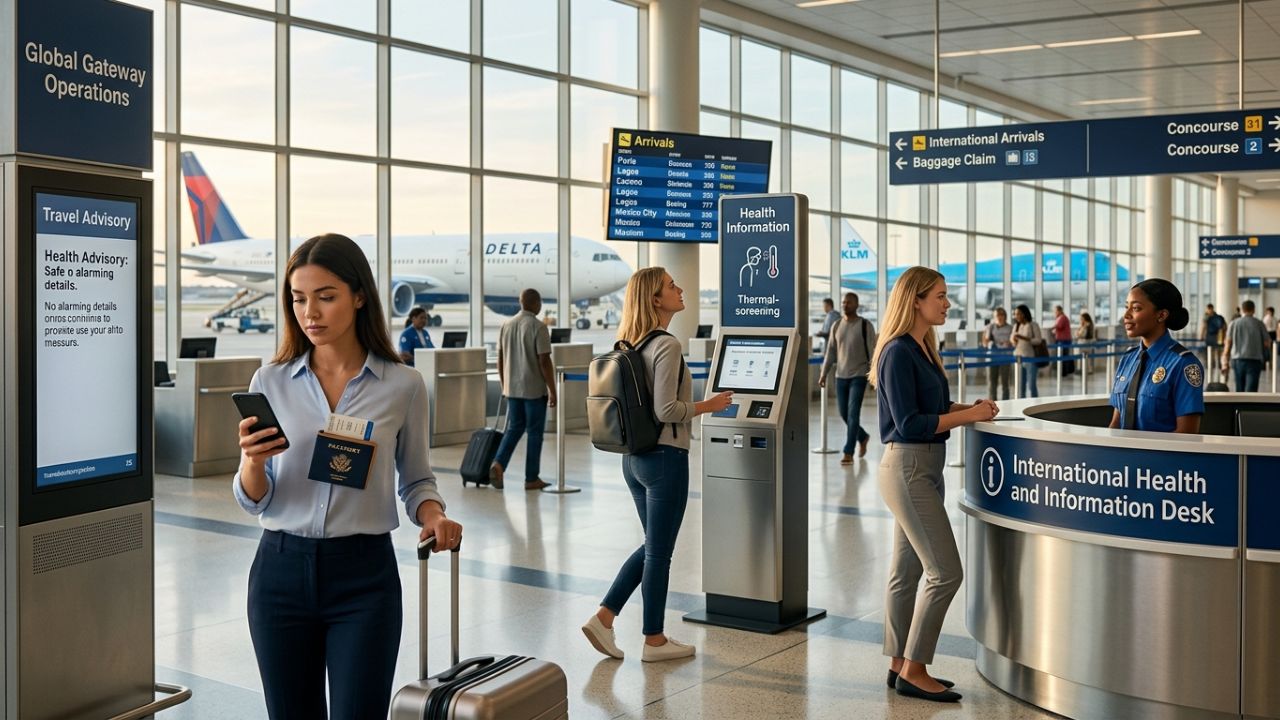
Federal health officials have drastically tightened airport security protocols to intercept deadly global pathogens at America's busiest travel hubs.
United States Issues Urgent Biosecurity Warning as Atlanta Expands Ebola Screenings and Los Angeles Battles Deadly Medical Tourism Superbugs: New Travel Alert
In a dramatic response to rapidly escalating global health threats, the Centers for Disease Control and Prevention (CDC) has issued a highly unusual dual travel alert aimed squarely at America’s most heavily trafficked international transit hubs. Drastic new measures include mandatory border screenings at Atlanta’s Hartsfield-Jackson International Airport to intercept a deadly Ebola strain, while simultaneous warnings in Los Angeles highlight a massive surge in drug-resistant superbugs tied directly to overseas cosmetic surgeries. Travelers moving through these major gateways are urgently advised to exercise extreme caution, comply fully with new border security protocols, and immediately reconsider participating in discount international medical tourism.
Quick Summary
- Dual Health Emergency: The CDC issued a rapid 72-hour dual health alert targeting Atlanta and Los Angeles due to severe cross-border biological threats.
- Atlanta Ebola Checkpoint: Hartsfield-Jackson International Airport has implemented mandatory, high-security border screenings to contain the highly elusive Bundibugyo ebolavirus strain.
- Los Angeles Superbug Crisis: Federal and county agencies warn of a massive surge in multi-drug resistant bacterial infections linked to cheap Latin American plastic surgery clinics.
- Severe Medical Fallout: Returning travelers are presenting with deep-tissue mycobacterial infections and post-operative sepsis caused by poor overseas sterilization.
- Immediate Action Required: Travelers must routinely check CDC health advisories and completely avoid unaccredited international medical facilities to protect themselves and local healthcare networks.
Public health management in our highly interconnected world requires an incredibly delicate balance between local clinical care and swift, decisive international border control. In a rapid 72-hour window, federal authorities underscored this terrifying reality by launching a massive biosecurity net across the country. While the federal warnings target two completely different health threats, they share a singular, dangerous root cause: the rapid, cross-border movement of human beings. This dual alert matters deeply to the traveling public because it proves that an untracked viral exposure passing through busy airport terminals can quickly devastate domestic communities before symptoms even begin to show.
Event and Incident Details: Deploying the Biosecurity Nets
In Georgia, federal agents and health officials have dramatically tightened airport security protocols, officially expanding mandatory Ebola border screenings at Atlanta’s Hartsfield-Jackson International Airport. This expansion is a direct administrative response to an intensifying, highly volatile outbreak of the Bundibugyo ebolavirus strain globally. Passengers who have recently traveled through or connected within affected outbreak zones are currently being systematically funneled into dedicated, high-security screening areas immediately upon their arrival in the United States.
Simultaneously, a completely different, highly localized emergency is aggressively unfolding across Southern California. On the West Coast, the CDC, operating alongside Los Angeles County public health teams, has taken the incredibly unusual step of issuing an explicit travel warning regarding the hidden medical risks of crossing international borders for cheap elective surgeries. Thousands of Southern Californians, actively lured by aggressively marketed social media packages, are traveling abroad for care annually, specifically targeting breast augmentations, dental overhauls, and liposuction at a fraction of US commercial costs.
Assessing the Severe Risks and Health Impacts
The immediate risks facing travelers and the broader domestic population are incredibly severe, completely threatening the integrity of regional medical infrastructures.
- Elusive Viral Strains: Epidemiologists heavily stress that while the Bundibugyo ebolavirus variant has historically exhibited lower mortality rates than the more common Zaire ebolavirus variant, its incredibly long incubation period makes it highly elusive and dangerous to track.
- Aggressive Superbugs: Federal agencies report an alarming, massive surge in returning Los Angeles patients presenting with highly aggressive, multi-drug resistant bacterial infections and severe post-operative sepsis.
- Unmonitored Infections: When unmonitored infections take hold, patients end up permanently hospitalized in domestic intensive care units, accumulating medical bills that quickly dwarf the initial cost of a domestic procedure.
- Threatening Vulnerable Patients: When a patient returns carrying a drug-resistant superbug, they violently introduce that pathogen directly into the local healthcare ecosystem, severely threatening compromised patients in regional hospitals.
To combat the viral threat, Atlanta officials have deployed a multi-tiered defense system specifically for inbound travelers from outbreak zones:
Ebola Border Screening Protocol Matrix:
| Screening Phase | Protocol Execution | Primary Objective |
|---|---|---|
| Stage 1 | Visual Assessment & Thermal Cameras | Catches Active Fevers |
| Stage 2 | Public Health Questionnaire | Traces Contact History & Symptoms |
| Stage 3 | 21-Day Local Health Monitoring | Managed by Local Epidemiology Teams |
Furthermore, clinical data collected from returning surgical patients points to catastrophic, systemic failures within discount international surgery networks.
Evaluating the Risks: Cross-Border Medical Failure Matrix:
| Risk Dimension analyzed by CDC | Overseas Clinic Operational Reality | Impact on Returning US Patients |
|---|---|---|
| Sterilization Regimes | Fragmented oversight can lead to the reuse of non-autoclaved instruments across fast-turnover patient sheets. | Deep-tissue mycobacterial infections that take months of highly toxic therapy to resolve. |
| Antibiotic Practices | Routine over-prescription of heavy, broad-spectrum antibiotics to cover up poor clinic hygiene. | The rapid cultivation of superbugs that defy standard hospital control protocols. |
| Continuity of Care | Patients are frequently discharged to hotels or flights within 24 to 48 hours of complex operations. | Acute pulmonary embolisms and severe wound breakdown occur mid-flight, far from the original surgeon. |
What Authorities Are Saying
Public health authorities are desperately trying to manage these overlapping challenges by leaning heavily on frontline local clinicians. The CDC emphatically states that the ultimate goal of the expanded Atlanta screenings is absolutely not to panic the traveling public, but rather to construct an airtight digital tracing loop before any exposed passenger ever boards a domestic connecting flight. Furthermore, doctors nationwide have been officially instructed to aggressively gather a full international travel history for any patient presenting with unexplained fevers, sudden wound inflammation, or highly unusual stomach issues.
Practical Traveler Advice: Protecting Your Health Abroad
The ultimate takeaway from this severe dual alert is that modern global travel demands a high degree of health literacy and advanced preparation. Travelers must immediately implement the following actionable safety protocols:
- Monitor Official Advisories: If you are planning to travel internationally over the coming months, checking the CDC health advisories for your specific destination must become as routine as checking your passport expiration date.
- Verify Clinic Accreditations: If you are heavily contemplating an elective medical procedure outside the country, you must absolutely verify that the destination facility holds recognized, legitimate international accreditations.
- Establish Post-Operative Care: Never travel for surgery without building a clear, comprehensive post-operative care plan directly with a local doctor in your hometown before you depart.
- Prioritize Clinical Safety: Always prioritize absolute clinical safety over a cheap price tag. True wellness can never be found by taking dangerous shortcuts with your long-term physical health.
- Comply with Airport Screenings: If you are returning from a designated outbreak zone, you must fully comply with all visual assessments, thermal camera scans, and public health questionnaires at the border.
Broader Context: The Gateways to American Health
Because Atlanta stands as one of the busiest airport hubs on the planet, it represents an absolutely critical chokepoint for preventing deadly global pathogens from embedding deeply within domestic communities. If a breach occurs there, a virus could quickly spread across multiple states before symptoms even register. Conversely, Los Angeles represents the largest single source population for travelers moving rapidly back and forth between the United States and massive Latin American medical hubs. The high concentration of vulnerable patients moving through both of these massive transit arteries creates a unique, highly volatile biosecurity environment for the entire nation.
What to Expect Next and Looking Ahead
Moving forward, travelers should anticipate a heavy, sustained presence of local epidemiology teams actively managing the 21-day local health monitoring protocols for anyone flagged during the Atlanta screenings. As the CDC continues to investigate the clinical data surrounding the deep-tissue mycobacterial infections originating from overseas clinics, expect potential diplomatic pressure regarding fragmented oversight in Latin American surgery networks. The financial calculation that heavily drives people to pursue overseas procedures will continue to be aggressively scrutinized by federal agencies hoping to stem the tide of returning medical emergencies.
Conclusion
The CDC’s simultaneous warnings regarding the Bundibugyo ebolavirus outbreak and highly dangerous international medical tourism highlight the profound, life-threatening risks associated with modern global mobility. All travelers must exercise maximum vigilance, heavily prioritize their biosecurity, and strictly adhere to federal health directives to ensure their global journeys do not result in catastrophic domestic medical emergencies.
Frequently Asked Questions (FAQ)
Why has the CDC expanded Ebola screenings at Atlanta's airport? The CDC expanded mandatory border screenings at Hartsfield-Jackson International Airport in direct response to an intensifying global outbreak of the highly elusive Bundibugyo ebolavirus strain.
What specific medical tourism procedures are causing superbug infections in Los Angeles? Travelers returning to Los Angeles are suffering from severe, multi-drug resistant bacterial infections after undergoing cheap, elective overseas surgeries such as breast augmentations, dental overhauls, and liposuction.
What happens during the airport health screening if I arrive from an outbreak zone? Passengers are funneled into a dedicated high-security area for a three-stage process: visual assessment with thermal cameras, a public health questionnaire, and enrollment in a 21-day local health monitoring program.
Why are overseas medical clinics causing such severe infections? The CDC reports that fragmented oversight leads to the reuse of non-autoclaved instruments, while the routine over-prescription of heavy antibiotics covers up poor hygiene, resulting in deep-tissue infections immune to standard hospital protocols.
How can I protect myself when traveling for medical procedures? The CDC strongly advises verifying that the overseas facility holds recognized international accreditations, building a clear post-operative care plan with a local doctor, and checking all official health advisories before booking your trip.
Disclaimer
This article is for informational and educational purposes only. It does not constitute legal, financial, or professional advice. While we strive to provide accurate and up-to-date information, travel policies, regulations, and conditions change rapidly. Always verify information with official sources before making travel decisions. Nomad Lawyer makes no representations about the accuracy, reliability, completeness, or suitability of the information provided. Readers should consult qualified professionals for advice specific to their circumstances. The views expressed in this article are those of the author and do not necessarily reflect the views of Nomad Lawyer.
Kunal K Choudhary
Co-Founder & Contributor
A passionate traveller and tech enthusiast. Kunal contributes to the vision and growth of Nomad Lawyer, bringing fresh perspectives and driving the community forward.
Learn more about our team →