
US Issues Urgent Travel Advisory for Nepal as 2026 Monsoon Floods Threaten Himalayan Trekking Routes
A new US travel warning alerts visitors to severe flood risks and landslides across Nepal's Bagmati Province and key river basins.

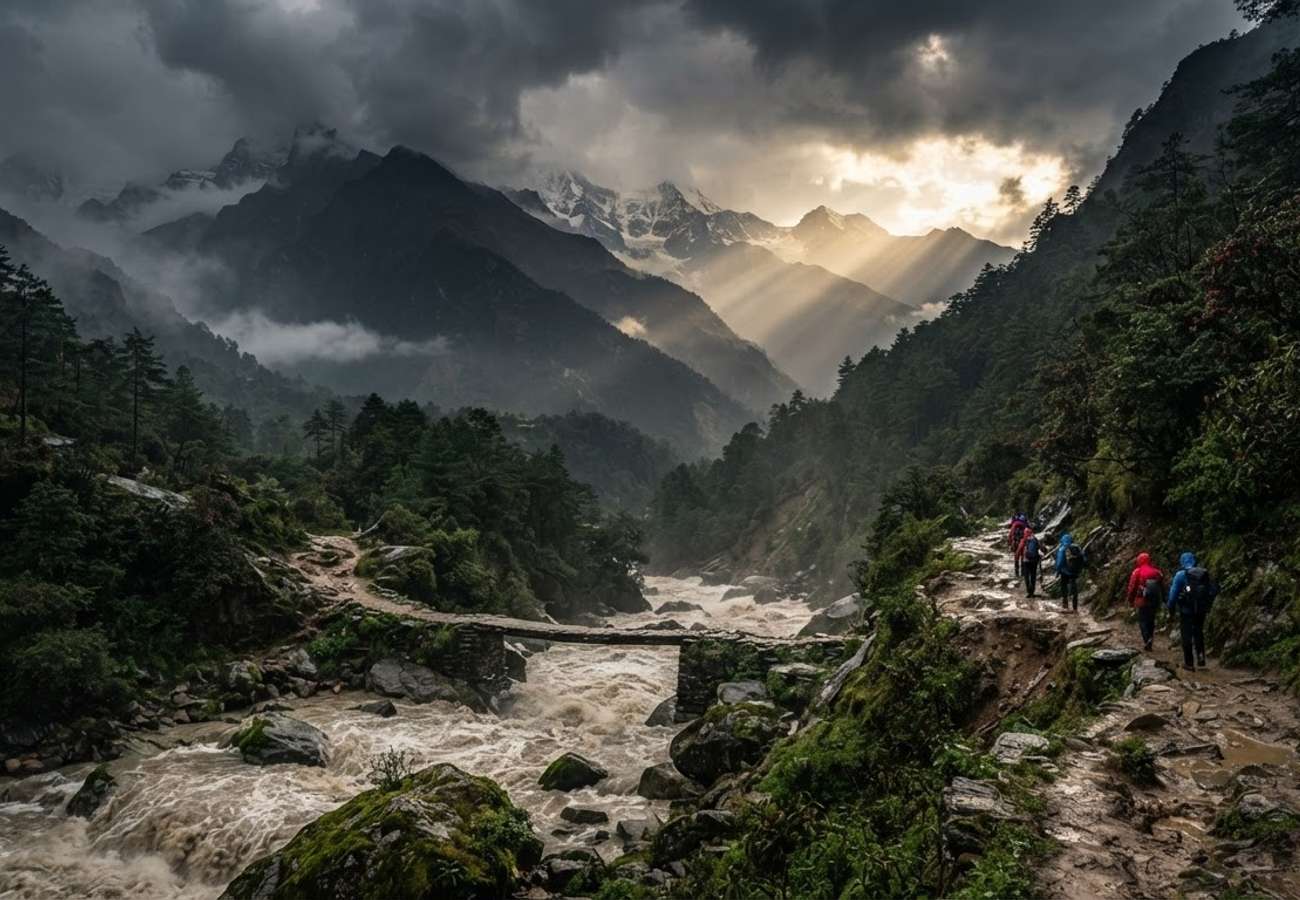
Image generated by AI
High-risk weather patterns in the Himalayas have prompted the United States to issue a formal travel warning for Nepal. Severe monsoon rains and flash floods are currently compromising critical highways and adventure trekking routes.
The current environmental crisis in Nepal is driven by a volatile combination of intense monsoon rainfall and unstable Himalayan geography. The US advisory comes as Nepal's disaster authorities and the Flood Forecasting Division report dangerous increases in upstream water flow, creating a high probability of flash floods and landslides across the northern and central mountain regions.
The Regional Crisis: Bagmati Province and River Basins
The Department of Hydrology and Meteorology has identified Bagmati Province as a primary danger zone. Heavy to very heavy rainfall was forecast through September 1, with continued threats extending into September 2. The region's steep slopes, already saturated by prolonged rain, are prone to sudden debris flows that can sever transportation links in minutes.
Two specific river systems are currently under critical observation:
The Bhote Koshi River This system is the epicenter of current flood concerns. Because the river flows through narrow mountain valleys, there is limited space for water to disperse, meaning surges move with extreme velocity. While one upstream lake has recently drained, authorities remain on high alert for other natural debris blockages that could act as temporary dams before bursting and triggering catastrophic downstream flooding.
The Trishuli River Basin As a primary artery connecting Kathmandu to major tourism hubs, the Trishuli corridor is vital for both local commerce and international travel. Rising water levels here threaten bridges and roadside settlements, potentially isolating entire communities and trapping travelers on the highways.
Impact on Adventure Tourism and Infrastructure
For the visitor, the real impact is a significant disruption to the adventure travel calendar. Nepal attracts millions of visitors for mountaineering and river rafting, but the current conditions have turned these attractions into hazards.
Infrastructure damage from previous disasters has left the region fragile. Hydropower facilities and rural road networks are already struggling; further landslides may block highways for extended periods, complicating emergency evacuations and supply chains. Travelers moving between major cities and Himalayan destinations must now account for total route closures and the necessity of flexible itineraries.
Visitor Insider Tips
Navigating Nepal during the monsoon requires more than just a rain jacket. To ensure safety and support the local economy responsibly, travelers should follow these guidelines:
- The "Safe Window" Strategy: Avoid river-adjacent trekking and rafting between June and September. The peak safety window for high-altitude trekking is typically October to November and March to May.
- Local Intelligence: Do not rely solely on international apps. Check updates from the Department of Hydrology and Meteorology (DHM) Nepal and consult with local guides who understand the specific "micro-climates" of the Bhote Koshi and Trishuli valleys.
- Cultural Etiquette in Crisis: When visiting affected northern districts, prioritize purchasing supplies from local village shops rather than bringing all provisions from Kathmandu. This directly supports communities recovering from infrastructure loss.
- Essential Gear: Carry a satellite communication device (like a Garmin inReach) when venturing into the Bagmati Province, as landslides frequently knock out cellular towers in remote valleys.
- River Safety: If you see the river water turning a muddy brown or carrying large pieces of debris/logs, move to higher ground immediately. This is a primary indicator of an upstream flash flood.
Tourism Outlook
The long-term viability of Nepal's tourism depends on the integration of climate-resilient infrastructure. The current crisis underscores the need for the Nepal Tourism Board and regional conservation bodies to implement better early-warning systems for trekkers. While the Himalayan region remains a premier global destination, the shift toward "responsible timing"—traveling outside the peak monsoon risk windows—will be essential for visitor safety and the preservation of local heritage sites.
Stay vigilant and prioritize local guidance over rigid itineraries when exploring the Himalayas.
Related Travel Guides
Disclaimer
This article is for informational and educational purposes only. It does not constitute legal, financial, or professional advice. While we strive to provide accurate and up-to-date information, travel policies, regulations, and conditions change rapidly. Always verify information with official sources before making travel decisions. Nomad Lawyer makes no representations about the accuracy, reliability, completeness, or suitability of the information provided. Readers should consult qualified professionals for advice specific to their circumstances. The views expressed in this article are those of the author and do not necessarily reflect the views of Nomad Lawyer.
Preeti Gunjan
Contributor & Community Manager
A passionate traveller and community builder. Preeti helps grow the Nomad Lawyer community, fostering engagement and bringing the reader experience to life.
Learn more about our team →