
US Tightens Student Visa Rules for 2026: Fixed Stay Limits Replace Duration of Status for F and J Visas
The United States is replacing open-ended 'duration of status' for international students with fixed admission periods, introducing a four-year cap and mandatory extensions for F and J visa holders.

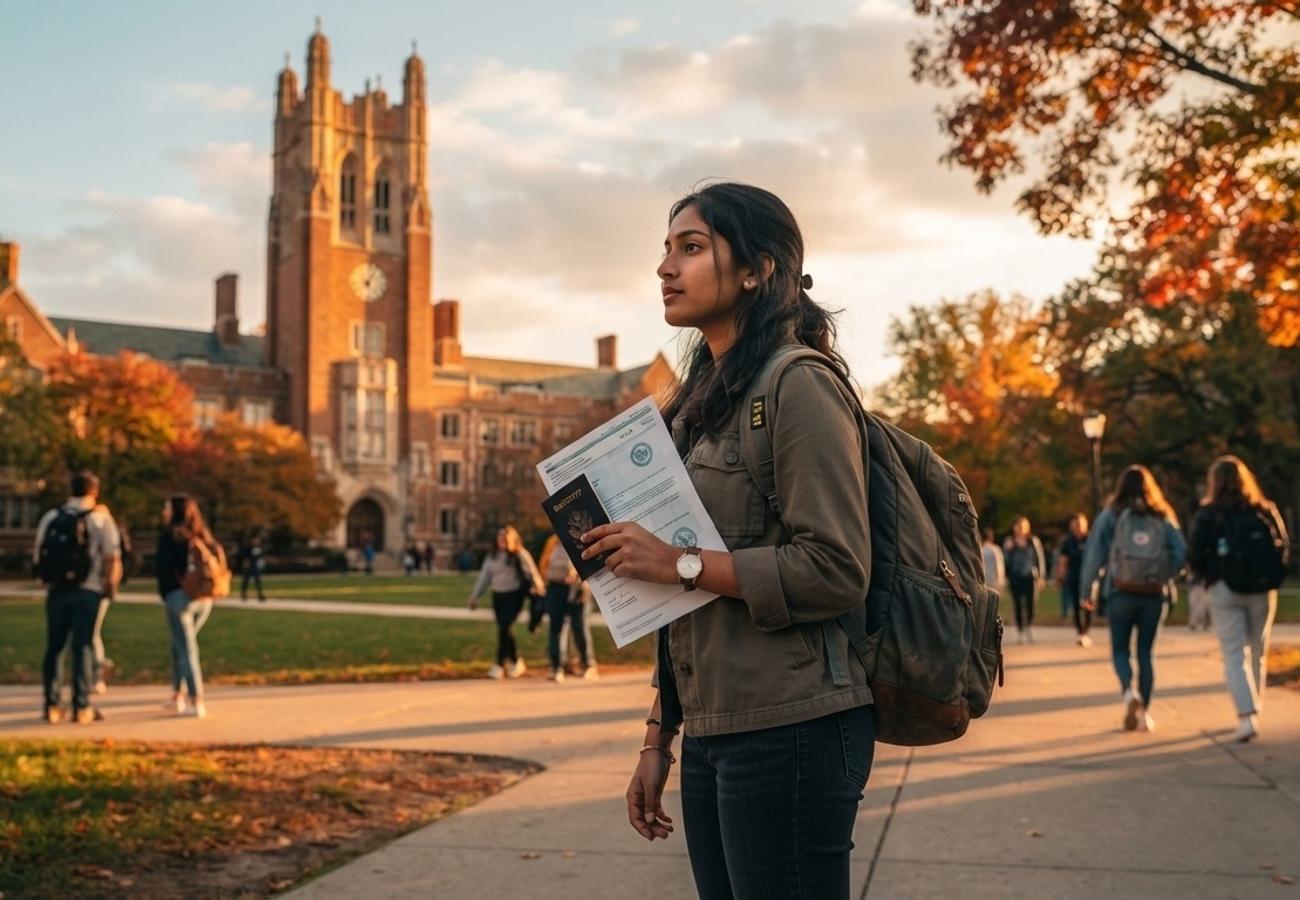
Image generated by AI
The United States is ending the era of open-ended residency for international scholars, replacing the "duration of status" framework with strict, date-limited admission periods starting mid-September 2026. This regulatory shift mandates that F and J visa holders adhere to fixed expiry dates, fundamentally altering how millions of students plan their academic careers and international travel.
For decades, the U.S. immigration system operated on a flexible basis for students and exchange visitors. Under the previous "duration of status" (D/S) notation, individuals could remain in the country indefinitely, provided they maintained full-time enrollment and adhered to the terms of their visa. However, new federal rulemaking has dismantled this system, introducing a rigid structure where admission is tied to specific calendar dates.
Fixed Admission Dates Replace Open-Ended Status
The transition from a flexible stay to a fixed-term admission represents a significant tightening of border controls. Under the new regulations, an international student's legal stay is now strictly tied to the program end date listed on their Form I-20 (for F visas) or Form DS-2019 (for J visas).
Industry reports indicate that a general ceiling has been established, where a single period of stay typically cannot exceed four years. While a brief grace period remains available after the official end date, any student requiring more time to complete their degree must now file a formal extension of status with U.S. Citizenship and Immigration Services (USCIS).
This final rule was published in the Federal Register in July 2026, following a public comment period that spanned from August 2025. Federal authorities have stated that the goal is to bring student categories into alignment with other nonimmigrant visas that already utilize fixed admission windows. Conversely, academic advocates view the move as a restrictive measure that increases the risk of accidental status violations.
New Restrictions on Program Transfers and Academic Shifts
The impact of these changes extends beyond the initial entry date. The new framework introduces heightened scrutiny regarding how students move between institutions or change their fields of study.
For graduate students, the rules are now more stringent regarding transfers. In most cases, students are required to complete at least one full academic year at the institution that issued their original I-20 before they are permitted to transfer to another school. While some exceptions exist, the general trend is toward reduced mobility.
Furthermore, reports suggest new hurdles for those wishing to change degree levels—such as moving from a Master's to a PhD—within a single admission period. This lack of flexibility may complicate the paths of students who realize their academic goals have shifted after arriving in the U.S.
Travel Risks and Transition Timelines for Current Students
A critical distinction exists between students already residing in the U.S. and those arriving after the rule takes effect in mid-September 2026. For those currently in the country, electronic I-94 records will not be automatically updated to the new fixed-date system on the first day of implementation. These individuals generally retain their existing status until their program end date or a specific multi-year limit, whichever occurs first.
However, international travel now carries a significant logistical risk. According to campus immigration offices, any student or exchange visitor who departs the U.S. and seeks reentry after mid-September 2026 will be processed under the new fixed-period system.
For example, a PhD candidate who travels home for a family emergency or attends an overseas conference may find that upon reentry, their remaining stay is suddenly capped by the four-year framework. This necessitates precise coordination with university international offices to ensure that reentry does not inadvertently shorten their legal stay.
University Concerns Over Global Competitiveness
The academic community has expressed alarm over the potential for these rules to deter top global talent. Medical schools and research-heavy institutions are particularly concerned, as their programs rarely fit into a neat four-year window.
Many PhD programs routinely exceed five years, and medical residencies often involve a complex sequence of training stages. Under the old system, these were managed under a single admission. Now, these scholars face a cycle of mandatory extension filings, which introduce:
- Financial Burdens: Increased costs associated with filing fees.
- Administrative Delays: Potential gaps in status due to USCIS processing times.
- Psychological Stress: Uncertainty regarding whether an extension will be granted.
There are also concerns regarding Optional Practical Training (OPT). Since work authorization is tethered to legal status, any complication in securing a stay extension could compress the timeline for post-graduation work, reducing the overall appeal of the U.S. as a destination for high-skilled migrants.
Impact on Future Applicants and Global Mobility
Prospective students must now factor a "maximum stay" into their initial planning. Advising materials now urge applicants to meticulously analyze program lengths and anticipate potential research delays that could push them beyond the four-year mark.
From a strategic standpoint, the U.S. may see a shift in how students approach their education. The fear of a denied extension or a shortened stay upon reentry may discourage students from engaging in essential fieldwork or international collaborations.
Global observers note that other major study destinations—specifically Canada, Australia, and the United Kingdom—are monitoring this rollout. If the U.S. system is perceived as too rigid or risky, there is a possibility that globally mobile students will redirect their applications toward nations with more flexible residency structures.
Why This Matters: The Real-World Impact on Travelers
For the international student, this is no longer just about getting a visa; it is about managing a countdown. The shift from "Duration of Status" to "Fixed Stay" transforms the student experience from one of academic focus to one of immigration compliance.
From a logistical standpoint, the "Travel Trap" is the most immediate danger. A student who previously viewed a trip home as a simple matter of showing a valid passport and I-20 now faces a situation where that trip could trigger a hard cap on their remaining time in the country. This creates a "chilling effect" on mobility, where students may choose to skip family milestones or professional conferences to avoid risking their legal standing.
Furthermore, the requirement for formal extensions introduces a point of failure. In a system where processing times can be unpredictable, a delay in an extension approval could leave a student in a legal limbo, unable to work or study, despite having the financial means and academic standing to do so.
The shift toward fixed limits marks a transition from a trust-based system to a surveillance-based system for international education.
Related Travel Guides
Disclaimer
This article is for informational and educational purposes only. It does not constitute legal, financial, or professional advice. While we strive to provide accurate and up-to-date information, travel policies, regulations, and conditions change rapidly. Always verify information with official sources before making travel decisions. Nomad Lawyer makes no representations about the accuracy, reliability, completeness, or suitability of the information provided. Readers should consult qualified professionals for advice specific to their circumstances. The views expressed in this article are those of the author and do not necessarily reflect the views of Nomad Lawyer.
Kunal K Choudhary
Co-Founder & Contributor
A passionate traveller and tech enthusiast. Kunal contributes to the vision and growth of Nomad Lawyer, bringing fresh perspectives and driving the community forward.
Learn more about our team →