
US Teams Up With South Korea To Deepen Cooperation And Transform Tourism With Stronger Investment And Travel Links
US Teams Up With South Korea To Deepen Cooperation And Transform Tourism With Stronger Investment And Travel Links

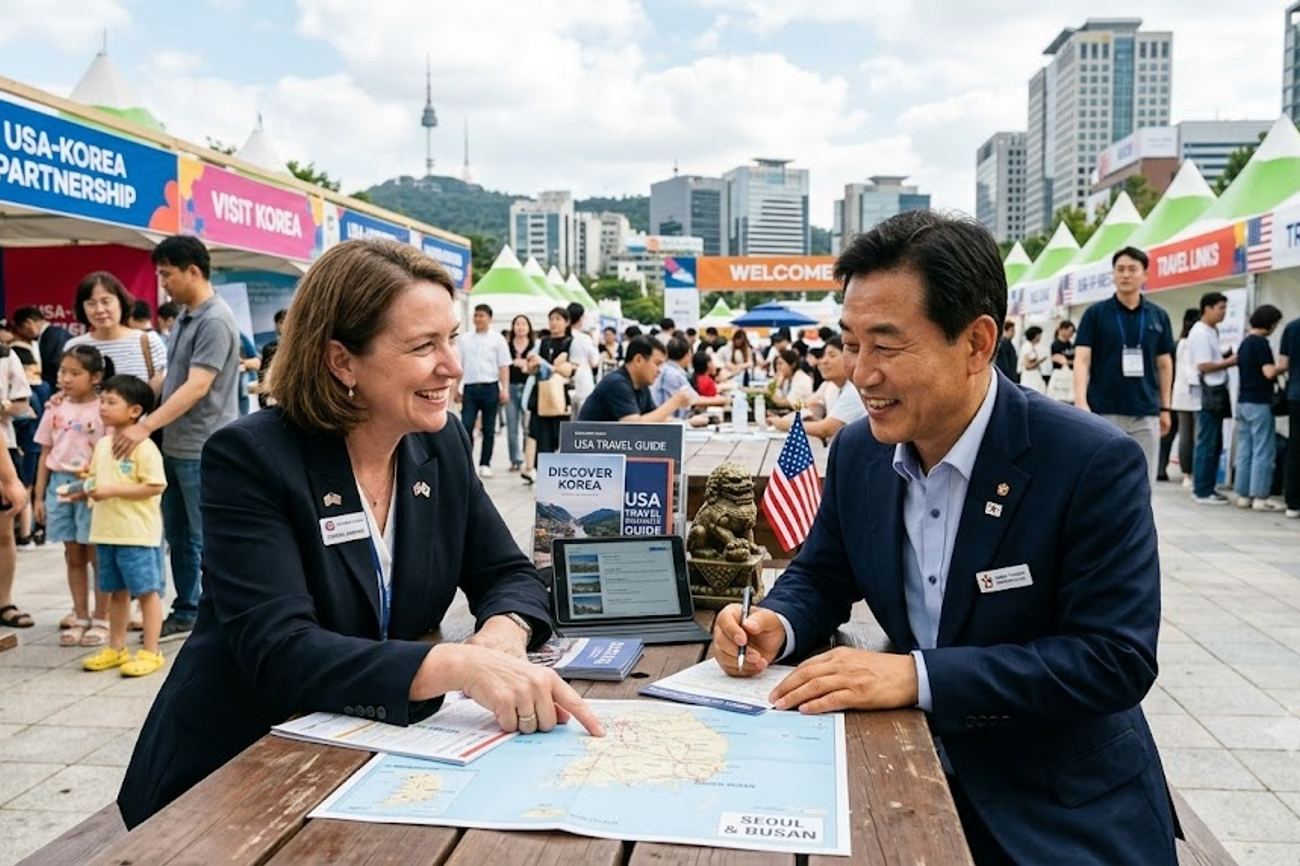
Image generated by AI
Zero specific passenger quotas were named in the recent bilateral talks, yet the strategic alignment between US Secretary of State Marco Rubio and South Korean Foreign Minister Cho Hyun establishes a framework for a massive surge in high-yield business travel. By consolidating partnerships across investment, security, and connectivity, the two nations are moving beyond a traditional military alliance toward an integrated economic corridor. While the primary dialogue focused on the environment for American businesses and freedom of navigation, the logistical byproduct of these agreements is a projected increase in the movement of corporate executives, technology professionals, and industry delegates between the two markets.
The Economic Engine of Bilateral Mobility
The current diplomatic trajectory is rooted in a major investment package linked to previous economic agreements. This is not merely a political gesture but a structural shift in how the United States and South Korea interact commercially. When strategic industries—specifically technology and manufacturing—receive targeted investment, the immediate result is a spike in "corporate leakage," where the necessity of face-to-face oversight, site visits, and board-level negotiations drives a consistent stream of premium travelers.
This shift primarily impacts a specific set of urban hubs. In the United States, New York, Los Angeles, and Washington DC are positioned as the primary landing zones for South Korean investors. Conversely, Seoul and Busan serve as the critical gateways for American corporate interests. The nature of this travel is high-value; business travelers typically outspend leisure tourists per capita due to their reliance on luxury hotel tiers, high-end dining, and specialized meeting facilities.
Strategic Connectivity and Maritime Security
A critical, often overlooked component of the Rubio-Cho discussions was the emphasis on freedom of navigation and international maritime security. For the travel industry, maritime stability is the bedrock of the cruise and coastal tourism sectors. South Korean ports, specifically Busan and Incheon, are not just trade conduits but are essential for the expansion of regional maritime travel.
The correlation between security and tourism is direct: insurance premiums for cruise lines and the viability of new coastal itineraries depend entirely on the perceived stability of global shipping lanes. By securing these routes, the two nations are effectively lowering the risk profile for maritime operators, which paves the way for expanded cruise operations and increased port visits.
Furthermore, the aviation sector stands to gain. The International Air Transport Association (IATA) frequently notes that air capacity follows economic demand. As the investment package is implemented, airlines are likely to evaluate increased frequencies and aircraft upgauging on routes connecting North America to Incheon International Airport. This is particularly relevant as Incheon continues to solidify its role as the premier transit hub connecting the West to the broader Asian market.
Expert Analysis: The High-Yield Pivot
For travelers and industry stakeholders, the direct consequence of this diplomatic pivot is a transition from "mass tourism" to "high-yield professional mobility." We are seeing a move toward the "bleisure" model—where business trips are extended for leisure—driven by the deepening cultural ties and the global explosion of Korean cultural exports.
The pricing pressure this creates is significant. An increase in corporate travel typically absorbs the highest-priced cabin classes (Business and First Class), which can lead to a pricing ripple effect for leisure travelers. When corporate demand peaks, airlines often raise the floor for premium economy fares. However, the increased capacity brought on by these economic ties generally leads to more flight options and better connectivity in the long run.
Moreover, the technology cooperation mentioned in the talks—specifically regarding AI and smart airport systems—will likely be pioneered at Incheon International Airport and major US gateways. For the nomad lawyer or the frequent flyer, this means a shift toward biometric processing and personalized digital visitor platforms, reducing the friction of cross-border movement. The synergy between US software expertise and South Korean hardware integration will likely set the global standard for the "frictionless" airport experience by 2026.
Key Takeaways
- Corporate Surge: New investment packages are expected to increase the flow of tech professionals, investors, and executives between Seoul, Busan, NYC, LA, and DC.
- Maritime Stability: Diplomatic focus on freedom of navigation directly supports the viability and safety of cruise operations and coastal tourism in South Korean ports.
- Aviation Upscaling: Increased economic interdependence is a leading indicator for airlines to add more capacity and flight frequencies to the US-South Korea corridor.
- Tech Integration: Joint cooperation in AI and smart systems is set to transform passenger processing and personalized travel services at major hubs.
- Cultural Synergy: The "Hallyu" (Korean Wave) continues to drive leisure demand, which is now being bolstered by formal diplomatic and economic strengthening.
FAQ: US-South Korea Travel 2025
Will these economic talks lead to cheaper flights between the US and South Korea? Not necessarily. While increased capacity can lower prices, the surge in high-paying business travel often keeps premium fares high. However, more flight options generally lead to better competitive pricing for economy passengers.
Which cities will see the most growth in tourism? Expect the highest growth in Seoul and Busan in South Korea, and New York, Los Angeles, and Washington DC in the United States, as these are the primary centers for the discussed investments.
How does "freedom of navigation" affect a regular tourist? It primarily impacts cruise travelers. Secure maritime routes mean more diverse cruise itineraries, more frequent port calls in South Korea, and lower risk-related surcharges on cruise tickets.
What new technology should travelers expect at airports? Expect a rollout of AI-driven personalized recommendations, faster biometric passenger processing, and integrated digital visitor platforms designed to streamline the arrival-to-destination experience.
The shift from a security-first alliance to an investment-led partnership is rewriting the logistics of Trans-Pacific travel.
Tags: Incheon International Airport, Marco Rubio, Cho Hyun, US-South Korea Bilateral Relations, Busan Port, Trans-Pacific Aviation
Related Travel Guides
- Vietnam Airlines Boosts Hanoi Tourism With Unique Autumn Campaign Celebrating Culture and Experiences
- Abu Dhabi’s Yas Island Unveils Dh6 Billion Tourism Magnet With Luxury Marina And World Class Entertainment Experiences
- China’s Chenzhou Draws Global Tourism Attention as Zixing Reveals New Tourism Growth Opportunities
Disclaimer
This article is for informational and educational purposes only. It does not constitute legal, financial, or professional advice. While we strive to provide accurate and up-to-date information, travel policies, regulations, and conditions change rapidly. Always verify information with official sources before making travel decisions. Nomad Lawyer makes no representations about the accuracy, reliability, completeness, or suitability of the information provided. Readers should consult qualified professionals for advice specific to their circumstances. The views expressed in this article are those of the author and do not necessarily reflect the views of Nomad Lawyer.
Preeti Gunjan
Contributor & Community Manager
A passionate traveller and community builder. Preeti helps grow the Nomad Lawyer community, fostering engagement and bringing the reader experience to life.
Learn more about our team →