
US Government Issues Security Alerts for Qatar, Bahrain, Saudi Arabia and UAE Amid Rising Iran Missile Threats 2026
US authorities have issued critical security warnings for travelers in Qatar, Bahrain, Saudi Arabia, and other Middle Eastern hubs due to escalating Iran-linked missile and drone threats.

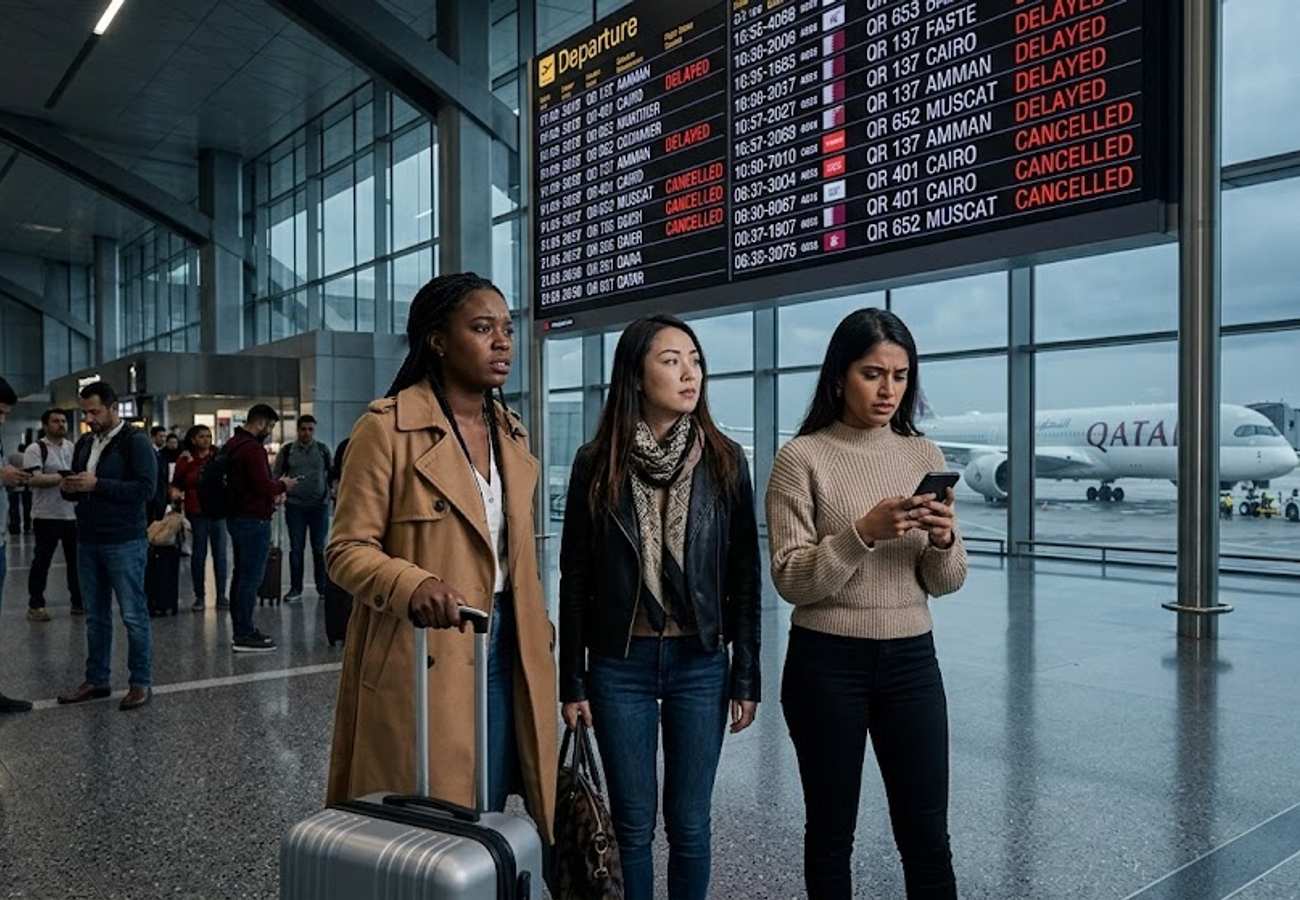
Image generated by AI
The US government has issued urgent security alerts for citizens and travelers across the Middle East, specifically targeting Qatar, Bahrain, Jordan, Kuwait, Saudi Arabia, and the UAE. These warnings follow escalating cross-border tensions with Iran and an increased risk of missile and drone strikes.
Regional Security Crisis and Immediate Threats
The security environment in the Gulf has deteriorated following specific intelligence regarding potential strikes. The US Embassy in Bahrain has issued a high-priority alert stating that Iran may target unspecified locations in central Manama.
Due to the presence of the US Navy’s Fifth Fleet, Bahrain remains a high-risk strategic point. The embassy has instructed personnel and citizens to seek immediate shelter if sirens activate or explosions are heard, advising them to move to lower levels of buildings and stay away from windows.
Flight and Airport Impact Breakdown
While major hubs remain operational, the risk of sudden airspace closures and operational shifts is high. Our analysis of regional aviation patterns indicates the following vulnerabilities:
- Bahrain (Manama): High risk of immediate disruption in central urban areas; potential for emergency airport closures if missile threats materialize.
- Qatar (Doha): Increased security screening and potential flight schedule volatility due to its role as a primary global transit hub.
- United Arab Emirates (Dubai/Abu Dhabi): Monitoring for airspace restrictions that could force flight diversions or rerouting of international corridors.
- Saudi Arabia: Heightened vigilance at major airports and cultural tourism sites following a history of drone-related infrastructure attacks.
- Jordan & Kuwait: Increased border security checks and potential aviation delays due to geographical proximity to active conflict zones.
Passenger Rights & Advisory (Information Gain)
Travelers currently in the region or booking flights to these destinations must be aware of their legal protections and operational rights during a security-led disruption.
Rebooking and Refund Rights Under most international aviation standards and US Department of Transportation (DOT) guidelines, passengers are entitled to a full refund if a flight is canceled due to security risks, regardless of the "force majeure" classification of the event. If a carrier offers a rebooking, travelers should ensure the new itinerary does not transit through high-risk airspace.
Duty of Care If you are stranded in a transit hub like Doha or Dubai due to a security-related cancellation:
- Hotel & Food: Carriers are generally required to provide vouchers for meals and accommodation if the delay extends overnight.
- Communication: Passengers should maintain a digital copy of their passport and travel insurance policy, as physical documents may be harder to retrieve during emergency evacuations.
Actionable Steps for Travelers
- Enroll in STEP: US citizens should register with the Smart Traveler Enrollment Program (STEP) to receive real-time embassy alerts.
- Verify Insurance: Confirm that your travel insurance policy includes "Political Evacuation" or "War Risk" clauses, as standard policies often exclude conflicts.
- Flexible Booking: Only use flexible fares for Middle Eastern routes in the current climate to avoid losing deposits during sudden airspace closures.
Industry Analyst View
The current volatility represents a systemic risk to the "hub-and-spoke" model employed by Gulf carriers. Because Doha, Dubai, and Manama serve as critical bridges between East and West, any localized strike or airspace restriction triggers a global ripple effect.
The primary operational challenge is not just the physical threat to aircraft, but the "traveler confidence gap." As security alerts increase, business travel and luxury tourism—the primary drivers of growth in Saudi Arabia and the UAE—tend to contract sharply. Airlines are now forced to balance operational continuity with the high cost of emergency rerouting and increased insurance premiums for aircraft operating in contested zones.
Stay vigilant and monitor official government channels for real-time safety updates.
Related Travel Guides
Disclaimer
This article is for informational and educational purposes only. It does not constitute legal, financial, or professional advice. While we strive to provide accurate and up-to-date information, travel policies, regulations, and conditions change rapidly. Always verify information with official sources before making travel decisions. Nomad Lawyer makes no representations about the accuracy, reliability, completeness, or suitability of the information provided. Readers should consult qualified professionals for advice specific to their circumstances. The views expressed in this article are those of the author and do not necessarily reflect the views of Nomad Lawyer.
Preeti Gunjan
Contributor & Community Manager
A passionate traveller and community builder. Preeti helps grow the Nomad Lawyer community, fostering engagement and bringing the reader experience to life.
Learn more about our team →