Bypassing Holiday Crowds: Quietest US Regional Airports for Winter Travel 2026–2027

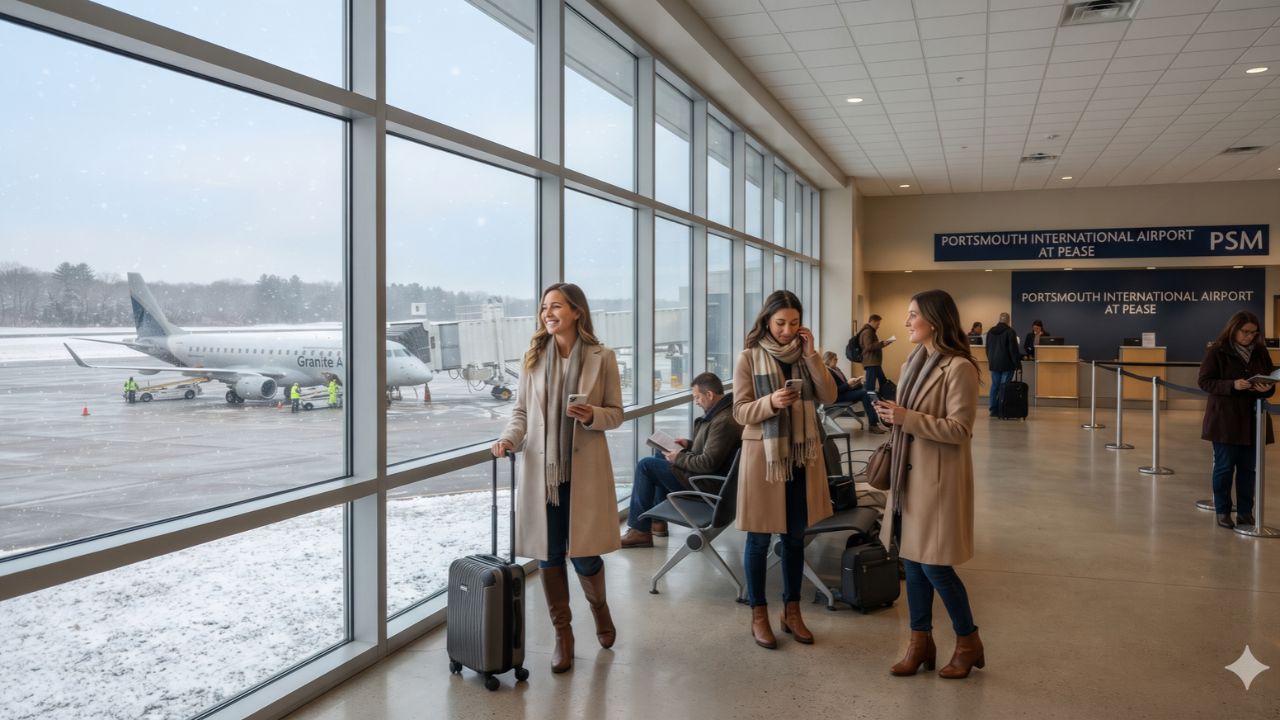
While mega-hubs like Atlanta Hartsfield-Jackson and Chicago O’Hare each process upwards of 40 million passengers annually, a network of under-the-radar American regional airfields—anchored by New Hampshire’s Portsmouth International at just 90,771 annual boardings and Massachusetts’ Worcester Regional at 106,229—allows savvy travelers to clear security in five minutes and completely bypass holiday terminal gridlock.
According to official commercial passenger boarding statistics published by the Federal Aviation Administration (FAA), a massive traffic chasm separates America’s primary international hubs from regional community facilities. As AAA projects 5.96 million domestic air travelers during the 2026 Thanksgiving window alone (amid 81.5 million overall holidaymakers traveling between 24 and 30 November), concourses in Boston, Detroit, and Minneapolis face severe holiday congestion. For winter travelers across New England, the Upper Midwest, and the Great Plains, secondary gateways offer calm terminal environments, curb-adjacent parking, and reduced transit fatigue—provided passengers understand the operational trade-offs of single-runway regional operations.
Evaluating America’s Lowest-Volume Regional Airports
The disparity between tier-one mega-terminals and small community airports defines the American domestic flying experience. While Hartsfield-Jackson Atlanta handled 51.46 million passenger boardings in 2025, Dallas Fort Worth processed roughly 41.3 million, and Denver International approached 40 million, several municipal airfields recorded fewer than 110,000 boardings over the entire year.
The table below outlines FAA official 2025 passenger boardings, annual percentage shifts, and winter operational profiles across prominent low-volume regional gateways:
| Airport Facility & Location | 3-Letter Code | 2025 Passenger Boardings | Annual Traffic Change | Primary Comparative Hub | Winter Travel Advantage & Operational Consideration |
|---|---|---|---|---|---|
| Portsmouth International (Pease), NH | PSM | 90,771 | −9.5% | Boston Logan (BOS) | Ultra-low passenger density; limited leisure routes to Florida |
| Worcester Regional Airport, MA | ORH | 106,229 | −5.9% | Boston Logan (BOS) | Central Massachusetts hub bypass; hillside fog and icing risk |
| Kalamazoo/Battle Creek, MI | AZO | 88,713 | −4.1% | Detroit Metro (DTW) | Direct access to southwest Michigan; lake-effect snowfall exposure |
| Central Wisconsin Airport, WI | CWA | 87,834 | −2.5% | Milwaukee (MKE) / Minneapolis | Fast processing for north-central Wisconsin; sub-zero ground deicing |
| Manhattan Regional Airport, KS | MHK | 88,640 | +3.2% | Kansas City (MCI) | Uncrowded Flint Hills terminal; connection-dependent regional feeder |
| Grand Forks International, ND | GFK | 94,416 | +2.1% | Minneapolis (MSP) | Fast regional processing; extreme Northern Plains blizzard exposure |
| Lake Charles Regional, LA | LCH | 91,944 | +1.3% | Houston Intercontinental (IAH) | Low Gulf Coast passenger volumes; minimal winter freeze exposure |
| Helena Regional Airport, MT | HLN | 101,803 | +0.2% | Salt Lake City (SLC) | Mountain regional alternative; Rocky Mountain winter turbulence |
| Rochester International, MN | RST | 105,117 | +6.7% | Minneapolis (MSP) | Convenient access for southern Minnesota; Upper Midwest snow patterns |
| Casper–Natrona County, WY | CPR | 102,638 | +3.0% | Denver International (DEN) | Avoids Denver terminal delays; high plateau crosswind vulnerability |
| Columbia Metropolitan, SC | CAE | 662,756 | +1.3% | Charlotte Douglas (CLT) | Mid-sized regional relief valve; reliable mild-weather operations |
| Manchester–Boston Regional, NH | MHT | 685,594 | +8.3% | Boston Logan (BOS) | Premier northern New England alternative with mainline carrier links |
For travelers living between metropolitan boundaries, these numbers represent an entirely different style of travel. At Portsmouth International Airport at Pease, passengers can step out of their vehicle in outdoor surface parking, walk 100 feet to the check-in desk, pass through the lone Transportation Security Administration (TSA) checkpoint, and reach their departure gate in under fifteen minutes.
What Makes Regional Airport Travel Different in Winter
Regional airports operate with a simplicity that eliminates the cognitive overload of massive multi-terminal hubs. There are no automated people movers, multi-story parking structures, or mile-long concourse walks. The terminal is typically a single-level open floor plan where ticketing counters, baggage claim carousels, and gates share a common sightline.
In seasonal summer colonies, the winter slowdown is even more pronounced. Airfields like Martha’s Vineyard (MVY), Nantucket Memorial (ACK), and Provincetown Municipal (PVC) in Massachusetts, alongside Hancock County–Bar Harbor Airport (BHB) in Maine, handle tens of thousands of holidaymakers during July and August. By late November, seasonal scheduled flights contract dramatically, leaving pristine coastal facilities operating with whisper-quiet waiting lounges and skeleton ground crews.
However, the operational reality of regional flying carries distinct vulnerabilities during North American winter storm cycles. A major hub like Chicago O’Hare operates fleets of snow melters, massive deicing pads, and multiple parallel runways, backed by hundreds of daily flights that allow airlines to rebook stranded passengers onto later departures.
At a regional airfield like Central Wisconsin (87,834 boardings) or Grand Forks (94,416 boardings), an airline may operate only two or three flights per day using regional jet aircraft. If an incoming aircraft is delayed by deicing bottlenecks at a connecting hub, or if lake-effect snow grounds a flight in Kalamazoo, there are no spare aircraft or relief crews sitting on standby. A single weather cancellation can ground passengers for 24 to 48 hours.
Visitor Insider Tips for Flying Regional in Winter
Maximizing the speed and comfort of small-airport flying while protecting holiday vacation plans requires local field tactics:
- Book the First Outbound Flight of the Morning: Regional aircraft generally overnight on the tarmac at airports like Portsmouth, Worcester, and Manchester. Booking the 6:00 AM or 6:30 AM departure ensures your aircraft and crew are already positioned on-site, avoiding delays from incoming flights trapped in weather elsewhere.
- Target Mid-Sized Reliever Hubs for Backup Schedules: If total cancellation risk is unacceptable, select established mid-sized alternatives like Manchester–Boston Regional (685,594 boardings, up 8.3%) or Columbia Metropolitan (662,756 boardings). These airports offer manageable security lines while maintaining multiple daily flights across American, Delta, United, and Southwest.
- Verify Regional Baggage and Ground Transit Rules: Regional jets like the Embraer 175 or CRJ-900 have smaller overhead bins. Standard rolling carry-on luggage is routinely valet-checked at the boarding bridge. Pack medications, electronics, and winter coats in a soft personal bag that fits under the seat.
- Coordinate Off-Site Rental Car Desks: At smaller airfields, rental car counters may close early outside of scheduled flight arrival windows. If your evening flight is delayed into Helena, Casper, or Lake Charles, confirm that the ground handling agency will retain staff to dispatch your vehicle keys.
- Explore New England's Winter Byways: Using Portsmouth or Manchester provides immediate access to the historic seacoast and White Mountain ski valleys. Consult scenic driving itineraries and road safety advisories through Visit New Hampshire before heading north.
Cultural and Environmental Context
Regional airports are critical economic anchors for mid-sized cities, manufacturing centers, and rural healthcare corridors. Airports like Rochester International in Minnesota provide vital, time-sensitive links for specialized medical patients traveling to the Mayo Clinic, while Manhattan Regional in Kansas supports university research and regional agricultural commerce.
The preservation of regional air connectivity also prevents complete transit centralization. Without regional airports, millions of residents in northern Wisconsin, central Massachusetts, and coastal Maine would be forced to drive two to three hours on congested winter interstate corridors like Interstate 93, Interstate 90, or Interstate 94, increasing highway traffic hazards and carbon emissions.
From an environmental sustainability standpoint, regional authorities are pioneering advanced airfield surface management. Many smaller airports have upgraded runway lighting to low-draw LED arrays and implemented glycol reclamation systems that capture spent aircraft deicing fluid before it can leach into local groundwater tables, protecting fragile river basins and pine barrens.
FAQ: Flying US Regional Airports Winter 2026–2027
What is the quietest regional airport in New England?
Based on FAA 2025 passenger boarding figures, Portsmouth International Airport at Pease (PSM) in New Hampshire is among the quietest, recording 90,771 boardings, followed by Worcester Regional (ORH) in Massachusetts with 106,229.
What are the main risks of flying out of a small regional airport in winter?
The primary risk is limited flight frequency. Because regional airports often have only 2 to 4 flights daily per airline, a winter weather cancellation can result in a 24- to 48-hour delay with fewer rebooking alternatives than a major hub.
How early should passengers arrive at regional airports?
For domestic flights at small regional terminals like Central Wisconsin or Portsmouth, arriving 60 to 75 minutes before scheduled departure is generally sufficient to check bags and clear security without stress.
Do small airports offer cheaper parking than major city airports?
Yes. Parking at regional airports is significantly more economical than at major hubs like Boston Logan or Chicago O'Hare, with daily surface parking rates frequently costing 50% to 70% less, situated within walking distance of the terminal.
By trading the chaotic concourses of mega-hubs for the calm gates of regional airfields, winter travelers can rediscover the forgotten ease of flying.
Related Travel Guides
This article is for informational purposes. Flight routes, passenger regulations, visa rules, and transit advisories are subject to change by airlines and aviation authorities. Readers are advised to verify schedules and travel documentation with relevant carriers and border agencies before departure.
Related Stories

Bruce Peninsula Winter Camping Opens: Insider Guide to Yurts, Stormhaven, and Georgian Bay Trails

Australia's Two-Speed Aviation Divide: Overseas Arrivals Surge as Domestic Flying Stalls