US Airports Debut Walk-Through Duty-Free Flagships: Miami, JFK, and Seattle Modernization

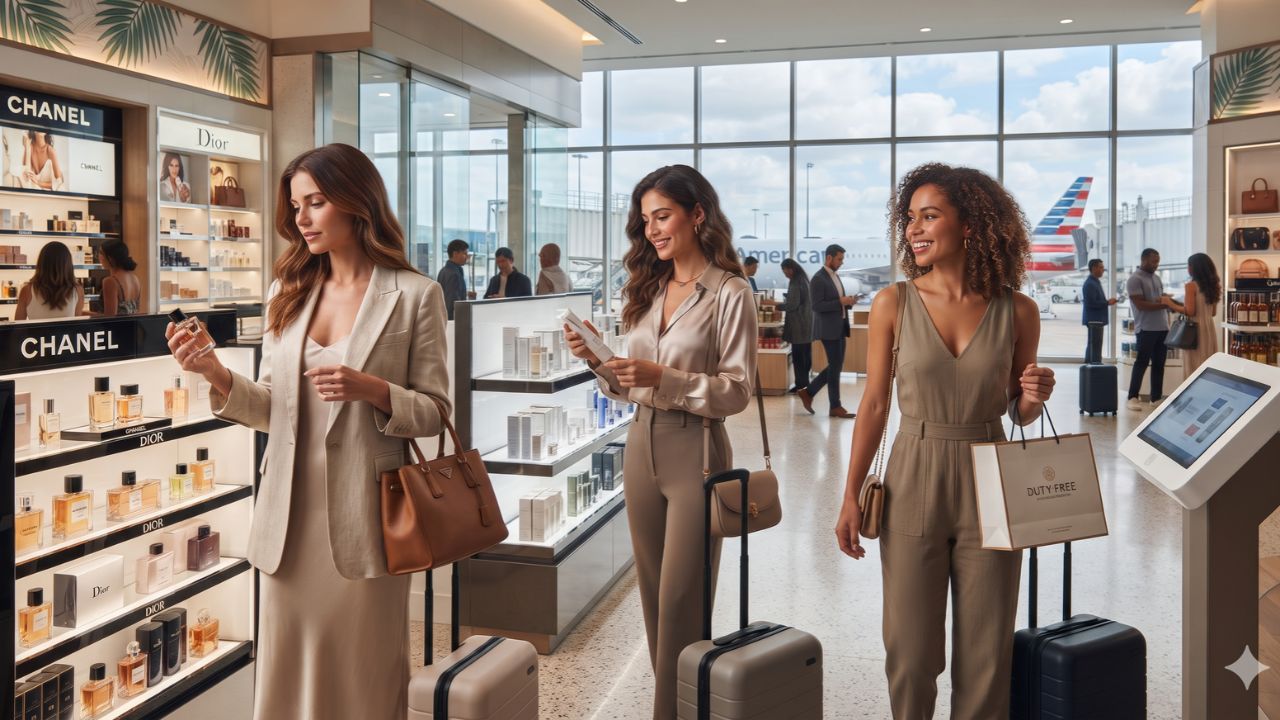
For more than fifty years, duty-free shopping across United States airports was notoriously treated as an afterthought—relegated to fluorescent, windowless storefronts in cramped 1970s corridors—until a nationwide multi-billion-dollar terminal building boom between late 2026 and 2028 began unveiling massive, walk-through luxury flagships designed to rival Singapore Changi and London Heathrow.
From New York’s John F. Kennedy International Airport (JFK) and Washington Dulles (IAD) to Miami International (MIA), Seattle-Tacoma (SEA), and Chicago O’Hare (ORD), airport authorities are replacing fragmented concessions with sweeping, tech-infused experiential marketplaces. Backed by long-term 10- to 20-year concession agreements with travel retail heavyweights like Avolta (the merged powerhouse of Dufry and Hudson) and Duty Free Americas (DFA), airport operators are funneling departing international passengers straight through curated boutiques immediately after security. This structural shift captures soaring international outbound spending while generating vital non-aeronautical revenue to service airport infrastructure bonds.
Multi-Billion Dollar US Airport Duty-Free Modernization Rollout
The ongoing retail transformation reflects an overdue rethinking of airport terminal commercial footprints. Instead of forcing passengers down sterile holding corridors, newly engineered terminals channel passenger flow directly through high-ceilinged retail plazas featuring interactive tasting bars, beauty testing counters, and local cultural storefronts.
The table below outlines active and forthcoming duty-free expansions, designated operators, terminal locations, and verified delivery timelines across primary US gateways:
| Gateway Airport (IATA) | Terminal & Concourse Area | Lead Duty-Free Concessionaire | Verified Timeline & Phase Milestones | Commercial Scale & Design Highlights |
|---|---|---|---|---|
| New York JFK | Terminal 6 (New International Terminal) | Avolta (Dufry & Hudson) | Late 2026 – 2028 (First gates open Q4 2026; full build 2028) | Over 18,200 sq ft; 4 NYC-themed districts; The Liquor Library & Green Market |
| New York JFK | New Terminal One (NTO) | Duty Free Americas (Skyline Duty Free) | 2027 – 2030 (Phase 1 with 14 gates opens 2027; full completion 2030) | Nearly 20,000 sq ft; "World’s Runway" district; 1,000+ sq ft for Queens local artisans; AI beauty bars |
| Seattle-Tacoma (SEA) | Concourses A, S, and N | Hudson (Avolta) + ACDBE partners | Q2 2028 debut (Concourse A starts Q1 2027; Concourse S via SCE project) | 12,000 sq ft in Concourse A between Gates A4 & A6; live music stage; The Distillery Trail |
| Washington Dulles (IAD) | Concourse E (New 14-gate tier) | Avolta (Dufry / Hudson) | Opened November 2026 (Retail fit-outs actively rolling out) | Over 700 sq meters of luxury retail & dining under 10-year agreements for United hubs |
| Miami International (MIA) | South Terminal Concourse H & airport-wide | Duty Free Americas (DFA) | 2026 – 2028 (Phased multi-year reconstruction) | Consolidates 20 separate shops into unified, large-format walk-through store |
| Chicago O’Hare (ORD) | Terminals 1 & 3 + Satellite Concourse 1 | Multiple concessionaires (Open tender) | 2026 – 2028 (T1/T3 turnovers underway; Satellite 1 opens 2028) | 3 new duty-free concessions modernizing legacy concourses ahead of Satellite 1 |
| San Diego International (SAN) | New Terminal 1 (Phase 2) | Paradies Lagardère / Concessionaires | Early 2028 (Phase 1 opened late 2025; Phase 2 adds 11 gates) | Part of $3.4 billion redevelopment expanding international departure capacity |
| Private FBO Terminals | Private jet lounges (FLL, OPF, 20 national FBOs) | Executive Retail Shops (Duty Free Holdings) | Active through end of 2027 | Boutique high-end duty-free lounges tailored to private aviation passengers |
The commercial shift extends beyond scheduled commercial flights into elite private aviation. Duty Free Holdings’ subsidiary, Executive Retail Shops, is launching dedicated luxury duty-free lounges across 20 fixed-base operator (FBO) terminals nationwide through late 2027, following initial deployments at Fort Lauderdale (FLL) and Miami-Opa Locka (OPF).
What Makes the New Generation of American Airport Retail Different
For decades, duty-free retail in the United States meant dusty shelves of generic scotch, bulk American cigarettes, and standard designer perfumes tucked behind boarding gates. The new wave of airport retail discards this model in favor of regional cultural authenticity and interactive retail technology.
At John F. Kennedy International Airport's New Terminal One, Duty Free Americas is engineering an experiential flagship called Skyline Duty Free. Occupying nearly 20,000 square feet at the foot of the central post-security escalators, the store incorporates artificial intelligence skin-diagnostic mirrors, holographic product pedestals, and virtual reality sensory stations where travelers can explore the heritage of rare single-malt distilleries. Crucially, more than 1,000 square feet is reserved exclusively for rotating artisanal foods, spirits, and handmade crafts produced in neighboring Queens and Brooklyn.
On the West Coast, the Port of Seattle’s landmark 20-year concession contract with Hudson and local ACDBE partners re-anchors Seattle-Tacoma International Airport. The upcoming 12,000-square-foot flagship in Concourse A replaces five obsolete retail units with an open-concept hall featuring an active acoustic music stage and "The Distillery Trail"—a craft tasting bar pouring Pacific Northwest single-barrel whiskeys, Washington state boutique wines, and local microbrews.
At Miami International Airport, the multi-year reconstruction across South Terminal Concourse H eliminates 20 fragmented storefronts, unifying them into a broad, single-flow walk-through concourse that mirrors the luxury hotel lobbies of South Beach, complete with curated Caribbean rums, Latin American designer labels, and artisanal coffees.
Visitor Insider Tips for Pre-Flight Shopping and Duty-Free Allowances
Maximizing your airport shopping experience requires navigating custom rules, delivery logistics, and price comparisons:
- Understand Gate Delivery Regulations for Liquids: Under federal customs laws, duty-free purchases containing liquids exceeding TSA 3.4-ounce (100ml) rules (such as spirits or perfumes) cannot be carried away from the cash register in US airports. The retailer will securely pack your items and deliver them directly to your international boarding gate or aircraft jet bridge door, where you collect them as you step onto the plane.
- Target Regional Specialty Collaborations: Skip internationally mass-produced products that cost the same online. Focus your purchases on airport-exclusive releases, such as limited-edition bourbon barrels at JFK or Pacific Northwest single-cask whiskeys at Sea-Tac, which are legally barred from standard retail distribution.
- Utilize Digital Reserve-and-Collect Services: Both Avolta and Duty Free Americas operate digital pre-order platforms. Browse inventory online up to five days before departure to lock in online promotional discounts (routinely 10% to 15% below terminal shelf prices) and bypass cash register lines during peak evening departure rushes.
- Audit Destination Customs Duty Free Allowances: Remember that duty-free means free of US sales taxes; it does not exempt you from customs duties in your arrival country. Entering the European Union allows 4 liters of wine, 16 liters of beer, and 1 liter of spirits over 22% ABV tax-free, while returning to the UK carries a 42-liter beer allowance alongside 1 liter of spirits. Exceeding arrival thresholds triggers steep border excise taxes.
- Retain Sealed Tamper-Evident Bags on Connecting Flights: If your international itinerary involves a connection at another gateway, do not open the Secure Tamper-Evident Bag (STEB) provided by the retailer until you reach your final international destination. Breaking the seal before clearing intermediate security checkpoints will result in TSA officers confiscating your bottles.
Cultural and Environmental Context
The aggressive redevelopment of airport retail centers on economic survival for municipal airport authorities. Unlike many international hubs that receive substantial direct state operating subsidies, major American airports fund multi-billion-dollar terminal modernizations through revenue bonds.
Non-aeronautical revenue—derived from duty-free leases, food and beverage concessions, and car parking—provides the primary financial cushion that keeps airport balance sheets stable. By generating higher retail concession income per passenger, airports can keep airline landing fees and terminal gate rental charges competitive, motivating international carriers to launch direct flights to underserved overseas markets.
At the same time, terminal operators face stringent environmental mandates. The new retail concourses at JFK Terminal 6, Dulles Concourse E, and San Diego Terminal 1 incorporate LEED Silver and Gold certification standards. Store construction utilizes energy-efficient LED accent lighting arrays, sustainably harvested timber millwork, and automated chilled-air recovery systems that cut energy draw. Concessionaires are also phasing out single-use petroleum plastics at checkout, substituting compostable fiber bags and FSC-certified packaging.
FAQ: Pre-Flight Duty-Free Shopping at US Airports 2026–2028
How does walk-through duty-free shopping work at new US airport terminals?
Passengers clearing security are routed naturally along a wide, curved central concourse flanked by open retail bays, allowing them to browse luxury products, local goods, and tasting bars directly along the path to their boarding gate.
When will JFK's new Terminal 6 and New Terminal One retail spaces open?
JFK Terminal 6 begins opening gates and Avolta duty-free retail in late 2026, reaching completion in 2028. New Terminal One opens Phase 1 with 14 gates and Skyline Duty Free in 2027, with final build-out completed by 2030.
Can domestic passengers purchase goods in duty-free stores?
Yes, domestic passengers can purchase most retail items such as confections, accessories, and local artisanal gifts, paying applicable local sales taxes. However, bonded duty-free alcohol and tobacco remain restricted exclusively to ticketed international departures.
How are duty-free liquid purchases delivered to passengers?
Duty-free liquids over 3.4 ounces (100ml) are sealed in tamper-evident security bags and delivered by retail staff directly to the international boarding gate, where passengers collect them immediately before boarding the aircraft.
As massive walk-through boutiques replace aging departure corridors, the American airport terminal finally transforms from an endurance test into a premier luxury destination.
Related Travel Guides
This article is for informational purposes. Flight routes, passenger regulations, visa rules, and transit advisories are subject to change by airlines and aviation authorities. Readers are advised to verify schedules and travel documentation with relevant carriers and border agencies before departure.
Related Stories
Australia's Two-Speed Aviation Divide: Overseas Arrivals Surge as Domestic Flying Stalls
Unlocking Africa's Skies: 60M Arrivals Spark Call to Dismantle Air and Visa Barriers