
US Military Aircraft Occupy Ben Gurion Airport Parking Stalls Threatening Summer 2026 Flight Delays
Dozens of US military refueling aircraft parked at Israel's Ben Gurion Airport are consuming over half of available parking positions, prompting warnings of potential flight cuts during peak 2026 summer travel.

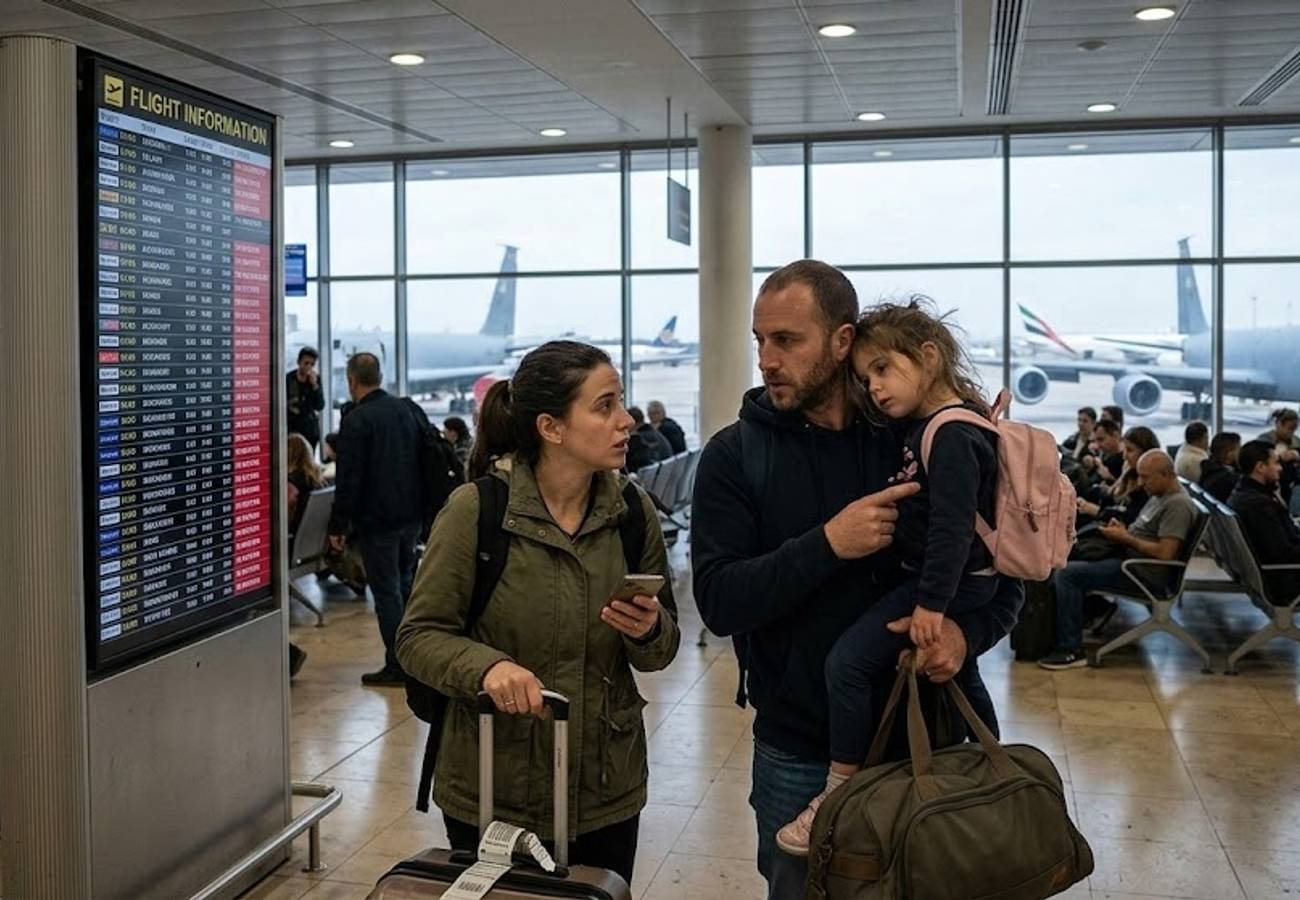
Image generated by AI
Up to 75 US military aircraft are occupying more than half of Ben Gurion Airport's roughly 100 parking stands, and the Israel Airports Authority says 10 commercial flights per day may need to be cut this summer if capacity is not freed.
Travelers flying to and from Israel this summer face a unique bottleneck: one of the country's most critical infrastructure assets is doubling as a forward operating hub for allied military forces. The presence of dozens of United States aerial refueling aircraft at Ben Gurion Airport has tightened ramp capacity at exactly the moment civilian passenger traffic is surging back to pre-conflict levels.
US Tanker Fleet Tightens Space at Israel's Main Gateway
Large KC-46A and KC-135 tanker aircraft have been stationed at Ben Gurion Airport for months, tied to regional tensions and the recent conflict with Iran. According to published reports and aviation tracking forums, the US military footprint at the airport has at times reached 70 to 75 aircraft — occupying well over half of the facility's approximately 100 parking positions.
That number fluctuates based on operational requirements, but even at reduced levels, the military presence consumes stands and taxi areas that commercial airlines depend on during peak travel waves. The result is a civilian gateway operating with significantly diminished flexibility at the height of its busiest season.
Ben Gurion, located near Tel Aviv, serves as Israel's primary international airport and handles the overwhelming share of the country's inbound tourism and outbound leisure traffic. Airport data from the past year shows a rapid recovery in passenger volumes following wartime disruptions, with recent summer and holiday peak days recording around 88,000 passengers. That rebound means the airfield is now handling commercial demand comparable to pre-conflict periods — but with far fewer available parking stands.
Publicly available traffic reports from the Israel Airports Authority confirm that international passenger and aircraft movements have climbed sharply compared with 2024, particularly during late summer and early autumn 2025. The ramp and runway environment is busier than it has been in years, and a portion of that infrastructure is simultaneously devoted to non-commercial military operations.
Airport Authority Models Flight Reduction Scenarios
The Israel Airports Authority has reportedly cautioned airlines about operational constraints heading into the busiest months of the 2026 vacation season. Internal modeling cited in Israeli media outlines a scenario in which approximately 10 commercial flights per day may need to be removed from the schedule if additional parking capacity is not made available.
Some coverage has referenced estimates that tens of thousands of tickets could theoretically be at risk over the summer if airlines and regulators cannot reconcile peak leisure demand with restricted parking and turnaround options. The authority has stressed that there is no blanket cancellation plan and that preserving the existing schedule remains the goal — but it has also acknowledged that runway and apron congestion will be more acute than in previous summers.
Discussions highlighted in domestic media suggest that initial proposals to relocate a significant portion of the US refueling fleet to Israeli military bases met resistance from Washington. A partial compromise was reportedly reached: a core group of tankers would remain at Ben Gurion while others relocated to alternative facilities. The exact balance of that arrangement and its impact on civilian operations remains fluid.
What Passengers Should Expect
For most travelers, the visible impact will likely manifest as longer waits before takeoff or after landing rather than widespread cancellations. When an airport's stands and taxiways operate near capacity, minor disruptions cascade — aircraft queue for limited gates, pushback slots become scarce, and ground movement slows across the board.
Ben Gurion already operates under intensive security screening protocols and maintains a concentrated bank of overnight and early-morning flights feeding transatlantic and European connections. Travel commentary from recent months describes crowded check-in halls and baggage handling pressure during busy periods even without the added military footprint. Layering airfield congestion on top of these existing stress points compounds the challenge for both airport staff and passengers.
Passengers flying during peak times are most likely to encounter schedule slippage. Early morning departures, late-night banked arrivals, and heavily used weekend slots are particularly vulnerable when air traffic control must meter departures to prevent ground gridlock. Airlines often build extra block time into schedules under such conditions, which can make delays appear less severe on paper while still extending overall journey times.
Leisure travelers connecting from North America or Europe may face tighter margins for onward flights if inbound services to Tel Aviv run late. Even modest average delays can translate into missed connections and disrupted itineraries over the course of a crowded season — especially when rebooking options are limited by high load factors across the network.
Airlines Face Short-Notice Schedule Adjustments
Foreign carriers that rely on tight turnarounds at Ben Gurion may be hit hardest by reduced flexibility on parking and pushback windows. These airlines often operate with minimal ground time buffers, and any constraint on stand availability can force timetable adjustments at short notice.
Israeli carriers, while more familiar with the local operating environment and contingency procedures, are not immune. If the ramp becomes saturated during peak arrival and departure waves, even carriers with deep operational experience at Ben Gurion would face bottlenecks that ripple through their networks.
Airlines may respond by proactively retiming flights to smooth peak-hour pressure, swapping aircraft types, or consolidating lightly booked services. Passengers are advised to monitor bookings closely in the days before departure, as such adjustments can occur with limited advance notice.
Long-Term Capacity Debate Revived
The strain created by the US tanker fleet has reignited a longstanding debate over Israel's reliance on Ben Gurion as a single primary international gateway. Aviation planning documents and expert commentary have for years flagged the airport's limited room for physical expansion and the structural challenges of accommodating sustained passenger growth on one site.
Israeli policymakers have previously examined options including terminal and runway expansion at Ben Gurion, converting or dual-using military airbases for civilian traffic, and developing entirely new regional gateways. Nevatim Airbase in the Negev and Ramat David in the north have both surfaced in public discussions as potential mixed-use sites that could absorb some demand from the main hub.
The current situation demonstrates how quickly Ben Gurion's operational margins can be eroded by a geopolitical event or military operation. Previous crises — including missile attacks and periods of intense regional conflict — have briefly shut the airport or prompted airlines to suspend service, exposing the vulnerability of a single-hub system serving an entire country's international travel demand.
With US military aircraft expected to maintain at least a partial presence at Ben Gurion for the foreseeable future, planners and tourism stakeholders are watching this summer's operations as a stress test. The outcome could accelerate investment decisions around additional capacity, whether civilian, military, or dual-use.
Practical Guidance for Summer Travelers
Travel industry reports and airline advisories recommend that passengers headed to Israel in the coming months build extra flexibility into their itineraries. For long-haul travelers, selecting connections with slightly longer layover windows and avoiding the most congested departure times can reduce the risk of missed onward flights if delays occur at Ben Gurion.
Consumer groups and travel agents encourage passengers to monitor bookings closely as departure dates approach, since airlines may retime flights to manage peak-hour pressure. Arriving at the airport earlier than usual — particularly for overnight and early-morning departures — can help offset expected congestion at check-in and security checkpoints.
For those with tight international connections after departing Tel Aviv, building buffer time into the downstream itinerary is advisable. High load factors during peak season mean rebooking options may be scarce if a delayed inbound flight causes a missed connection.
Data Table: Ben Gurion Airport Military and Civilian Capacity Snapshot
| Metric | Figure |
|---|---|
| Total parking positions at Ben Gurion | ~100 |
| Peak US military aircraft parked at airport | 70–75 |
| US military aircraft types | KC-46A, KC-135 |
| Peak daily passenger volume (recent summer/holiday) | ~88,000 |
| Modeled daily commercial flight cuts (worst case) | ~10 |
| Tickets potentially at risk (summer estimate) | Tens of thousands |
| Potential alternative dual-use airbases | Nevatim (Negev), Ramat David (north) |
Key Takeaways
- 70 to 75 US military aircraft have occupied over half of Ben Gurion Airport's approximately 100 parking stands at peak periods, primarily KC-46A and KC-135 refueling tankers.
- The Israel Airports Authority has modeled a scenario requiring 10 daily commercial flight cuts if parking capacity is not freed, potentially putting tens of thousands of summer tickets at risk.
- Passenger traffic has rebounded sharply compared with 2024, with peak days recording around 88,000 passengers — intensifying competition for limited ramp space.
- A partial compromise reportedly allows some US tankers to relocate to Israeli military bases while a core group remains at Ben Gurion, though Washington initially resisted full relocation.
- Travelers should expect longer ground waits and schedule slippage rather than mass cancellations, with early morning and late-night banks most vulnerable.
- The crisis has revived debate over dual-use airbases like Nevatim and Ramat David as alternatives to Israel's single-hub model.
Frequently Asked Questions
Why are US military aircraft parked at Ben Gurion Airport? The aircraft — primarily KC-46A and KC-135 aerial refueling tankers — have been stationed at Ben Gurion for months in connection with regional tensions and the recent conflict with Iran. The airport is functioning partially as a forward operating hub for allied air forces.
How many parking positions does Ben Gurion Airport have? Ben Gurion has approximately 100 parking positions. At peak periods, 70 to 75 US military aircraft have occupied well over half of those stands.
Will flights to Israel be cancelled this summer? The Israel Airports Authority has stated there is no blanket cancellation plan. However, it has modeled a scenario in which approximately 10 commercial flights per day may need to be cut if additional parking capacity is not made available.
What should travelers do to minimize disruption? Passengers should build extra buffer time into connections, monitor bookings closely for schedule changes, and arrive at the airport earlier than usual — especially for overnight and early-morning departures.
Are there plans to move US military aircraft elsewhere? A partial compromise has reportedly been reached in which some tankers would relocate to Israeli military bases while a core group remains at Ben Gurion. Nevatim Airbase in the Negev and Ramat David in the north have been discussed as potential alternative sites.
For travelers navigating Israel's busiest gateway this summer, the lesson is clear: build in buffer time, stay alert to schedule changes, and expect a tighter, slower airport experience than in previous years.
Related Travel Guides
Disclaimer
This article is for informational and educational purposes only. It does not constitute legal, financial, or professional advice. While we strive to provide accurate and up-to-date information, travel policies, regulations, and conditions change rapidly. Always verify information with official sources before making travel decisions. Nomad Lawyer makes no representations about the accuracy, reliability, completeness, or suitability of the information provided. Readers should consult qualified professionals for advice specific to their circumstances. The views expressed in this article are those of the author and do not necessarily reflect the views of Nomad Lawyer.
Preeti Gunjan
Contributor & Community Manager
A passionate traveller and community builder. Preeti helps grow the Nomad Lawyer community, fostering engagement and bringing the reader experience to life.
Learn more about our team →