
Severe Travel Chaos Paralyzes the United States as Southwest and Delta Suffer 3,816 Flight Disruptions Across Chicago, Atlanta, and Boston: Latest Airline News
The US aviation network has buckled under severe operational pressure, officially recording a staggering 3,720 flight delays and 96 outright cancellations that have stranded thousands nationwide.

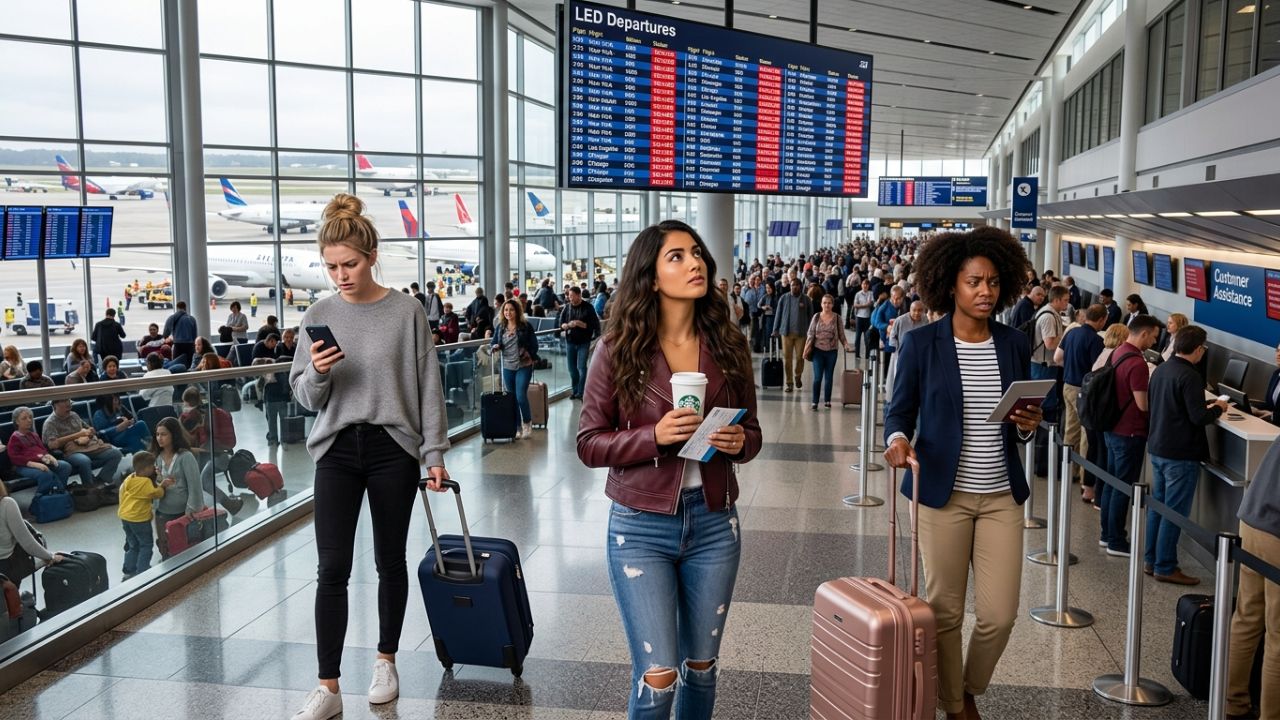
Image generated by AI
In a massive, cascading logistical breakdown that has completely destabilized the domestic passenger transit grid, a severe wave of airport disruptions has paralyzed the United States aviation network. According to official flight data recorded today, June 17, 2026, severe schedule instability has triggered an astronomical 3,720 flight delays and 96 outright cancellations across the country’s primary commercial gateways. As prominent operators like Southwest Airlines, Delta Air Lines, United, and American Airlines scramble to recover their massively backlogged fleets, intense travel chaos is currently tearing through massive mega-hubs in Chicago, Atlanta, New York, Boston, and Seattle. With thousands of travelers stranded, facing missed connections and severe terminal congestion, this sprawling wave of flight cancellations represents the premier headline in today's breaking airline news and essential global aviation updates.
By introducing direct passenger coordination and dynamic scheduling backups, the regional aviation hubs target growing passenger demand across vital commerce sectors. The choice to coordinate flight departures in phases helps to manage gate capacity, supporting the country's broader regional transportation network.
Context: The Collapse of the US Air Corridor
For the thousands of corporate professionals and tourists relying on the precision scheduling of the US aviation grid, the current operational reality has degenerated into an absolute nightmare.
The widespread flight disruptions aggressively exposed the delicate interconnectedness of America's transit infrastructure. When aircraft rotations and crew scheduling adjustments are delayed at a primary hub like Chicago O’Hare early in the day, subsequent legs of that aircraft’s tight rotation cycle are inevitably compromised. This structural dependency explains why smaller regional gateways like Nashville and Fort Lauderdale were plunged into operational difficulties alongside the country’s largest mega-airports. The sheer volume of 3,816 combined disruptions meant that mounting queues rapidly overwhelmed ground handling teams and customer service agents processing alternative transport arrangements. Because high traffic volumes at major hubs increase the likelihood of cascading disruptions, this rolling delay wave deeply damages consumer confidence in summer travel reliability.
To view live flight schedules, specific domestic carrier route maps, or alternative connection options, travelers must consult official US aviation directories. For direct booking access, specific baggage rules, and immediate rebooking portals, passengers should check the official Delta Air Lines or Southwest Airlines portals. To explore live flight tracking and monitor the exact severity of the rolling airspace closures, passengers can consult the official FlightAware tracking service.
Section-Wise Breakdown of the Continental Meltdown
The Midwest Gridlock: Chicago O’Hare
Chicago O’Hare International Airport experienced the most severe delay volume in the nation, recording an incredible 503 delayed flights and 6 complete cancellations. As one of the busiest hubs in the country, severe congestion and aircraft rotation failures here quickly spread throughout the entire domestic and international network.
The Southern Hubs: Atlanta and Charlotte
Heavy traffic volumes and schedule adjustments crippled Hartsfield-Jackson Atlanta International Airport, which recorded 244 delays and 13 cancellations, devastating passengers connecting through the world’s busiest aviation hub. Nearby, Charlotte Douglas International Airport saw 129 delayed flights and 3 cancellations, heavily impacting operations for major carriers.
The Northeast Corridor: LaGuardia and Boston Logan
The high traffic density and limited operating flexibility of New York’s LaGuardia Airport made it extremely vulnerable, resulting in 137 delays and 7 cancellations cascading across multiple airlines. Further north, Boston Logan International Airport recorded 111 delays and 8 cancellations, making it one of the most heavily affected airports in the Northeast.
Pacific Northwest and Leisure Markets
Operational challenges paralyzed the Pacific Northwest, with Seattle-Tacoma International Airport registering 131 delays and 3 cancellations. In the Sunbelt and leisure markets, Nashville International Airport suffered 111 delays and 5 cancellations. San Diego International Airport registered 84 delays and 3 cancellations. Florida traffic was severely affected, with Tampa International Airport recording 73 delays and 4 cancellations, while Fort Lauderdale International Airport suffered 62 delays and 2 cancellations.
Technical Roster: US Airport and Airline Disruption Matrix
To ensure absolute factual accuracy regarding the specific airlines and airports driving this massive continental aviation failure, the following tables detail the exact operational metrics generated by the breakdown:
| Major US Airport Location | Total Operational Disruptions | Geographic Impact |
|---|---|---|
| Chicago O'Hare (ORD) | 503 Delays, 6 Cancellations | Massive Midwestern hub drives nationwide cascading delays |
| Hartsfield-Jackson Atlanta (ATL) | 244 Delays, 13 Cancellations | Global southern hub experiences severe connection failures |
| LaGuardia (LGA) | 137 Delays, 7 Cancellations | Northeast airspace congestion triggers rolling delays |
| Seattle-Tacoma (SEA) | 131 Delays, 3 Cancellations | Pacific Northwest operations severely throttled |
| Charlotte Douglas (CLT) | 129 Delays, 3 Cancellations | Mid-Atlantic connectivity heavily compromised |
| Boston Logan (BOS) | 111 Delays, 8 Cancellations | Secondary Northeast hub suffers heavy cancellations |
| Nashville (BNA) | 111 Delays, 5 Cancellations | Sunbelt regional schedules subjected to gridlock |
| San Diego (SAN) | 84 Delays, 3 Cancellations | Southern California airspace experiences notable friction |
| Tampa (TPA) | 73 Delays, 4 Cancellations | Florida leisure tourism pipelines severely delayed |
| Fort Lauderdale (FLL) | 62 Delays, 2 Cancellations | Vital Caribbean and domestic gateway suffers slowdowns |
Carrier Impact Breakdown
| Airline / Operating Carrier | Operational Disruption Metric | Fleet Impact & Delay Rate |
|---|---|---|
| Southwest Airlines | 835 Delays, 1 Cancellation | Leads the nation in delays; massive 20% delay rate |
| Delta Air Lines | 330 Delays, 29 Cancellations | Records the highest cancellation count in the US |
| United Airlines | 438 Delays, 5 Cancellations | Suffers a massive 14% system-wide delay rate |
| American Airlines | 401 Delays, 3 Cancellations | Reflects intense, continued pressure across its network |
| SkyWest | 359 Delays, 10 Cancellations | Regional carrier hit with a massive 14% delay rate |
| Endeavor Air | 164 Delays, 5 Cancellations | Delta operator suffers a brutal 20% delay rate |
| Alaska Airlines | 73 Delays, 1 Cancellation | Pacific Northwest carrier caught in the gridlock |
| JetBlue | 69 Delays, 1 Cancellation | Operations challenged across its Northeast network |
| Horizon Air | 17 Delays, 2 Cancellations | Regional feeder network heavily disrupted |
| Tradewind Aviation | 1 Delay, 6 Cancellations | Small operator hit with a brutal 3% cancellation rate |
Passenger Impact: Stranded Nationwide
For the thousands of passengers currently trapped inside America's major terminals, the logistical reality demands immediate contingency planning.
The immediate impact of 3,816 rolling disruptions is the total destruction of complex domestic itineraries. When a Southwest Airlines flight is delayed out of Chicago O'Hare, a passenger connecting to Tampa or San Diego is practically guaranteed to miss their transfer. Thousands of passengers are currently overwhelming customer service desks, desperately attempting to secure alternate routings through rival hubs. The sheer volume of delays guarantees massive luggage handling backlogs, missed hotel check-ins, and severe terminal crowding. Passengers are being forced to scramble for overnight accommodations and out-of-pocket food expenses as the airlines struggle to reposition crews and aircraft.
Industry Analysis: The Fragility of the Domestic Network
Aviation industry analysts view the 3,816-flight disruption wave across the US as a stark demonstration of the deep structural fragility inherent in the domestic system.
Analysts note that a combination of operational challenges inevitably cascades when the network operates near maximum capacity. High traffic volumes at major hubs like Chicago, Atlanta, and LaGuardia dramatically increase the likelihood of massive cascading disruptions. Aircraft rotations, crew scheduling adjustments, congestion, and broader network pressures all contributed to the collapse. In some locations, routine operational constraints and airline-specific issues—such as Southwest's 20% delay rate or Delta's staggering 29 cancellations—caused localized problems to spread throughout the entire continental system. Analysts warn that passengers must actively monitor real-time updates, as the situation remains highly volatile.
Actionable Advice for Surviving US Flight Disruptions
If you are a traveler relying on Southwest, Delta, United, or American Airlines during this massive disruption wave, execute this extreme survival checklist immediately:
- Check Flight Status Regularly: Do not head to the airport assuming your flight is on time. Monitor FlightAware and airline apps constantly before leaving your house.
- Sign Up for Alerts: Enable SMS and push notifications directly from your airline to receive instant updates regarding gate changes or terminal reassignments.
- Contact the Airline for Rebooking: Do not wait in the physical terminal line. Call customer service or use the airline's mobile app immediately to explore alternative routing options.
- Keep Documents Ready: Keep boarding passes and travel documents easily accessible, and be sure to review baggage arrangements if your schedule suddenly changes.
- Monitor Weather and Conditions: Arrive early and actively monitor local weather radar and airport status boards, as cascading delays can alter departure times by several hours.
FAQ: US Airport Flight Disruptions 2026
How severe is the current operational breakdown across US airports?
The United States aviation network suffered a massive collapse, officially recording an astronomical 3,720 flight delays and 96 outright cancellations across the country.
Which specific airlines are most affected by this travel chaos?
Southwest Airlines led the nation with 835 delays (a 20% delay rate), while Delta Air Lines suffered the most canceled flights (29 cancellations, plus 330 delays). United, American, and SkyWest also suffered massive delays.
Which major US airports experienced the worst flight cancellations and delays?
Chicago O’Hare International Airport recorded the highest volume with 503 delays and 6 cancellations, followed by Hartsfield-Jackson Atlanta (244 delays) and New York's LaGuardia Airport (137 delays).
The Breaking Point of the Domestic Grid
The massive wave of 3,816 flight disruptions ravaging America's primary mega-hubs proves definitively that the domestic transit infrastructure is operating under immense, unsustainable stress in 2026. By entirely devastating the highly scheduled operations of Southwest, Delta, United, and American Airlines, this operational meltdown has ruthlessly exposed the fragility of precision aircraft rotation. As airlines desperately attempt to reposition their fleets and clear the massive backlog of stranded corporate and leisure passengers from Chicago to San Diego, travelers must accept a brutal reality: navigating US airspace requires extreme itinerary flexibility and aggressive digital contingency planning to survive unexpected, rolling flight cancellations.
Key Takeaways
- Catastrophic National Breakdown: The US aviation network was paralyzed by 3,720 rolling flight delays and 96 outright cancellations.
- Chicago O'Hare Absorbs Heaviest Delays: The massive Midwestern hub logged the highest national delay volume, suffering 503 delays and 6 cancellations.
- Southwest Airlines Gridlocked: Southwest led all carriers with a staggering 835 delayed flights, translating to a massive 20% system-wide delay rate.
- Delta Suffers Highest Cancellations: Delta Air Lines absorbed 29 complete flight cancellations alongside 330 delays.
- Cascading Network Failure: Operational constraints, crew scheduling issues, and massive congestion spread delays to critical hubs like Atlanta, LaGuardia, Boston, and Seattle.
Related Travel Guides
Severe Travel Chaos Paralyzes China Across Major Hubs
Severe Travel Chaos Paralyzes Atlanta Across Major Hubs
US Domestic Flight Delays and Southwest Compensation Strategies on Reddit
Disclaimer
This article is for informational and educational purposes only. It does not constitute legal, financial, or professional advice. While we strive to provide accurate and up-to-date information, travel policies, regulations, and conditions change rapidly. Always verify information with official sources before making travel decisions. Nomad Lawyer makes no representations about the accuracy, reliability, completeness, or suitability of the information provided. Readers should consult qualified professionals for advice specific to their circumstances. The views expressed in this article are those of the author and do not necessarily reflect the views of Nomad Lawyer.
Kunal K Choudhary
Co-Founder & Contributor
A passionate traveller and tech enthusiast. Kunal contributes to the vision and growth of Nomad Lawyer, bringing fresh perspectives and driving the community forward.
Learn more about our team →