
US and Canada Agree to Open Gordie Howe International Bridge on July 27 After Toll Revenue Dispute
The Gordie Howe International Bridge connecting Detroit and Windsor will open July 27, 2026, following a financial agreement granting the US 50% of toll profits.

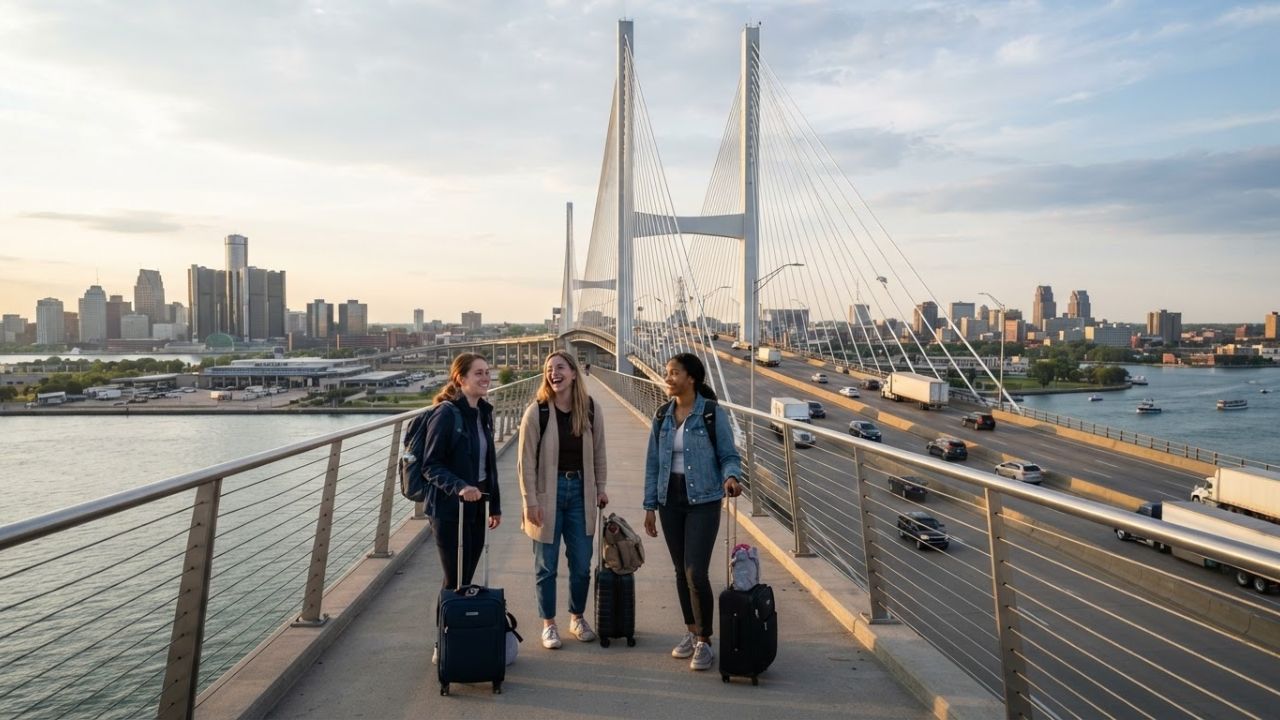
Image generated by AI
The Gordie Howe International Bridge is scheduled to open on July 27, 2026, following a resolution of a diplomatic and financial standoff between the United States and Canada.
The crossing, which connects Detroit, Michigan, to Windsor, Ontario, remained closed despite completed construction due to demands from the U.S. government for partial ownership and a share of toll revenues. An agreement reached between Michigan Governor Gretchen Whitmer and the Canadian government has now cleared the path for operation.
The Disruption and Political Resolution
The opening of the bridge was originally slated for June 12, but was postponed amid tensions regarding the financial structure of the project. While Canada funded the bridge at an estimated cost of $4.7 billion after the U.S. declined to contribute, the U.S. administration demanded compensation for the portion of the infrastructure situated on American soil.
The final agreement stipulates that the United States will receive 50% of toll revenue profits and maintains approval power over specific future toll increases. Additionally, both nations have established a 15-year economic development fund tied to the bridge's profits.
Flight and Infrastructure Impact Breakdown
The new crossing is designed to alleviate congestion at the privately owned Ambassador Bridge and the Detroit-Windsor Tunnel.
- Primary Connection: Direct highway-to-highway link between Michigan’s I-75 and Ontario’s Highway 401.
- Bridge Specifications: Six lanes of traffic, a main span of nearly 3,000 feet, and a total length of just over 1.5 miles.
- Technical Features: The main span is the longest cable-stayed bridge span of its kind in North America and incorporates advanced screening and border-management technology.
- Non-Motorized Access: A toll-free multi-use path will be available for two-way pedestrian and cyclist traffic.
Toll Rates and Vehicle Classifications
Travelers should prepare for the following toll structures upon the July 27 opening:
| Vehicle Type | Standard Toll | Breakaway Rate |
|---|---|---|
| Small/Medium Personal Vehicles | $5.75 USD / $8 CAD | $4.35 USD / $6 CAD |
| Personal Vehicles (Items on Roof) | $5.75 USD / $8 CAD | $4.35 USD / $6 CAD |
| Large Commercial/Passenger (per axle) | $8.75 USD / $12 CAD | $6.90 USD / $9.60 CAD |
| Hazardous/Oversized (per axle) | $8.75 USD / $12 CAD | $6.90 USD / $9.60 CAD |
Passenger Rights & Border Advisory (Information Gain)
Travelers utilizing the Gordie Howe International Bridge must adhere to strict federal documentation requirements to avoid delays or denials of entry.
Required Documentation
- U.S. Citizens Entering Canada: Must present a valid U.S. passport, passport card, or NEXUS card.
- Returning to the U.S.: Travelers must provide a Western Hemisphere Travel Initiative (WHTI) compliant document, such as a U.S. passport, passport card, or a trusted traveler card.
Compliance Warnings
- Firearms Regulations: Travelers are cautioned that Canada maintains significantly stricter firearms laws than the U.S. Failure to declare weapons or attempting to transport prohibited items can lead to immediate seizure and criminal charges.
- Customs Declarations: Ensure all commercial and personal goods are declared via the appropriate digital or paper manifests to avoid secondary inspection delays.
Industry Analyst View
From an operational perspective, the Gordie Howe International Bridge provides critical redundancy for one of North America's busiest trade corridors. The reliance on the Ambassador Bridge created a single point of failure; any disruption there threatened hundreds of millions of dollars in daily trade.
By linking I-75 directly to Highway 401, the bridge removes the "bottleneck" effect caused by local street navigation in Detroit and Windsor. This shift will likely reduce idling times for commercial haulers and decrease the volatility of transit times for commuters and tourists.
The resolution of this dispute marks a pivotal shift in cross-border logistics, potentially ending a year of travel boycotts that harmed regional tourism.
Related Travel Guides
Disclaimer
This article is for informational and educational purposes only. It does not constitute legal, financial, or professional advice. While we strive to provide accurate and up-to-date information, travel policies, regulations, and conditions change rapidly. Always verify information with official sources before making travel decisions. Nomad Lawyer makes no representations about the accuracy, reliability, completeness, or suitability of the information provided. Readers should consult qualified professionals for advice specific to their circumstances. The views expressed in this article are those of the author and do not necessarily reflect the views of Nomad Lawyer.
Preeti Gunjan
Contributor & Community Manager
A passionate traveller and community builder. Preeti helps grow the Nomad Lawyer community, fostering engagement and bringing the reader experience to life.
Learn more about our team →