
FAA Ground Stop at Hartsfield-Jackson Atlanta International Airport Causes Massive Cancellations and Delta Air Lines Delays in July 2026
Thunderstorms triggered a Federal Aviation Administration ground stop at Hartsfield-Jackson Atlanta International Airport, leading to over 1,000 mid-week cancellations and significant operational disruptions for Delta Air Lines.

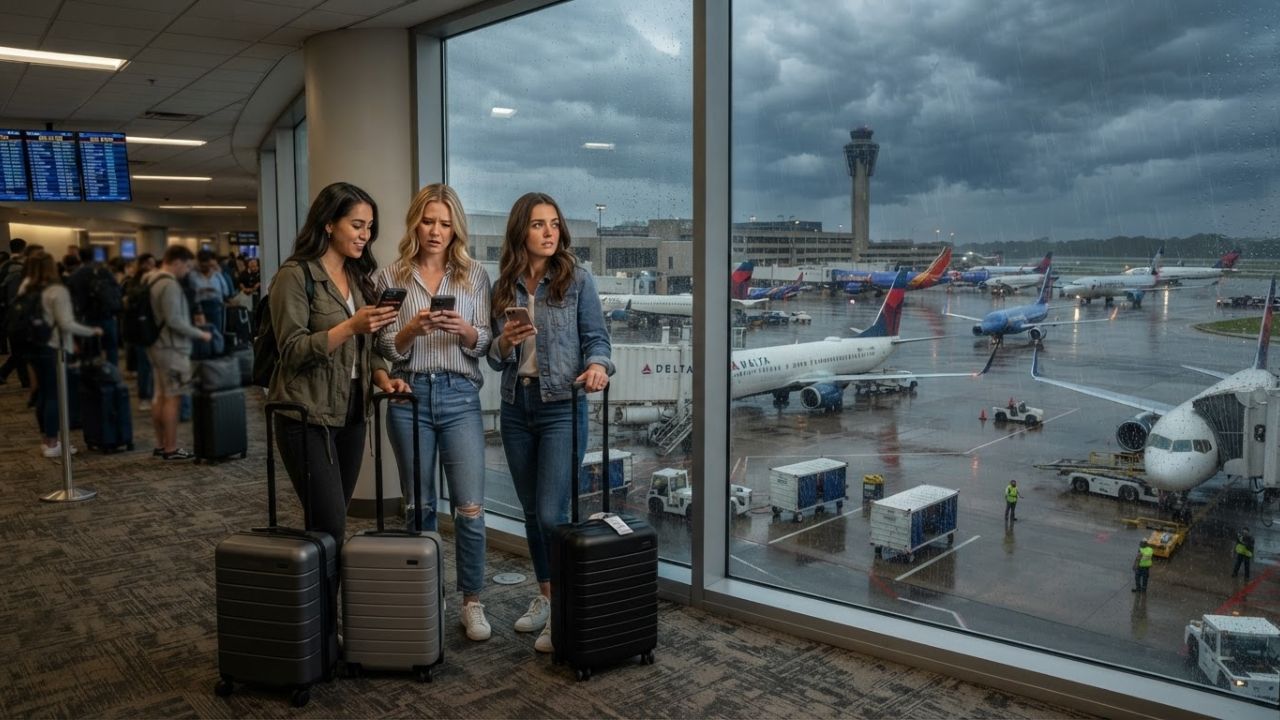
Image generated by AI
Severe weather in Georgia triggered a comprehensive Federal Aviation Administration (FAA) ground stop at Hartsfield-Jackson Atlanta International Airport (ATL), resulting in the highest volume of flight delays and cancellations among all major U.S. hubs.
The disruptions occurred on July 11, 2026, as part of a broader week of transit instability that began with fuel-related issues at Boston Logan International Airport. The weather-induced ground stop at ATL remained in effect until 3:30 p.m. EDT, followed by a 90-minute ground delay.
Operational Impact and Flight Data
The scale of the disruption positioned Hartsfield-Jackson as the global epicenter for flight delays on July 11. According to data from FlightAware, 46% of all departing flights from ATL were delayed, totaling 504 departures. Arrival delays were nearly as severe, with 477 flights impacted.
Across the United States, the ripple effect of these disruptions contributed to a total of 7,373 delays on Saturday alone. Delta Air Lines, which utilizes ATL as its primary hub, bore the brunt of the operational failure, recording 673 delays at the airport and 40 total cancellations within the hub.
U.S. Airports with Most Canceled Departures (July 11, 2026)
| Rank | Airport | Canceled Flights |
|---|---|---|
| 1 | Hartsfield-Jackson International Airport | 39 |
| 2 | John F. Kennedy International Airport | 24 |
| 3 | Reagan National Airport | 10 |
| 4 | San Diego International Airport | 7 |
| 5 | Philadelphia International Airport | 6 |
Global Airline Delay Rankings (July 11, 2026)
| Rank | Airline | Total Delays |
|---|---|---|
| 1 | Delta Air Lines | 1,161 |
| 2 | American Airlines | 979 |
| 3 | easyJet | 815 |
| 4 | China Eastern | 621 |
| 5 | United Airlines | 575 |
Transit Recovery and Sunday Outlook
The instability extended into Sunday, July 12. Early data indicated 9 departure cancellations and 31 arrival cancellations at ATL. Delta Air Lines continued to lead U.S. carriers in disruptions, with 47 canceled flights and 111 delays projected for Sunday, with numbers expected to climb as the airline attempts to reset its flight schedule.
Traveler Logistics Guide: Navigating Hub Disruptions
When a major hub like ATL experiences a ground stop, the probability of missing connecting flights increases exponentially. Travelers should employ the following strategies to mitigate risk:
- Connection Buffer Times: During peak storm seasons in the Southeast (June–September), avoid layovers shorter than 3 hours at ATL. The airport's massive layout—requiring transit between concourses (e.g., C to D)—makes rapid transfers difficult during irregular operations.
- Digital Rebooking: Use the airline's mobile app to rebook flights immediately upon a cancellation notice. Phone lines typically collapse during FAA ground stops; digital queues are processed faster.
- Know Your Rights: Under U.S. Department of Transportation (DOT) guidelines, passengers are entitled to a refund if a flight is canceled and they choose not to travel on the alternative offered.
- Ground Transportation: During airport-wide delays, ride-share surges are common. Consider the ATL SkyTrain for movement between the airport and rental car centers to avoid congested terminal curbsides.
Infrastructure Impact Assessment
This event highlights the systemic vulnerability of the U.S. aviation network's reliance on "super-hubs." Because Delta Air Lines concentrates such a high percentage of its operations at Hartsfield-Jackson, a localized weather event in Atlanta creates a national—and global—bottleneck.
The 46% departure delay rate demonstrates that even with advanced ATC (Air Traffic Control) coordination, the physical capacity of the runways cannot absorb the backlog created by a total ground stop. For regional tourism and business travel, these disruptions emphasize the need for diversified routing and the potential benefit of utilizing secondary airports to bypass primary hub failures.
Flight recovery efforts continue as Delta Air Lines works to stabilize its network following the July 11 weather event.
Related Travel Guides
Disclaimer
This article is for informational and educational purposes only. It does not constitute legal, financial, or professional advice. While we strive to provide accurate and up-to-date information, travel policies, regulations, and conditions change rapidly. Always verify information with official sources before making travel decisions. Nomad Lawyer makes no representations about the accuracy, reliability, completeness, or suitability of the information provided. Readers should consult qualified professionals for advice specific to their circumstances. The views expressed in this article are those of the author and do not necessarily reflect the views of Nomad Lawyer.
Kunal K Choudhary
Co-Founder & Contributor
A passionate traveller and tech enthusiast. Kunal contributes to the vision and growth of Nomad Lawyer, bringing fresh perspectives and driving the community forward.
Learn more about our team →