
Mount Rainier National Park Closes Carter Falls Trail Due to Critical Infrastructure Failure in 2025
Mount Rainier National Park has implemented an immediate ban on the Carter Falls Trail following the collapse of a key river crossing, highlighting systemic maintenance gaps.

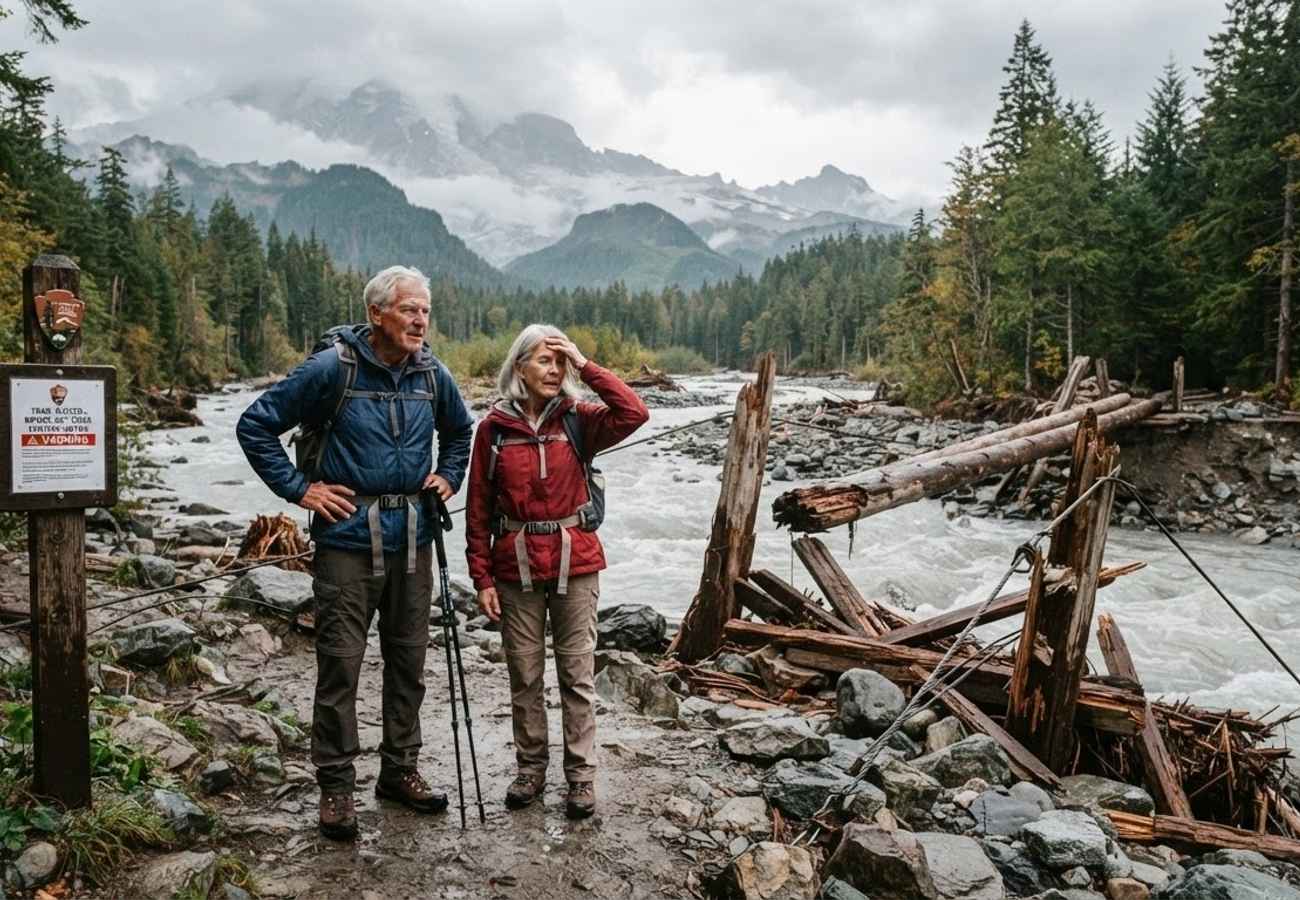
Image generated by AI
Mount Rainier National Park has issued an immediate access ban for the Carter Falls Trail following the failure of critical infrastructure. The closure is expected to remain in effect until spring trail crews return to the site.
The National Park Service (NPS) confirmed via official channels that the log footbridge spanning the Nisqually River was dislodged over a recent weekend. This bridge serves as the only safe passage for visitors to access the trail's primary attractions. Without this crossing, the park has determined there is no safe method for pedestrians to navigate the river, necessitating a total closure of the path until further notice.
While seasonal closures are common in the region—such as recent snow-related road closures in Yellowstone National Park—this specific shutdown is a direct result of structural damage. Park officials have stated that the closure will persist until conditions improve and maintenance crews can be deployed in the spring.
Carter Falls Trail Technical Specifications
The Carter Falls Trail is a recognized route leading to a 50-foot horsetail-shaped waterfall named after Harry Carter, the individual responsible for constructing much of the path between Longmire and Paradise.
- Total Distance: 2.8 miles (round-trip)
- Difficulty Rating: Easy to moderate
- Elevation Gain: 660 feet
- Maximum Elevation: 3,650 feet
Industry observers note that the log bridge at this location is particularly vulnerable, frequently washing out during the late autumn and winter months due to the volatility of the Nisqually River.
Systemic Maintenance Failures and Staffing Shortages
The inability to provide an immediate repair timeline for the Carter Falls bridge underscores a broader crisis within the National Park Service. Current data indicates that during the U.S. government shutdown, many parks have relied on precarious funding from state agencies and environmental organizations.
Our analysis of the current operational climate reveals that while these funds keep gates open, they only cover basic services. Critical specialized labor, specifically dedicated trail crews, are currently not operational. This lack of manpower means that erosions, landslides, and structural failures—like the dislodged bridge at Mount Rainier—remain unaddressed.
Market trends suggest a deepening instability in park management. Reports indicate a Department of the Interior plan under the Trump administration that considers the potential removal of NPS workers. This move would exacerbate existing staffing shortages in a system already struggling to maintain basic safety standards for visitors.
Why This Matters: The Infrastructure Gap
The closure of the Carter Falls Trail is not an isolated incident of natural wear and tear, but a symptom of a "maintenance deficit." When specialized trail crews are absent due to federal budget freezes or staffing cuts, the risk profile for the average visitor increases exponentially.
The "Information Gain" here lies in the disconnect between park accessibility and park safety. A park can be "open" to the public, but if the infrastructure is degrading without professional oversight, the environment becomes a liability. The delay in repairing a simple log bridge until the following spring demonstrates a collapse in the rapid-response capability of the NPS. This suggests that other "open" trails across the national system may harbor undetected structural risks.
Forward Outlook
Expect continued volatility in trail accessibility across the U.S. National Park system through the 2025-2026 winter cycle. If the federal shutdown persists or if the proposed Department of the Interior staffing cuts are implemented, the timeline for "spring repairs" may shift further back. Visitors should anticipate more frequent, sudden closures as aging infrastructure fails without a standby maintenance workforce to perform emergency repairs.
The gap between park visitation numbers and infrastructure investment has reached a critical breaking point.
Related Travel Guides
Disclaimer
This article is for informational and educational purposes only. It does not constitute legal, financial, or professional advice. While we strive to provide accurate and up-to-date information, travel policies, regulations, and conditions change rapidly. Always verify information with official sources before making travel decisions. Nomad Lawyer makes no representations about the accuracy, reliability, completeness, or suitability of the information provided. Readers should consult qualified professionals for advice specific to their circumstances. The views expressed in this article are those of the author and do not necessarily reflect the views of Nomad Lawyer.
Kunal K Choudhary
Co-Founder & Contributor
A passionate traveller and tech enthusiast. Kunal contributes to the vision and growth of Nomad Lawyer, bringing fresh perspectives and driving the community forward.
Learn more about our team →