
US, Italy, and UAE Lead Global Hyperloop Race to Transform Tourism and Sustainable Mobility in 2026
The United States, Italy, and the UAE are accelerating the development of ultra-fast Hyperloop technology, aiming to reshape international tourism and continental rail connectivity through sustainable, high-speed vacuum transport.

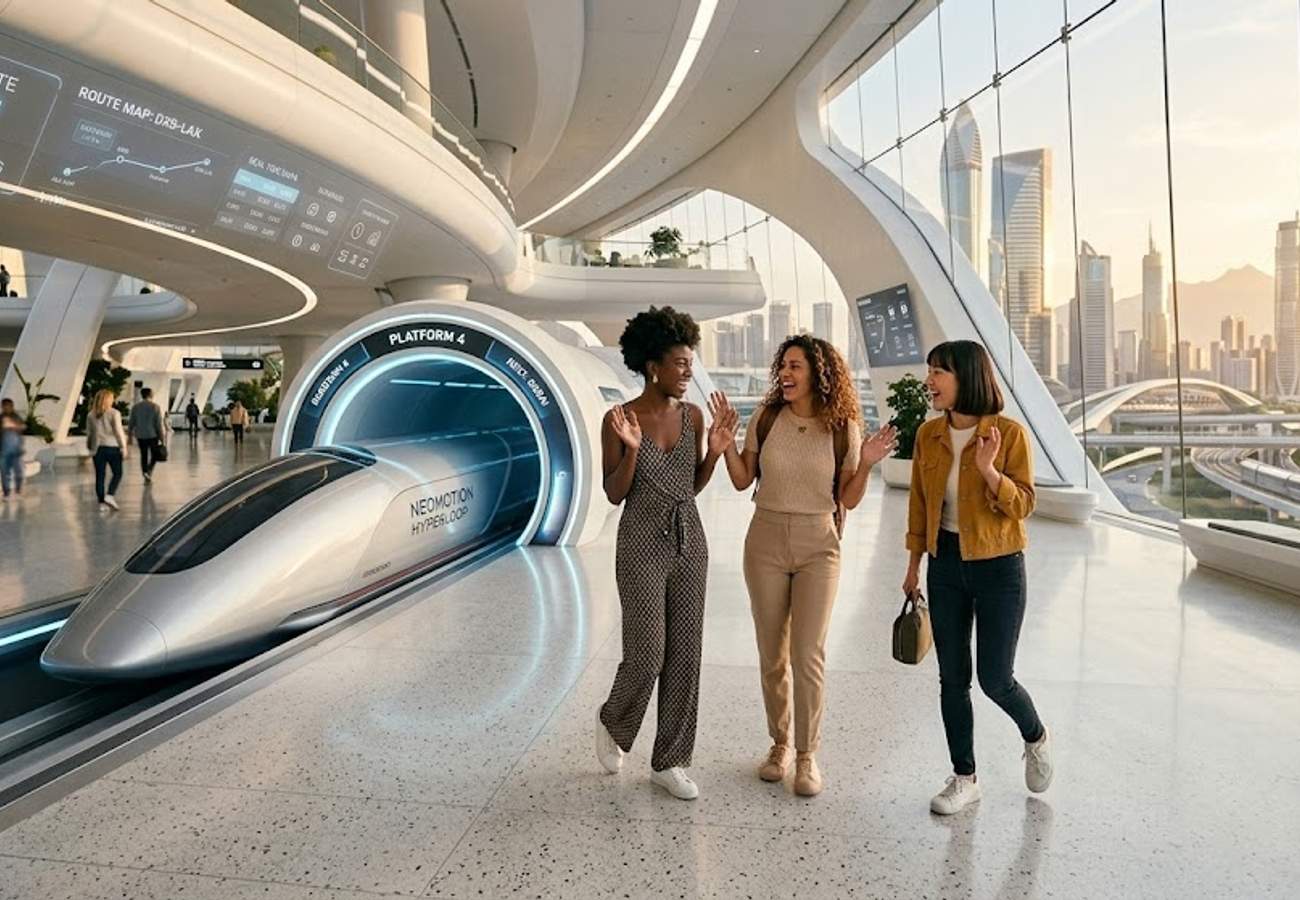
Image generated by AI
The global race to implement ultra-fast vacuum transport is accelerating, with the United States, Italy, and the United Arab Emirates (UAE) coordinating efforts to redefine continental connectivity. This shift toward Hyperloop technology aims to drastically reduce travel times, lowering the carbon footprint of long-distance transit while opening new frontiers for international tourism.
While commercial passenger services have not yet launched, the transition from theoretical research to prototype testing is gaining momentum. Governments and private innovators are now prioritizing efficiency and sustainable mobility to replace or augment traditional rail and air travel.
North American Innovation and the US Blueprint
The United States continues to serve as a primary hub for Hyperloop engineering, focusing on the foundational elements of vacuum tube systems and propulsion. Current efforts are centered on refining passenger safety standards and propulsion technologies.
Although regulatory approval for commercial routes remains pending, the US innovation ecosystem is leveraging prototype facilities to reach critical technological milestones. These developments are expected to eventually transform interstate travel and create more sustainable tourism corridors across the mainland.
Asian Advancements: South Korea and China
In Asia, the approach to ultra-fast travel is diversifying. South Korea has transitioned its focus toward the "Hypertube" project. This government-backed initiative specifically targets the corridor between Seoul and Busan, aiming to slash journey times via high-speed vacuum transport.
China is similarly investing heavily through national laboratories and universities. While commercial deployment is not immediate, Chinese engineers are integrating vacuum transport research with their existing world-leading high-speed rail network to enhance regional tourism and international connectivity.
European Strategies: From Test Centers to MagRail
Europe has adopted a fragmented but collaborative approach to high-speed innovation:
- The Netherlands: Currently hosts the European Hyperloop Centre, a critical facility for testing vehicle performance and establishing technical standards for the continent.
- Italy: Focuses on engineering studies to integrate Hyperloop corridors into Southern Europe, viewing the technology as a complement to existing rail rather than a replacement.
- Switzerland: Leverages its precision engineering reputation to improve propulsion and vacuum stability.
- Poland: Taking a pragmatic detour via Nevomo’s "MagRail" technology. Instead of building new tubes, MagRail integrates magnetic levitation into existing railway infrastructure to reduce costs and speed up implementation.
- France and Spain: Both nations contribute through engineering partnerships and innovation programs, ensuring a unified European technical framework.
Middle Eastern Vision and Mega-Projects
The UAE and Saudi Arabia are integrating Hyperloop technology into their broader national transformations. The UAE is specifically evaluating corridors between Dubai and Abu Dhabi as part of a smart mobility vision to enhance luxury tourism and business connectivity.
Similarly, Saudi Arabia is assessing advanced transport solutions under its Vision 2030 strategy. If implemented, these systems would connect emerging smart cities and economic hubs, supporting the Kingdom's rapidly expanding tourism sector.
Current Global Development Status
While several nations are in the research and prototyping phase, India has emerged as a frontrunner in practical, large-scale implementation and infrastructure development.
The following table summarizes the strategic focus of key nations in the Hyperloop race:
| Nation | Primary Technology/Project | Strategic Focus | Current Status |
|---|---|---|---|
| United States | Vacuum Tube Systems | Safety & Propulsion Standards | Prototype Testing |
| South Korea | Hypertube | Seoul-Busan Connectivity | Government-Backed Development |
| India | Commercial Hyperloop | Large-scale Implementation | Leading Practical Testing |
| Poland | MagRail | Existing Rail Integration | Infrastructure Upgrading |
| UAE | Smart Mobility Corridors | Dubai-Abu Dhabi Link | Technical & Regulatory Evaluation |
| Netherlands | European Hyperloop Centre | Technical Standardization | Active Research Facility |
| China | Vacuum Transport Research | National Lab Integration | Experimental Phase |
| Italy | Regional Corridors | Southern Europe Connectivity | Engineering Studies |
Impact on Global Tourism and Mobility
The shift toward Hyperloop technology represents more than just speed; it is a fundamental change in how geography affects tourism. By reducing travel time between major cities to minutes rather than hours, "super-commuting" becomes possible, and regional tourism can expand without the environmental cost of short-haul flights.
The coming decade will be the deciding factor in which nation successfully moves from the testing phase to the first commercial passenger operation.
The race for ultra-fast transit is no longer a question of "if," but "who" will cross the finish line first.
Related Travel Guides
Disclaimer
This article is for informational and educational purposes only. It does not constitute legal, financial, or professional advice. While we strive to provide accurate and up-to-date information, travel policies, regulations, and conditions change rapidly. Always verify information with official sources before making travel decisions. Nomad Lawyer makes no representations about the accuracy, reliability, completeness, or suitability of the information provided. Readers should consult qualified professionals for advice specific to their circumstances. The views expressed in this article are those of the author and do not necessarily reflect the views of Nomad Lawyer.
Preeti Gunjan
Contributor & Community Manager
A passionate traveller and community builder. Preeti helps grow the Nomad Lawyer community, fostering engagement and bringing the reader experience to life.
Learn more about our team →