
Travel Alert: Thunderstorms and FAA Traffic Management Disrupt US Flight Networks
Widespread flight disruptions hit the US, with 4,265 delays and 189 cancellations recorded at Boston, JFK, Dallas-Fort Worth, and Chicago O'Hare.

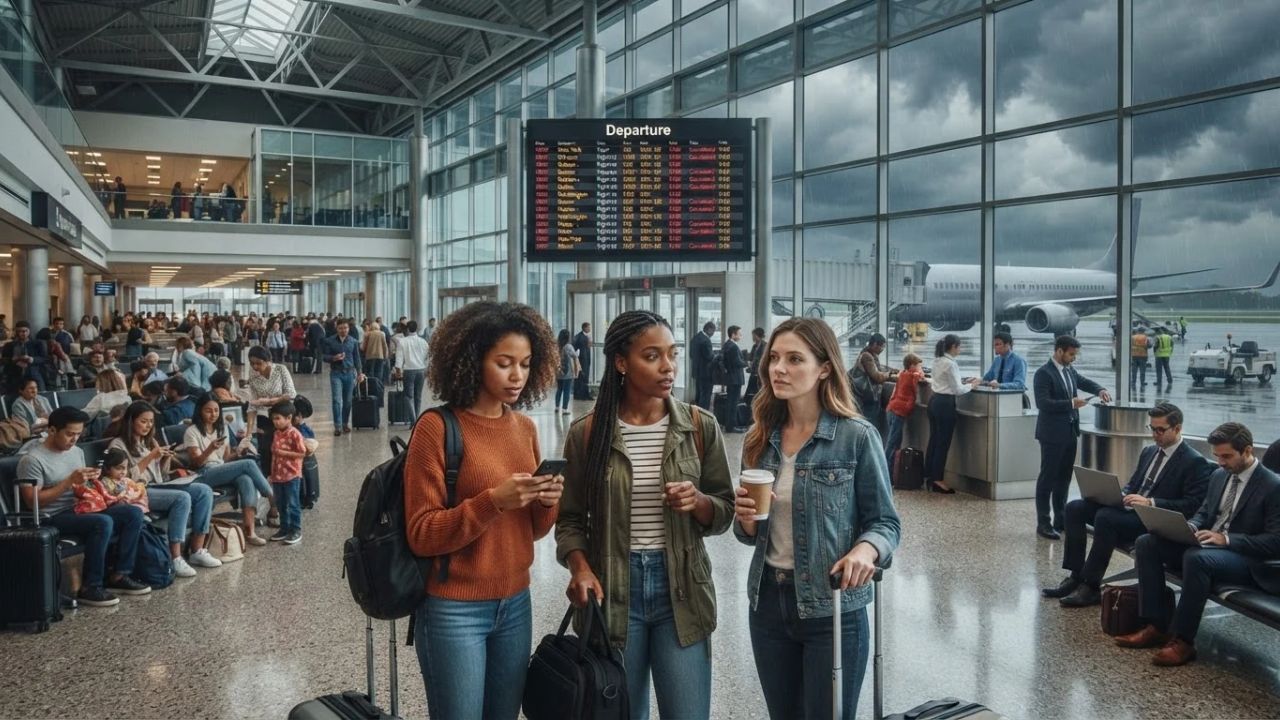
Image generated by AI
Widespread flight disruptions hit the US, with 4,265 delays and 189 cancellations recorded at Boston, JFK, Dallas-Fort Worth, and Chicago O'Hare. The Federal Aviation Administration (FAA) indicates that active thunderstorm fronts and airport traffic metering coordinate flight updates, supporting passenger protection rules across regional transit corridors.
The Transition of Domestic Corridors to Air traffic Bottlenecks
A significant trend in domestic transportation planning is the transition of major airline corridors into active air traffic bottlenecks. Historically, flight dispatch teams routed regional operations with minimal scheduling buffers, assuming that metropolitan runway capacities would handle high-volume enplanements without interruption. In 2026, the rise of severe regional weather fronts and FAA-mandated traffic management programs coordinates cascading runway delays, forcing carriers to reduce operations at key hubs to prevent extended tarmac waiting times.
By rebalancing daily flight rotations, airlines attempt to stabilize travel schedules. This congestion-heavy travel model coordinates pressure across international transit operations, municipal airport authorities, and customer service teams.
Analysis of US Airport Delays and Cancellations
The flight tracking data, recorded on 23 August 2026 at 4:26 pm ET USA via FlightAware, outlines the operational pressure across major US terminals:
- Boston Logan (BOS): Listed as the day's most disrupted airport, logging 501 delays and 70 cancellations due to thunderstorm activity affecting departure lanes.
- John F. Kennedy (JFK): The New York gateway recorded 413 delays and 5 cancellations, impacting Northeast corridors.
- Dallas-Fort Worth (DFW): The Texas transit hub reported 363 delays and 4 cancellations, affecting long-haul connecting flights.
- Chicago O'Hare (ORD): The Midwest hub logged 237 delays and 7 cancellations, disrupting domestic flight transfers.
- Reagan National (DCA): The Washington-area terminal experienced 172 delays and 25 cancellations.
- Orlando International (MCO): Reported 164 delays and 3 cancellations due to weather-related traffic management programs.
- Newark Liberty (EWR): Reported 142 delays and 6 cancellations due to traffic metering and airspace congestion.
- Other Major Hubs: Seattle-Tacoma (SEA) logged 104 delays and 7 cancellations, Nashville (BNA) recorded 94 delays and 5 cancellations, and Washington Dulles (IAD) reported 77 delays and 3 cancellations.
These disruptions affected major domestic passenger routes and international arrival gates.
Airline Delays and Cancellations Performance Metrics
Major carriers experienced varying operational impacts across their domestic networks:
- American Airlines: Logged 663 delays and 9 cancellations, representing the highest delay count among US airlines.
- Southwest Airlines: Logged 659 delays and 26 cancellations, representing the highest cancellation count.
- Delta Air Lines: Recorded 387 delays and 11 cancellations.
- United Airlines: Recorded 380 delays and 17 cancellations.
- Republic Airways: Logged 186 delays and 10 cancellations on regional feeder flights.
- Other Affected Carriers: Schedule changes also impacted JetBlue, Alaska Airlines, Hawaiian Airlines, and Spirit Airlines.
These figures show how weather delays at primary hub terminals quickly spread throughout an entire airline's network.
US Aviation Infrastructure and Traffic Coordinates
The table below breaks down the affected US airports, recorded delay volumes, cancellation counts, primary delay reasons, regional partners, and coordinating authorities recorded on August 24, 2026:
| Affected Airport | Recorded Delay Volume | Cancellation Count | Primary Delay Reason | Regional Partner | Coordinating Authority |
|---|---|---|---|---|---|
| Boston Logan (BOS) | 501 delays | 70 cancellations | Thunderstorm departures | American Airlines | Federal Aviation Admin |
| Reagan National (DCA) | 172 delays | 25 cancellations | Airspace capacity limits | Republic Airways | Federal Aviation Admin |
| John F. Kennedy (JFK) | 413 delays | 5 cancellations | Northeast route congestion | Port Authority NY & NJ | Federal Aviation Admin |
| Orlando International | 164 delays | 3 cancellations | Traffic metering program | Southwest Airlines | Greater Orlando Aviation |
| Newark Liberty (EWR) | 142 delays | 6 cancellations | Airspace metering & DCA | United Airlines | Port Authority NY & NJ |
These coordinates outline the airports, delays, cancellations, reasons, partners, and authorities established for the transit recovery programs.
Resource Stewardship and Eco-Aware Transit Management
For the traveler, the benefit of verifying flight status online before driving to the terminal is the avoidance of unnecessary airport transfer emissions and parking zone congestion. Selecting public transit (such as rail options linking Boston or New York airports to city centers) reduces carbon emissions.
Additionally, keeping digital copies of all boarding passes and passenger rights receipts reduces paper waste during compensation claims. Supporting independent dining spots and hotels near regional airports distributes tourist spending to local businesses during overnight delays.
For comparison, you can explore the changing dynamics of Australia New Zealand Flight Delays Disruptions to see how regional aviation networks manage scheduling delays. For transit updates, comparing flight scheduling matches other networks, such as Middle East Flight Disruptions Gulf Aviation Delays updates. This trend is similar to the tourism growth seen in other destinations, as detailed in our guide on the Hacienda Heights Bus Fire Transport Safety regulations.
Passenger Protection Tips: Managing Flight Cancellations
If you are currently traveling through US airspace, keep these practical tips in mind:
- Monitor Mobile App Notifications: Turn on real-time alerts on your airline's app to track gates, baggage, and departure times.
- Search Alternative Routes Offline: Research backup flights on your phone before contacting customer service agents, so you can suggest specific rebooking options.
- Verify Connecting Flight Status: Ensure that your connecting flight is operating before accepting a rescheduled first-leg ticket.
- Preserve All receipts: Retain documentation for meals and refreshments during delays, as airlines must provide vouchers during carrier-caused disruptions.
- Leverage Airport Transit Links: Use airport train loops to change terminals if rebooked on a different airline at short notice.
Long-Term Outlook for US Travel Infrastructure
The long-term outlook for transit in the United States is focused on upgrading air traffic control systems, expanding runway capacities at high-density hubs, and constructing regional high-speed rail links to connect adjacent cities. As domestic traveler numbers grow, regional aviation boards and federal transit administrations will cooperate to maintain passenger standards.
By developing sustainable transit options and protecting regional logistics networks, the transportation sector aims to build a sustainable transport network.
FAQ
Why are flights across America cancelled today?
Widespread disruptions are driven by active thunderstorm fronts along the East Coast and FAA-mandated traffic management and metering programs.
Which airport recorded the highest cancellations and delays?
Boston Logan International Airport was the most disrupted, recording 501 delays and 70 cancellations due to thunderstorms.
What are my rights if my flight is cancelled by a US airline?
Under DOT regulations, passengers are entitled to a full refund if they choose not to travel after a cancellation, or a free rebooking on the next available flight.
Which airlines recorded the highest delays?
American Airlines recorded the highest delay count with 663 delayed flights, followed by Southwest Airlines with 659 delays.
Stay updated on regional travel regulations and air traffic campaigns shaping domestic transit.
Related Travel Guides
Disclaimer
This article is for informational and educational purposes only. It does not constitute legal, financial, or professional advice. While we strive to provide accurate and up-to-date information, travel policies, regulations, and conditions change rapidly. Always verify information with official sources before making travel decisions. Nomad Lawyer makes no representations about the accuracy, reliability, completeness, or suitability of the information provided. Readers should consult qualified professionals for advice specific to their circumstances. The views expressed in this article are those of the author and do not necessarily reflect the views of Nomad Lawyer.
Raushan Kumar
Founder & Lead Developer
Full-stack developer with 11+ years of experience and a passionate traveller. Raushan built Nomad Lawyer from the ground up with a vision to create the best travel and law experience on the web.
Learn more about our team →