
US Flight Disruption Alert September 2026: Runway Works and Volume Trigger 2,249 Delays Across Major Hubs
Aviation networks across the United States grapple with 2,249 delays and 119 cancellations as Boston Logan runway construction and regional airspace congestion disrupt major carriers.

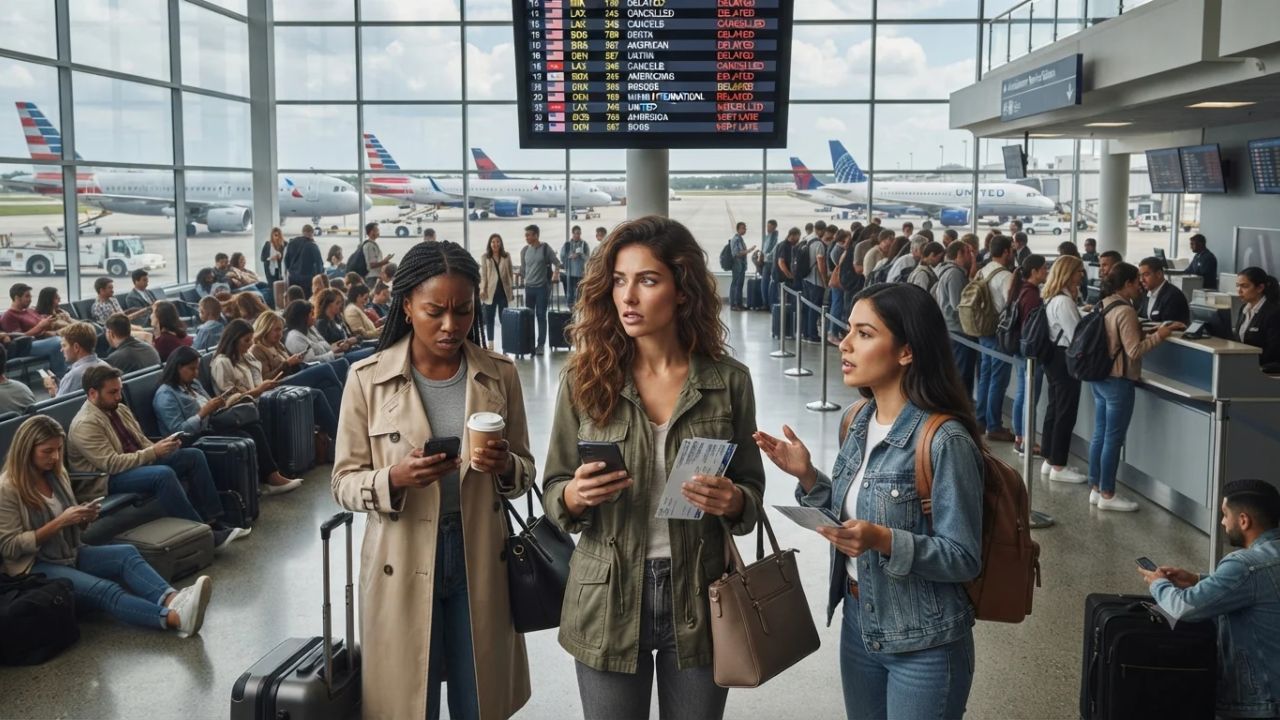
Image generated by AI
Runway rehabilitation projects and compacted departure corridors converged to trigger 2,249 flight delays and 119 cancellations across the United States on 29 September 2026, creating cascading schedule revisions across the national airspace. Real-time tracking telemetry compiled by FlightAware at 3:50 PM ET indicates that Boston Logan, Miami, Los Angeles, and Denver absorbed the heaviest operational impacts, disrupting major network carriers including Southwest, American, Delta, United, and Alaska Airlines.
Runway Reconstruction and Airspace Bottlenecks
The sharpest concentration of schedule disruptions centered on the Northeast corridor, where active infrastructure rehabilitation at Boston Logan International Airport (BOS) severely curtailed arrival and departure capacity. According to operational bulletins issued by the Federal Aviation Administration (FAA) System Command Center, a formal Ground Delay Program was enacted for Boston Logan due to scheduled runway construction, resulting in average gate delays of 74 minutes.
In total, Boston Logan recorded 263 flight delays alongside 45 full cancellations, with arriving flights absorbing a punishing 26% delay rate and departing flights seeing 14% schedule pushbacks.
Simultaneously, high traffic volume and compacted departure demand triggered departure metering delays across San Diego International (SAN) averaging 15 minutes and rising, alongside private aviation metering at Teterboro (TEB) in New Jersey. In the Southeast and West Coast gateways, weather transitions and gate constraints pushed Miami (MIA) to 170 delays (16% outbound delay rate) and Los Angeles International (LAX) to 126 delays.
Hub-by-Hub Disruption Telemetry
The cross-country impact was distributed across commercial passenger gateways, affecting both origin-and-destination travelers and connecting passengers transferring through primary airline fortress hubs:
- Boston Logan (BOS): 263 delays, 45 cancellations; 26% arrival delay rate driven by FAA runway reconstruction ground stops.
- Miami International (MIA): 170 delays, 5 cancellations; 16% departure delay rate impacting Caribbean and Latin American banks.
- Los Angeles International (LAX): 126 delays, 4 cancellations; 9% arrival delay rate with rolling gate holds.
- Denver International (DEN): 125 delays, 3 cancellations; 6% arrival and departure delay rates.
- San Diego International (SAN): 84 delays, 1 cancellation; FAA airspace volume restrictions.
- New York JFK & Newark (EWR): Combined 114 delays and 13 cancellations across New York metropolitan airspace.
- Anchorage Ted Stevens (ANC): 40 delays, 8 cancellations; 10% arrival delay rate affecting sub-Arctic passenger routes.
National Airport and Airline Disruption Overview
| Aviation Hub / Carrier | Recorded Delays | Recorded Cancellations | Primary Operational Root Cause | Delay Rate Percentage |
|---|---|---|---|---|
| Boston Logan (BOS) | 263 | 45 | FAA Ground Delay Program (Runway Construction) | 26% Inbound / 14% Outbound |
| Miami International (MIA) | 170 | 5 | Gate constraints & regional convective weather | 16% Outbound / 13% Inbound |
| Los Angeles (LAX) | 126 | 4 | Airspace sequencing & coastal marine layer | 9% Inbound / 6% Outbound |
| Denver (DEN) | 125 | 3 | High-altitude hub traffic metering | 6% Inbound / 6% Outbound |
| Southwest Airlines | 365 | 4 | Point-to-point network flow adjustments | High systemwide rotational impact |
| American Airlines | 339 | 4 | Northeast & Miami connecting bank delays | Core hub connection delays |
| Delta Air Lines | 290 | 6 | Multi-hub flow control and gate holds | Transcontinental & regional banks |
| United Airlines | 176 | 15 | Newark & Denver corridor adjustments | Long-haul schedule rebalancing |
| Alaska Airlines | 97 | 12 | West Coast & Anchorage network sequencing | Regional route adjustments |
| Republic Airways | 60 | 24 | Regional feed constraints into Northeast hubs | Regional partner cancellations |
Passenger Action Plan: Rebooking and Compensation Rights
When rolling delays and sudden cancellations threaten multi-leg travel itineraries, seasoned travelers take immediate steps to protect their travel timeline.
- Dual-Channel Rebooking: When a flight is cancelled, do not simply stand in the customer service terminal queue. Open the airline's mobile smartphone app immediately to select alternate flight itineraries while simultaneously placing a call to the carrier's international customer service line, which often has shorter phone wait times.
- Enforce US DOT Refund Protections: Under U.S. Department of Transportation Airline Customer Service mandates, if an airline cancels a flight or significantly alters departure times and the passenger chooses not to travel on the offered replacement, the traveler is legally entitled to a prompt 100% cash refund to their original form of payment, rather than expiring travel vouchers.
- Baggage Verification on Reroutes: If accepting a rerouted connection through an alternative hub (such as switching from a Boston connection to a Charlotte or Chicago routing), confirm with the gate agent that your checked baggage barcode has been manually retagged to the new itinerary.
- Credit Card Delay Insurance: Many premium travel credit cards provide automatic trip delay reimbursement (covering up to $500 in meals and overnight hotel accommodations) when delays exceed 6 hours, provided the ticket was charged to the card.
Cultural and Environmental Context
Modern air traffic management in the United States is operating at peak historical capacity, where minor maintenance closures at high-density hubs like Boston Logan create instantaneous reverberations across the entire North American continent. Balancing critical airfield modernization with daily commercial schedules remains a complex engineering challenge for port authorities and the FAA.
Simultaneously, air traffic flow management programs are increasingly leveraging trajectory-based operations (TBO) to minimize airborne holding patterns. By assigning ground delay programs before aircraft depart their origin cities, controllers reduce fuel burn, lower greenhouse gas emissions, and prevent excessive holding pattern fuel consumption in congested terminal airspace.
For passengers, recognizing that flight networks operate as tightly wound, interdependent systems allows for proactive itinerary planning, smarter airport layover buffers, and less stressful transit across the country.
FAQ: US Air Travel Disruptions 2026
Why does runway construction in Boston cause delays across other US cities?
Boston Logan operates as a primary hub for Delta, JetBlue, and regional carriers. When arriving flights are metered into Boston, the inbound aircraft cannot turn around on time, causing delayed departures to destinations like Miami, Chicago, and Los Angeles.
Are airlines required to provide hotel vouchers for construction-related delays?
Airlines generally classify airport runway maintenance and air traffic control ground delay programs as circumstances outside their direct operational control, meaning complimentary hotel vouchers are rarely guaranteed.
How can travelers track live airport ground delays in real time?
The FAA National Airspace System status page (nasstatus.faa.gov) provides live, real-time updates on ground stops, delay programs, and departure metering for every major commercial airport in the country.
What should travelers do if their connection time shrinks below 30 minutes?
Speak with a gate agent prior to boarding the first flight or use the airline app to request a proactive rebooking onto a later connecting flight to avoid being stranded between terminals.
When airspace becomes crowded, the prepared traveler moves with speed, patience, and clear knowledge of their passenger rights.
Related Travel Guides
American Airlines AAdvantage Guide 2026 How Systemwide Upgrades Unlock Holiday Business Class Cabins
Boston Logan to New York JFK Rail vs Flight Transit Comparison Guide 2027
Disclaimer
This article is for informational and educational purposes only. It does not constitute legal, financial, or professional advice. While we strive to provide accurate and up-to-date information, travel policies, regulations, and conditions change rapidly. Always verify information with official sources before making travel decisions. Nomad Lawyer makes no representations about the accuracy, reliability, completeness, or suitability of the information provided. Readers should consult qualified professionals for advice specific to their circumstances. The views expressed in this article are those of the author and do not necessarily reflect the views of Nomad Lawyer.
Naina Thakur
Contributor & Travel Specialist
Travel enthusiast and legal writer covering visa regulations, responsible tourism, and cultural journeys across global destinations.
Learn more about our team →