US Flight Cancellations and Delays: Miami, Chicago, and Boston Hit by 1,649 Delays and 181 Cancellations

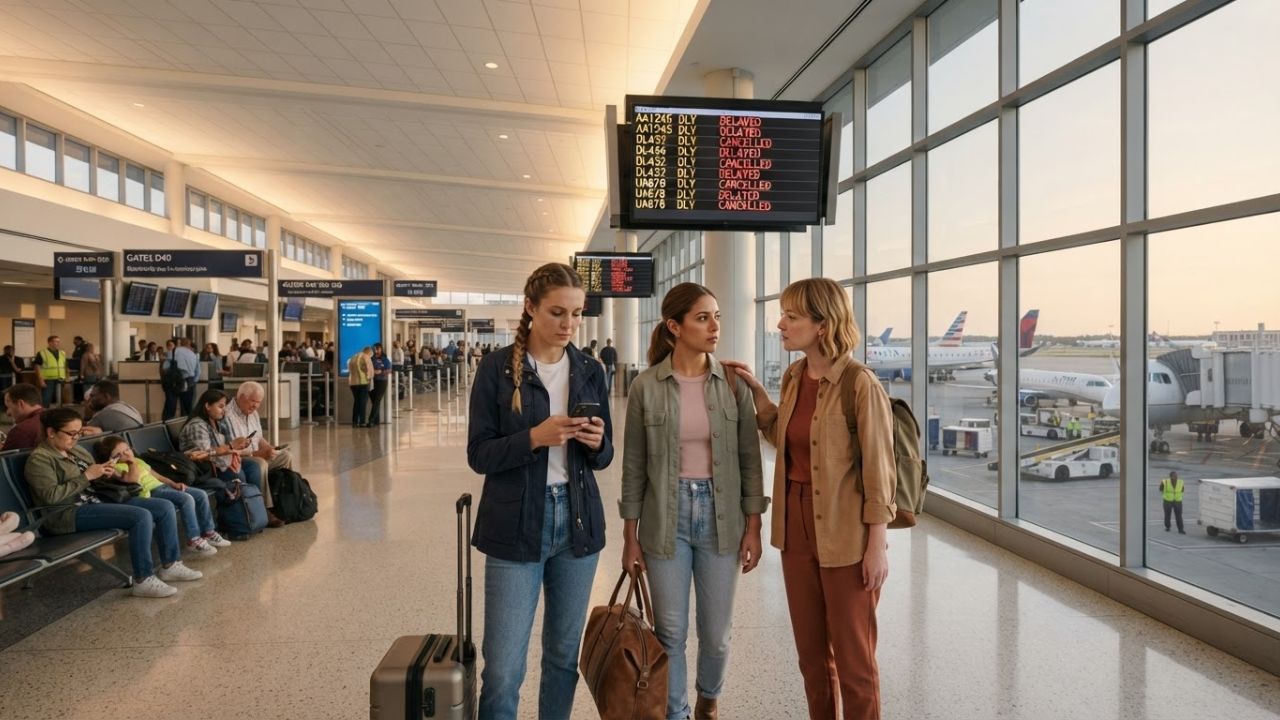
Flight operations across the United States experienced widespread disruption on September 8, 2026, with aviation tracking telemetry recording 1,649 flight delays and 181 outright cancellations by mid-afternoon. Severe bottlenecks concentrated in Florida, New England, and the Midwest, where Miami International Airport endured an average ground delay of 211 minutes following a disabled aircraft on the runway, while Boston Logan logged 142 delays amid active runway construction.
Commercial aviation corridors across North America faced compounding operational strain, leaving thousands of connecting passengers stranded across major transfer hubs. The disruptions swept across top domestic carriers, with Southwest Airlines recording 220 delays, Delta Air Lines tracking 209 delays, and American Airlines logging 201 delays alongside a carrier-high 48 cancellations.
For domestic and international travelers navigating transfer points from Miami to Chicago O'Hare, the day's gridlock highlighted the fragility of hub-and-spoke networks when unexpected airfield incidents intersect with scheduled infrastructure repairs.
The Local Trend Revealed: Runway Incidents and Hub Congestion
The focal point of the nation's flight disruption was Miami International Airport (MIA), where Federal Aviation Administration (FAA) traffic management controllers issued a ground-delay advisory citing a disabled aircraft blocking an active runway. The incident triggered an average delay of 211 minutes for inbound traffic. In total, Miami logged 151 delays and 42 cancellations, with 13% of arriving flights and 9% of departing departures running behind schedule, alongside a 5% arrival cancellation rate.
Concurrently, Boston Logan International Airport (BOS) recorded 142 delays and six cancellations. Massport and FAA notices pointed to active runway construction projects that curtailed runway acceptance rates during afternoon peak traffic banks, generating an average ground delay of 42 minutes.
| Airport Hub | Code | Delays | Cancellations | Key Operational Driver / FAA Advisory |
|---|---|---|---|---|
| Miami International | MIA | 151 | 42 | Disabled aircraft on runway; avg delay 211 mins |
| Boston Logan | BOS | 142 | 6 | Runway construction; avg delay 42 mins |
| Chicago O’Hare | ORD | 134 | 11 | Hub throughput congestion; 5% outbound delays |
| Hartsfield-Jackson Atlanta | ATL | 113 | 10 | Peak bank congestion; 5% arrival delay rate |
| Los Angeles International | LAX | 100 | 12 | West Coast airspace pacing; 8% inbound delays |
| Dallas-Fort Worth | DFW | 99 | 4 | Severe connection bank delays; 4% inbound delays |
| John F. Kennedy | JFK | 91 | 13 | New York airspace delays; 8% inbound delays |
| San Francisco | SFO | 90 | 7 | Coastal flow controls; 10% inbound delay rate |
| Seattle-Tacoma | SEA | 66 | 9 | Pacific Northwest pacing; 5% outbound delays |
| Fort Lauderdale-Hollywood | FLL | 53 | 5 | South Florida overflow; 6% inbound delays |
| Orlando International | MCO | 49 | 5 | Central Florida leisure flow; 6% outbound delays |
| Daniel K. Inouye Honolulu | HNL | 13 | 21 | High inter-island cancellation rate (3% inbound cancelled) |
Across the carrier ecosystem, operational recovery efforts varied significantly:
- Southwest Airlines: Encountered 220 delays and 14 cancellations, navigating rolling turnaround holds across its point-to-point network.
- Delta Air Lines: Faced 209 delays and 13 cancellations, primarily absorbing connecting passenger holds at Atlanta, Boston, and Minneapolis.
- American Airlines: Endured 201 delays and 48 cancellations, bearing the heaviest cancellation impact due to its dual mega-hub presence in Miami and Dallas-Fort Worth.
- United Airlines: Tracked 135 delays and 26 cancellations, managing tight gate flows at Chicago O'Hare and San Francisco.
- Alaska Airlines: Logged 34 delays and 37 cancellations, experiencing localized disruptions that affected West Coast and Hawaii flight schedules.
Cultural & Environmental Value: Turning Airfield Gridlock into Neighborhood Discovery
When major aviation hubs experience extended multi-hour ground stops, the environmental toll escalates rapidly. Extended runway queues and holding patterns produce thousands of metric tons of excess carbon emissions and burn aviation fuel while aircraft idle on taxiways.
For travelers, extended ground delays provide an opportunity to reconsider how time is spent during unexpected stopovers. Instead of remaining seated in gate boarding areas or relying exclusively on chain concessionaires, transit passengers can step outside traditional terminal perimeters to channel discretionary spending directly into independent neighborhood businesses.
In Miami, passengers caught in the 211-minute ground hold can take the automated MIA Mover to the Miami Intermodal Center and connect via Metrorail directly into historic districts like Little Havana or downtown Miami. Spending tourism dollars at multi-generational Cuban bakeries, family-owned espresso counters, and open-air cultural plazas channels revenue straight into the community rather than multinational airport concession corporations.
Similarly, travelers experiencing holds at Boston Logan or Chicago O'Hare can leverage direct rapid transit links—such as the MBTA Silver Line in Boston or the CTA Blue Line at O'Hare—to explore neighborhood dining districts, supporting local culinary institutions while avoiding the stress of crowded boarding lounges.
Visitor Insider Tips: Navigating Extended Airport Delays
Navigating nationwide flight delays demands proactive management and a working understanding of passenger rights. Here are actionable tips for travelers caught in major transit hubs:
- Leverage Transit Over Terminal Traps in Miami: If your flight out of Miami International experiences an FAA ground delay exceeding three hours, avoid sitting by the gate. Take the free MIA Mover tram to the Miami Intermodal Center (MIC). From there, a 10-minute taxi or rideshare brings you straight to Calle Ocho in Little Havana. Stop by the historic Versailles Bakery for authentic warm pastelitos de guayaba (guava pastries), savory beef empanadas, and a freshly brewed cortadito.
- O’Hare Rapid Escape via Blue Line: At Chicago O’Hare, the CTA Blue Line station is located inside the lower level of Terminal 2. For connections delayed past four hours, board the train toward the Loop and disembark at Logan Square (25 minutes) to visit independent craft coffee roasters and taquerias along Milwaukee Avenue before taking the train back through security.
- Boston Logan Free Transit Link: Passengers delayed at Boston Logan can board the MBTA Silver Line (SL1) bus free of charge from any terminal curb. It connects directly to South Station in under 20 minutes, offering quick access to the historic Rose Kennedy Greenway and Boston's waterfront dining options.
- Enforce Federal Cash Refund Protections: Under U.S. Department of Transportation (USDOT) consumer rules, if an airline cancels your flight or makes a significant schedule change (defined as departing more than 3 hours early or arriving more than 3 hours late for domestic itineraries) and you choose not to accept alternative transportation, you are entitled to a full, prompt cash refund to your original payment method—not just an airline travel voucher.
- Monitor the FAA NAS Status Page: When delays ripple across the system, download your carrier's app for real-time bag tracking and boarding gate shifts, but cross-reference flight information using the FAA’s publicly accessible National Airspace System (NAS) Status page (nasstatus.faa.gov). This portal reveals active Ground Delay Programs (GDP), ground stops, and exact departure hold times well before gate display monitors reflect the changes.
Tourism Outlook: Infrastructure Strain and the Drive Toward Aviation Modernization
The September 8 flight disruptions highlight ongoing structural pressures facing the United States commercial aviation network. With passenger volumes continuing to reach post-pandemic records, the margin for operational error at primary hub facilities has narrowed considerably.
A single disabled aircraft on an active runway in Miami or scheduled maintenance on a primary runway in Boston can instantly cascade into more than 1,600 delays nationwide. This dynamic is accelerating investments by the FAA and municipal airport authorities into NextGen digital surface management tools, runway safety upgrades, and improved intermodal rail links that alleviate pressure on congested domestic flight corridors.
Related Travel Guides
This article is for informational purposes. Flight routes, passenger regulations, visa rules, and transit advisories are subject to change by airlines and aviation authorities. Readers are advised to verify schedules and travel documentation with relevant carriers and border agencies before departure.
Related Stories

American Airlines Expands Caribbean Winter 2026 Network with Up to Eight Daily Miami Flights to San Juan and Six to Tortola
Typhoon Champi Paralyzes Asian Skies: 1,090 Flight Cancellations and 4,878 Delays Strike Shanghai, Taipei, and Okinawa